Sofia Lane is a nonfiction author known for writing thoughtful books on emotional resilience, self-growth, modern relationships, and finding meaning in everyday life. Her calm and reflective writing style combines psychology, philosophy, and practical insight to help readers navigate life with greater clarity, balance, and self-awareness.
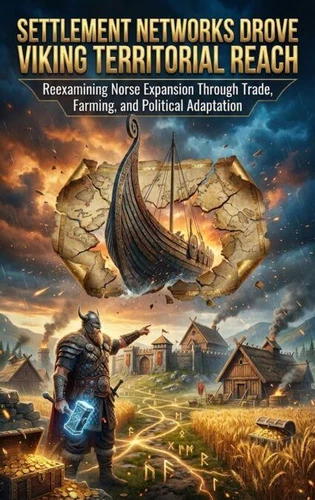
Settlement Networks Drove Viking Territorial Reach. Reexamining Norse Expansion Through Trade, Farming, and Political Adaptation
Par :Formats :
Disponible dans votre compte client Decitre ou Furet du Nord dès validation de votre commande. Le format ePub est :
- Compatible avec une lecture sur My Vivlio (smartphone, tablette, ordinateur)
- Compatible avec une lecture sur liseuses Vivlio
- Pour les liseuses autres que Vivlio, vous devez utiliser le logiciel Adobe Digital Edition. Non compatible avec la lecture sur les liseuses Kindle, Remarkable et Sony
 , qui est-ce ?
Notre partenaire de plateforme de lecture numérique où vous retrouverez l'ensemble de vos ebooks gratuitement
Pour en savoir plus sur nos ebooks, consultez notre aide en ligne ici
C'est si simple ! Lisez votre ebook avec l'app Vivlio sur votre tablette, mobile ou ordinateur :

- Nombre de pages208
- FormatePub
- ISBN978-3-565-20775-6
- EAN9783565207756
- Date de parution29/01/2026
- Protection num.pas de protection
- Taille2 Mo
- Infos supplémentairesepub
- ÉditeurEmphaloz Publishing House
Résumé
Vikings are remembered as raiders terrorizing medieval Europe. Yet this violent narrative overlooks what sustained Norse expansion across four centuries: agricultural settlements seeking arable land, merchant networks trading furs and walrus ivory, and political systems adapting to local conditions-from integrating into Francia's feudal structure to establishing parliamentary assemblies in Iceland and trading partnerships in Byzantine Constantinople.
This book traces Viking activity through settlement archaeology, runestone inscriptions, saga accounts, and contemporary records from attacked communities.
It examines how Norse farmers colonized Iceland and Greenland seeking independence from Scandinavian kings, how Dublin and York functioned as trading hubs rather than military outposts, and how Viking leaders converted to Christianity when political advantage required it. The focus extends beyond dramatic raids to include the women managing farms during men's absence, the enslaved people whose labor sustained colonies, and the environmental limits that ended Greenland settlements. By analyzing the economic and social foundations of Norse expansion, this work reveals a more complete picture: not just warriors, but communities seeking resources, trade access, and political autonomy.
It explores how Vikings succeeded through adaptation-and failed when environmental and political realities exceeded their capacity to adjust.
It examines how Norse farmers colonized Iceland and Greenland seeking independence from Scandinavian kings, how Dublin and York functioned as trading hubs rather than military outposts, and how Viking leaders converted to Christianity when political advantage required it. The focus extends beyond dramatic raids to include the women managing farms during men's absence, the enslaved people whose labor sustained colonies, and the environmental limits that ended Greenland settlements. By analyzing the economic and social foundations of Norse expansion, this work reveals a more complete picture: not just warriors, but communities seeking resources, trade access, and political autonomy.
It explores how Vikings succeeded through adaptation-and failed when environmental and political realities exceeded their capacity to adjust.
A propos de Sofia Lane

4,49 €