Sofia Lane is a nonfiction author known for writing thoughtful books on emotional resilience, self-growth, modern relationships, and finding meaning in everyday life. Her calm and reflective writing style combines psychology, philosophy, and practical insight to help readers navigate life with greater clarity, balance, and self-awareness.
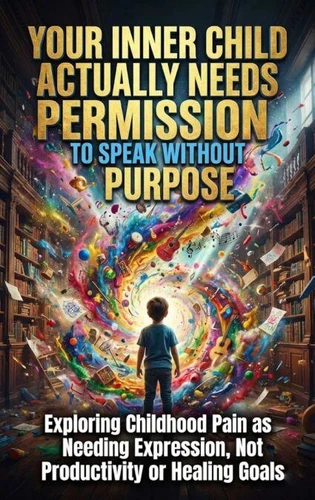
Your Inner Child Actually Needs Permission to Speak Without Purpose. Exploring Childhood Pain as Needing Expression, Not Productivity or Healing Goals
Par :Formats :
Disponible dans votre compte client Decitre ou Furet du Nord dès validation de votre commande. Le format ePub est :
- Compatible avec une lecture sur My Vivlio (smartphone, tablette, ordinateur)
- Compatible avec une lecture sur liseuses Vivlio
- Pour les liseuses autres que Vivlio, vous devez utiliser le logiciel Adobe Digital Edition. Non compatible avec la lecture sur les liseuses Kindle, Remarkable et Sony
 , qui est-ce ?
Notre partenaire de plateforme de lecture numérique où vous retrouverez l'ensemble de vos ebooks gratuitement
Pour en savoir plus sur nos ebooks, consultez notre aide en ligne ici
C'est si simple ! Lisez votre ebook avec l'app Vivlio sur votre tablette, mobile ou ordinateur :

- Nombre de pages178
- FormatePub
- ISBN978-3-565-21240-8
- EAN9783565212408
- Date de parution30/01/2026
- Protection num.pas de protection
- Taille2 Mo
- Infos supplémentairesepub
- ÉditeurEmphaloz Publishing House
Résumé
This book explores the often-overlooked tension in inner child work-the ways journaling prompts and healing exercises can inadvertently recreate the same pressure that caused the original wound: the expectation that your pain should be productive, should lead somewhere, should result in growth or insight. It examines how therapeutic journaling about childhood experiences can sometimes feel like another performance of getting it right, extracting lessons, or proving you're doing the healing work correctly.
Rather than offering structured prompts with prescribed outcomes, the text reframes inner child expression as fundamentally about permission-permission to remember without needing to understand, to feel without needing to resolve, to speak about your childhood without immediately transforming it into wisdom or closure.
It explores the patterns that block authentic expression: the internalized belief that emotions need purpose, the pressure to journal "correctly, " the shame of revisiting the same pain without visible progress. What does your inner child need to say that has nothing to do with healing, growth, or becoming better? Through compassionate psychological insight, the book examines what actually allows childhood experiences to be witnessed versus what keeps them performative-and why unstructured, purposeless expression might matter more than guided healing prompts.
This isn't about completing journal exercises or achieving inner child integration-it's about recognizing that some parts of you simply need to be heard without agenda, and that this permission might be more validating than any structured healing practice.
It explores the patterns that block authentic expression: the internalized belief that emotions need purpose, the pressure to journal "correctly, " the shame of revisiting the same pain without visible progress. What does your inner child need to say that has nothing to do with healing, growth, or becoming better? Through compassionate psychological insight, the book examines what actually allows childhood experiences to be witnessed versus what keeps them performative-and why unstructured, purposeless expression might matter more than guided healing prompts.
This isn't about completing journal exercises or achieving inner child integration-it's about recognizing that some parts of you simply need to be heard without agenda, and that this permission might be more validating than any structured healing practice.
A propos de Sofia Lane
4,49 €