SOLDES
Jusqu'à -70% sur une sélection d'articles*
- Accueil /
- William Makepeace Thackeray
William Makepeace Thackeray

Dernière sortie
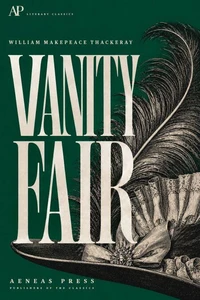
Vanity Fair
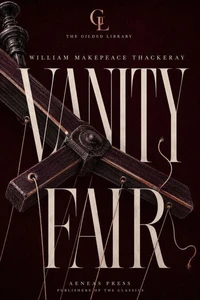
Vanity Fair is perhaps Thackeray's most famous novel. First serialized over the course of 19 volumes in Punch Magazine and first printed as a single volume in 1849, the novel cemented Thackeray's literary fame and kept him busy with frequent revisions and even lecture circuits. The story is framed as a puppet play, narrated by an unreliable narrator, that presents the story of Becky Sharp and Emmy Sedley and the people in their lives as they struggle through the Napoleonic Wars.
The story itself, like many other Thackeray novels, is a satire of the lives of the Victorian English of a certain class. Thackeray packed the novel with allusions, many of which were difficult even for his contemporary readers; part of the heavy revisions he later made were making the allusions more accessible to his evolving audience. As part of his satirical bent, Thackeray made a point to make each character flawed, so that there are no "heroes" in the book-hence the subtitle "A Novel Without a Hero." Thackeray's goal was not only to entertain, but to instruct; to that end, he wanted the reader to look within themselves after finishing the unhappy conclusion, in which there's no hint as to how society might be able to improve on the evils shadowed in the events of the novel.
Vanity Fair received glowing praise by its critical contemporaries, and remains a popular book well into modern times, having been adapted repeatedly for film, radio, and television. William Makepeace Thackeray (died 1863) was one of the most distinguished authors of the Victorian age. Their work has endured across generations and continues to be read and studied worldwide. As a work of classic literary fiction, Vanity Fair exemplifies the narrative craft and social insight that defined great storytelling of its era.
Literary fiction of this period was characterized by careful attention to character psychology, social milieu, and the moral questions that animated public discourse.
The story itself, like many other Thackeray novels, is a satire of the lives of the Victorian English of a certain class. Thackeray packed the novel with allusions, many of which were difficult even for his contemporary readers; part of the heavy revisions he later made were making the allusions more accessible to his evolving audience. As part of his satirical bent, Thackeray made a point to make each character flawed, so that there are no "heroes" in the book-hence the subtitle "A Novel Without a Hero." Thackeray's goal was not only to entertain, but to instruct; to that end, he wanted the reader to look within themselves after finishing the unhappy conclusion, in which there's no hint as to how society might be able to improve on the evils shadowed in the events of the novel.
Vanity Fair received glowing praise by its critical contemporaries, and remains a popular book well into modern times, having been adapted repeatedly for film, radio, and television. William Makepeace Thackeray (died 1863) was one of the most distinguished authors of the Victorian age. Their work has endured across generations and continues to be read and studied worldwide. As a work of classic literary fiction, Vanity Fair exemplifies the narrative craft and social insight that defined great storytelling of its era.
Literary fiction of this period was characterized by careful attention to character psychology, social milieu, and the moral questions that animated public discourse.
Vanity Fair is perhaps Thackeray's most famous novel. First serialized over the course of 19 volumes in Punch Magazine and first printed as a single volume in 1849, the novel cemented Thackeray's literary fame and kept him busy with frequent revisions and even lecture circuits. The story is framed as a puppet play, narrated by an unreliable narrator, that presents the story of Becky Sharp and Emmy Sedley and the people in their lives as they struggle through the Napoleonic Wars.
The story itself, like many other Thackeray novels, is a satire of the lives of the Victorian English of a certain class. Thackeray packed the novel with allusions, many of which were difficult even for his contemporary readers; part of the heavy revisions he later made were making the allusions more accessible to his evolving audience. As part of his satirical bent, Thackeray made a point to make each character flawed, so that there are no "heroes" in the book-hence the subtitle "A Novel Without a Hero." Thackeray's goal was not only to entertain, but to instruct; to that end, he wanted the reader to look within themselves after finishing the unhappy conclusion, in which there's no hint as to how society might be able to improve on the evils shadowed in the events of the novel.
Vanity Fair received glowing praise by its critical contemporaries, and remains a popular book well into modern times, having been adapted repeatedly for film, radio, and television. William Makepeace Thackeray (died 1863) was one of the most distinguished authors of the Victorian age. Their work has endured across generations and continues to be read and studied worldwide. As a work of classic literary fiction, Vanity Fair exemplifies the narrative craft and social insight that defined great storytelling of its era.
Literary fiction of this period was characterized by careful attention to character psychology, social milieu, and the moral questions that animated public discourse.
The story itself, like many other Thackeray novels, is a satire of the lives of the Victorian English of a certain class. Thackeray packed the novel with allusions, many of which were difficult even for his contemporary readers; part of the heavy revisions he later made were making the allusions more accessible to his evolving audience. As part of his satirical bent, Thackeray made a point to make each character flawed, so that there are no "heroes" in the book-hence the subtitle "A Novel Without a Hero." Thackeray's goal was not only to entertain, but to instruct; to that end, he wanted the reader to look within themselves after finishing the unhappy conclusion, in which there's no hint as to how society might be able to improve on the evils shadowed in the events of the novel.
Vanity Fair received glowing praise by its critical contemporaries, and remains a popular book well into modern times, having been adapted repeatedly for film, radio, and television. William Makepeace Thackeray (died 1863) was one of the most distinguished authors of the Victorian age. Their work has endured across generations and continues to be read and studied worldwide. As a work of classic literary fiction, Vanity Fair exemplifies the narrative craft and social insight that defined great storytelling of its era.
Literary fiction of this period was characterized by careful attention to character psychology, social milieu, and the moral questions that animated public discourse.
Les livres de William Makepeace Thackeray
5,99 €

0,49 €

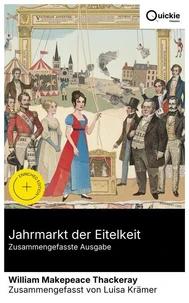
Jahrmarkt der Eitelkeit (Zusammengefasste Ausgabe). Bereicherte Ausgabe. Ironischer Blick auf die Londoner Gesellschaft: facettenreiche Klassenporträts vom 19. Jahrhundert bis Miss Pinkertons Erziehungsanstalt
William Makepeace Thackeray, Christoph Friedrich Grieb, Luisa Krämer
E-book
1,99 €

1,99 €

0,99 €

0,99 €

Jahrmarkt der Eitelkeit (Vanity Fair). Bereicherte Ausgabe. Ein scharfsinniger Blick auf die Abgründe der Gesellschaft des 19. Jahrhunderts
William Makepeace Thackeray, Christoph Friedrich Grieb, Wren Sharp
E-book
0,99 €

Jahrmarkt der Eitelkeit (Vanity Fair). Bereicherte Ausgabe.
William Makepeace Thackeray, Christoph Friedrich Grieb, Jonathan Kaiser
E-book
0,99 €

Jahrmarkt der Eitelkeit (Vanity Fair). Bereicherte Ausgabe.
William Makepeace Thackeray, Christoph Friedrich Grieb, Jonathan Kaiser
E-book
0,99 €

Jahrmarkt der Eitelkeit (Vanity Fair). Bereicherte Ausgabe. Intrigen und Machtkämpfe im 19. Jahrhundert: Eine satirische Gesellschaftskritik
William Makepeace Thackeray, Christoph Friedrich Grieb, Wren Sharp
E-book
0,99 €

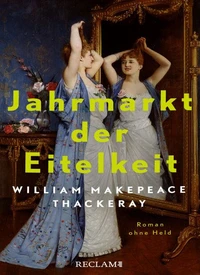
Jahrmarkt der Eitelkeit. Roman ohne Held | William Thackerays vergnügliche Charakterstudie neu und zeitgemäß übersetzt. SWR-Bestenliste Platz 6 | ORF-Bestenliste Platz 5 (Februar 2024)
William Makepeace Thackeray, Hans-Christian Oeser
E-book
39,99 €

0,99 €

0,99 €

The History of Henry Esmond, Esq., a Colonel in the Service of Her Majesty Queen Anne
William Makepeace Thackeray
E-book
0,99 €

1,99 €

0,99 €

0,99 €

0,99 €