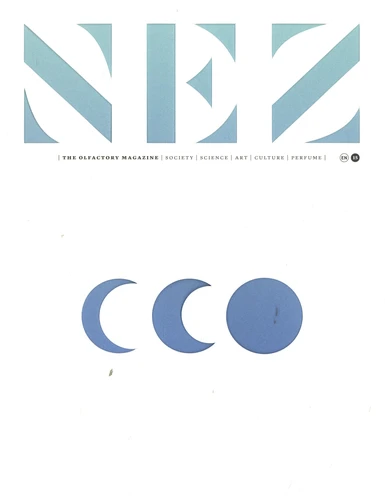
As time goes by They take us back to the past and connect us to the present : What is the link between smells and time ? Unfolding gradually in the air and on skin, perfume is often described as an art of time. In more ways than one, actually, since it involves our sense of smell, whose capacity to carry us back into the past is well known. Why is this sense so connected to our memory and the emotions that are linked to it ? And since odors are so hard to conserve, is an archaeology of smells possible ? Time is also needed to produce fragrance : Months or even years are necessary to grow perfume plants and transform them, but also for perfumers to elaborate the perfect formula.
How does our society, with its drive for immediate results, put up with this slowness, and can the industry speed up the process ? As nature's products are in essence neither uniform nor constant, how can the regularity demanded by the market be ensured in compositions, all while complying with the restrictions that affect the perfumer's palette and the scent of great classics ? Lastly, what is revealed by consumers' growing obsession with the long-lastingness of fragrances, as though they couldn't bear to part with them ?
As time goes by They take us back to the past and connect us to the present : What is the link between smells and time ? Unfolding gradually in the air and on skin, perfume is often described as an art of time. In more ways than one, actually, since it involves our sense of smell, whose capacity to carry us back into the past is well known. Why is this sense so connected to our memory and the emotions that are linked to it ? And since odors are so hard to conserve, is an archaeology of smells possible ? Time is also needed to produce fragrance : Months or even years are necessary to grow perfume plants and transform them, but also for perfumers to elaborate the perfect formula.
How does our society, with its drive for immediate results, put up with this slowness, and can the industry speed up the process ? As nature's products are in essence neither uniform nor constant, how can the regularity demanded by the market be ensured in compositions, all while complying with the restrictions that affect the perfumer's palette and the scent of great classics ? Lastly, what is revealed by consumers' growing obsession with the long-lastingness of fragrances, as though they couldn't bear to part with them ?