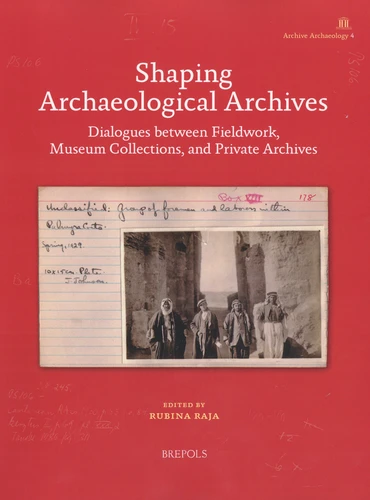
Shaping Archaeological Archives. Dialogues between Fieldwork, Museum Collections, and Private Archives
Par :Formats :
- Paiement en ligne :
- Livraison à domicile ou en point Mondial Relay estimée à partir du 7 octobreCet article sera commandé chez un fournisseur et vous sera envoyé 23 jours après la date de votre commande.
- Retrait Click and Collect en magasin gratuit
- Nombre de pages424
- FormatGrand Format
- PrésentationBroché
- Poids1.745 kg
- Dimensions22,0 cm × 28,0 cm × 3,0 cm
- ISBN978-2-503-60564-7
- EAN9782503605647
- Date de parution01/01/2023
- CollectionArchive Archaelogy
- ÉditeurBrepols
Résumé
Archaeology as a discipline has undergone significant changes over the past decades, in particular concerning best practices for how to handle the vast quantities of data that the discipline generates. Much of this data has often ended up in physical - or, more recently, digital - archives and been left untouched for years, despite containing critical information. But as many recent research projects explore how best to unleash the potential of these archives through publication, digitization, and improved accessibility, attention is now turning to the best practices that should underpin this trend.
In this volume, scholars turn their attention to how best to work with and shape archaeological archives, and what this means for the field as a whole. The majority of case studies here explore archaeological sites in the eastern Mediterranean and the Middle East, some of which are conflict zones today. However, the contributions also showcase more broadly the depth of research on archaeological archives as a whole, and offer reflections upon the relationship between archaeological practices and archival forms.
In so doing, the volume is able to offer a unique dialogue on best practices for the dissemination and synthetization of knowledge from archives more generally, whether physical or digital. Archive Archaeology. This is a dedicated series for the publication of monographs and edited collections exploring archival material relating to archaeological and historical materials across the centuries. The aims of this series are twofold.
Firstly, materials and excavation reports can be found in museums and archives around the world, but they are largely unpublished, frequently inaccessible, and typically united in scholarship, despite often holding crucial information on sites as well as objects. This series therefore aims to make this material available to readers for the first time, in combination with new research materials and wider discussions around the archive material.
Secondly, in the context of wider discussions about handling and disseminating cultural heritage, the series looks to promote research that explores the methodological and theoretical discussions around such material. Combined, these two approaches provide a unique forum for new research into archival and legacy data.
In this volume, scholars turn their attention to how best to work with and shape archaeological archives, and what this means for the field as a whole. The majority of case studies here explore archaeological sites in the eastern Mediterranean and the Middle East, some of which are conflict zones today. However, the contributions also showcase more broadly the depth of research on archaeological archives as a whole, and offer reflections upon the relationship between archaeological practices and archival forms.
In so doing, the volume is able to offer a unique dialogue on best practices for the dissemination and synthetization of knowledge from archives more generally, whether physical or digital. Archive Archaeology. This is a dedicated series for the publication of monographs and edited collections exploring archival material relating to archaeological and historical materials across the centuries. The aims of this series are twofold.
Firstly, materials and excavation reports can be found in museums and archives around the world, but they are largely unpublished, frequently inaccessible, and typically united in scholarship, despite often holding crucial information on sites as well as objects. This series therefore aims to make this material available to readers for the first time, in combination with new research materials and wider discussions around the archive material.
Secondly, in the context of wider discussions about handling and disseminating cultural heritage, the series looks to promote research that explores the methodological and theoretical discussions around such material. Combined, these two approaches provide a unique forum for new research into archival and legacy data.