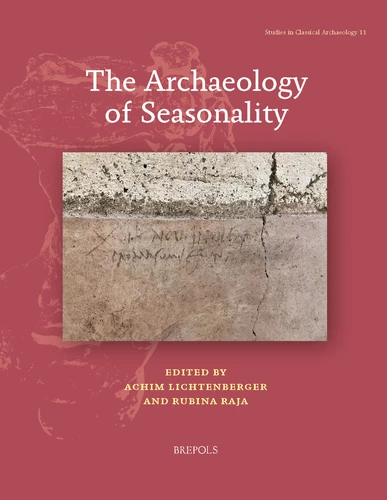
The Archaeology of Seasonality
Par : ,Formats :
- Paiement en ligne :
- Livraison à domicile ou en point Mondial Relay estimée à partir du 18 septembreCet article sera commandé chez un fournisseur et vous sera envoyé 25 jours après la date de votre commande.
- Retrait Click and Collect en magasin gratuit
- Nombre de pages431
- PrésentationBroché
- Poids1.82 kg
- Dimensions21,6 cm × 28,0 cm × 0,0 cm
- ISBN978-2-503-59395-1
- EAN9782503593951
- Date de parution27/08/2021
- CollectionStudies in classical archaeolo
- ÉditeurBrepols
Résumé
Seasonality — the passage of time and the change in the environment across the course of a year — is universally recognized as having a major impact on the relationship between people and nature, yet it has rarely been examined as a topic of study in its own right. In the past, many areas of life were constrained and furthered by the cycle of the seasons, from the production of crops and grazing of animals in rural areas, to dress and diet, urban development, and religious activities.
This volume offers an in-depth study of the impact of the seasons on the Graeco-Roman world, drawing on the archaeology of seasonality to open up new perspectives into the temporal dimension that underpins human activity, as well as offering fresh insights into space and spatial practices in the ancient world. The contributions draw on a wide range of archaeological evidence to explore the archaeology of the seasons from a number of different perspectives, including economic strategies, catastrophic events, religious activities, iconography, and the role of the individual.
Together, they offer a pioneering new approach to classical archaeology that it is hoped will further our understanding of the temporal dimensions to archaeological evidence.
This volume offers an in-depth study of the impact of the seasons on the Graeco-Roman world, drawing on the archaeology of seasonality to open up new perspectives into the temporal dimension that underpins human activity, as well as offering fresh insights into space and spatial practices in the ancient world. The contributions draw on a wide range of archaeological evidence to explore the archaeology of the seasons from a number of different perspectives, including economic strategies, catastrophic events, religious activities, iconography, and the role of the individual.
Together, they offer a pioneering new approach to classical archaeology that it is hoped will further our understanding of the temporal dimensions to archaeological evidence.