


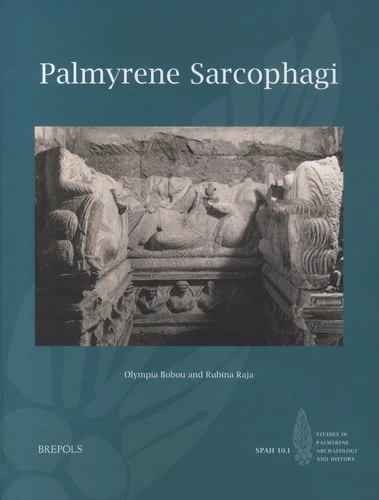
Palmyrene Sarcophagi. Pack en 2 volumes
Par : ,Formats :
- Paiement en ligne :
- Livraison à domicile ou en point Mondial Relay estimée à partir du 5 octobreCet article sera commandé chez un fournisseur et vous sera envoyé 23 jours après la date de votre commande.
- Retrait Click and Collect en magasin gratuit
- FormatGrand Format
- PrésentationPack
- Poids4.49 kg
- Dimensions22,0 cm × 29,0 cm × 7,0 cm
- ISBN978-2-503-60466-4
- EAN9782503604664
- Date de parution01/01/2023
- CollectionStudies in Palmyrene
- ÉditeurBrepols
Résumé
While the funerary portraiture of Palmyra is rightly world-renowned, up to now, the corpus of sarcophagi from the ancient city has received relatively little attention as a cohesive group in their own right. Comprising sarcophagi, banqueting reliefs and founder reliefs, as well as sarcophagus reliefs, most of these objects share a common iconographic motif, that of the banquet, although other scenes, mostly drawn from the daily life of the city's caravan leaders and their families, also appear.
The emphasis on the banqueting scene in particular reveals the crucial importance of dining in ancient Palmyrene society for the living, banquets were a marker of social standing and gave hosts a chance to honour the gods and offer an ephemeral benefaction to their fellow citizens, while for the dead, the banquet motif offered the opportunity for the entire family to be depicted together and showcase their wealth and sophistication, as well as their connections outside the city.
This single corpus of material gathered through the Palmyra Portrait Project, is presented in this beautifully illustrated two-volume monograph. Through careful analysis of the portraits, and the costumes and attribute choices that appear in these images, the authors explore how the sarcophagi were used by Palmyrenes to project an image of local pride, while at the same time participating in the visual cultures of the Roman and Parthian Empires between which their city was situated.
The oasis city of Palmyra in the Syrian Desert, a major centre of trade, politics, and religious practice in the ancient world, is today a world-wide renowned site. Although Palmyra was the focus of historical study and discussion from as early as the twelfth century, knowledge of the city's existence was then "lost" to the western world, before it was rediscovered by Europeans in the seventeenth century.
Since this time, scholarly interest in the city has continued to develop, and many aspects of the city's archaeology and history have been addressed. This cries provides a unique publication forum intended to draw together various international research traditions focusing on Palmyra and its surrounding region, and to make them available in one place for the first time. The series welcomes both monographs and edited collections addressing a variety of subjects connected with Palmyra, including archaeology, history, and historiographic and cultural heritage publications, as well as museum and collection studies.
The emphasis on the banqueting scene in particular reveals the crucial importance of dining in ancient Palmyrene society for the living, banquets were a marker of social standing and gave hosts a chance to honour the gods and offer an ephemeral benefaction to their fellow citizens, while for the dead, the banquet motif offered the opportunity for the entire family to be depicted together and showcase their wealth and sophistication, as well as their connections outside the city.
This single corpus of material gathered through the Palmyra Portrait Project, is presented in this beautifully illustrated two-volume monograph. Through careful analysis of the portraits, and the costumes and attribute choices that appear in these images, the authors explore how the sarcophagi were used by Palmyrenes to project an image of local pride, while at the same time participating in the visual cultures of the Roman and Parthian Empires between which their city was situated.
The oasis city of Palmyra in the Syrian Desert, a major centre of trade, politics, and religious practice in the ancient world, is today a world-wide renowned site. Although Palmyra was the focus of historical study and discussion from as early as the twelfth century, knowledge of the city's existence was then "lost" to the western world, before it was rediscovered by Europeans in the seventeenth century.
Since this time, scholarly interest in the city has continued to develop, and many aspects of the city's archaeology and history have been addressed. This cries provides a unique publication forum intended to draw together various international research traditions focusing on Palmyra and its surrounding region, and to make them available in one place for the first time. The series welcomes both monographs and edited collections addressing a variety of subjects connected with Palmyra, including archaeology, history, and historiographic and cultural heritage publications, as well as museum and collection studies.