Achim Lichtenberger and Rubina Raja are professors of classical archaeology and directors of the Danish-German Jerash Northwest Quarter Project. They are the founders of Jerash Papers.
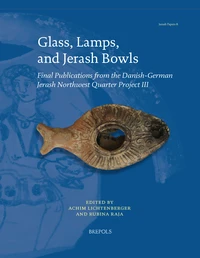
Hellenistic and Roman Gerasa. The Archaeology and History of a Decapolis City
Par : ,Formats :
- Paiement en ligne :
- Livraison à domicile ou en point Mondial Relay estimée à partir du 23 septembreCet article sera commandé chez un fournisseur et vous sera envoyé 10 jours après la date de votre commande.
- Retrait Click and Collect en magasin gratuit
- Nombre de pages390
- PrésentationBroché
- Poids1.63 kg
- Dimensions21,6 cm × 28,0 cm × 0,0 cm
- ISBN978-2-503-58504-8
- EAN9782503585048
- Date de parution15/09/2020
- CollectionJerash Papers
- ÉditeurBrepols
Résumé
The Graeco-Roman Decapolis city of Gerasa was a flourishing centre of population from the Late Hellenistic up to the Early Islamic period. It was also home to a vibrant ceramics industry. Kilns found throughout the city, with a concentration in the Hippodrome, suggest that Gerasa was in fact a mass-production centre in the Decapolis region over a number of centuries, manufacturing a vast array of material to suit the changing needs of daily life.
Drawing on finds yielded during excavations by the Danish-German Northwest Quarter Project and other archaeological projects, as well as the research undertaken within the Ceramics in Context project, this volume evaluates the pottery from Gerasa produced in the Late Hellenistic and Roman periods. Typology, development over time, and variations in the Gerasene pottery are explored, and rare examples of imported material are analysed in order to shed light both on the inner workings of the city, and on the networks that extended beyond Gerasa's walls.
The contributions gathered here examine the archaeology and history of Gerasa and assess ceramic remains alongside other finds from both the city and neighbouring urban centres. In doing so, they seek to contextualize this material in a broader cultural and historical context, and to improve our understanding of consumption, trading, and networks in the wider Decapolis area.
Drawing on finds yielded during excavations by the Danish-German Northwest Quarter Project and other archaeological projects, as well as the research undertaken within the Ceramics in Context project, this volume evaluates the pottery from Gerasa produced in the Late Hellenistic and Roman periods. Typology, development over time, and variations in the Gerasene pottery are explored, and rare examples of imported material are analysed in order to shed light both on the inner workings of the city, and on the networks that extended beyond Gerasa's walls.
The contributions gathered here examine the archaeology and history of Gerasa and assess ceramic remains alongside other finds from both the city and neighbouring urban centres. In doing so, they seek to contextualize this material in a broader cultural and historical context, and to improve our understanding of consumption, trading, and networks in the wider Decapolis area.
A propos de Achim Lichtenberger
126,60 €