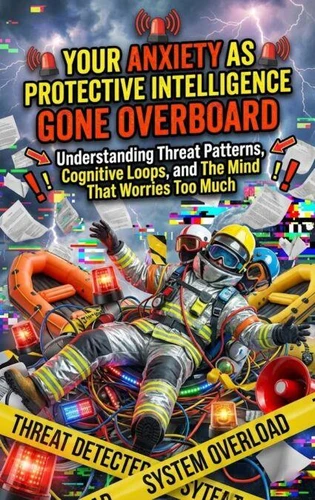
Your Anxiety as Protective Intelligence Gone Overboard. Understanding Threat Patterns, Cognitive Loops, and The Mind That Worries Too Much
Par :Formats :
Disponible dans votre compte client Decitre ou Furet du Nord dès validation de votre commande. Le format ePub est :
- Compatible avec une lecture sur My Vivlio (smartphone, tablette, ordinateur)
- Compatible avec une lecture sur liseuses Vivlio
- Pour les liseuses autres que Vivlio, vous devez utiliser le logiciel Adobe Digital Edition. Non compatible avec la lecture sur les liseuses Kindle, Remarkable et Sony
 , qui est-ce ?
Notre partenaire de plateforme de lecture numérique où vous retrouverez l'ensemble de vos ebooks gratuitement
Pour en savoir plus sur nos ebooks, consultez notre aide en ligne ici
C'est si simple ! Lisez votre ebook avec l'app Vivlio sur votre tablette, mobile ou ordinateur :

- Nombre de pages188
- FormatePub
- ISBN978-3-565-19902-0
- EAN9783565199020
- Date de parution27/01/2026
- Protection num.pas de protection
- Taille2 Mo
- Infos supplémentairesepub
- ÉditeurEmphaloz Publishing House
Résumé
Anxiety often feels like something we need to fix, manage, or overcome. But the anxious mind isn't malfunctioning-it's actually doing its job, just in overdrive.
This book explores anxiety not as a flaw in thinking, but as a pattern worth understanding. It examines how cognitive loops form, why certain thoughts feel so urgent and convincing, and how our threat detection system becomes overly sensitive.
Through the lens of cognitive awareness, it offers insight into rumination, catastrophic thinking, safety behaviors, and the exhausting cycle of mental vigilance. Rather than prescribing steps to eliminate anxiety, this book reframes it as information about how your mind protects you-and why that protection sometimes costs more than it offers. It explores the shift that happens when we work with anxious thoughts instead of against them, and how understanding cognitive patterns can change your relationship with worry itself. For anyone caught in cycles of overthinking, hypervigilance, or constant mental preparation, this book offers a compassionate look at why anxiety makes sense-and the clarity that emerges when you stop fighting your own mind.
Through the lens of cognitive awareness, it offers insight into rumination, catastrophic thinking, safety behaviors, and the exhausting cycle of mental vigilance. Rather than prescribing steps to eliminate anxiety, this book reframes it as information about how your mind protects you-and why that protection sometimes costs more than it offers. It explores the shift that happens when we work with anxious thoughts instead of against them, and how understanding cognitive patterns can change your relationship with worry itself. For anyone caught in cycles of overthinking, hypervigilance, or constant mental preparation, this book offers a compassionate look at why anxiety makes sense-and the clarity that emerges when you stop fighting your own mind.