Celeste Rowan is a nonfiction author known for writing reflective books on mindfulness, emotional resilience, and intentional living. Her calm and thoughtful approach blends psychology, philosophy, and everyday wisdom to help readers cultivate greater balance, clarity, and inner peace.
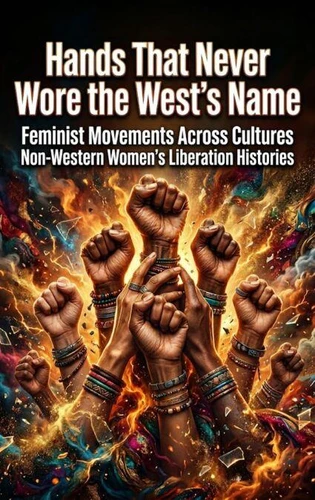
Hands That Never Wore the West's Name. Feminist Movements Across Cultures Non-Western Women's Liberation Histories
Par :Formats :
Disponible dans votre compte client Decitre ou Furet du Nord dès validation de votre commande. Le format ePub est :
- Compatible avec une lecture sur My Vivlio (smartphone, tablette, ordinateur)
- Compatible avec une lecture sur liseuses Vivlio
- Pour les liseuses autres que Vivlio, vous devez utiliser le logiciel Adobe Digital Edition. Non compatible avec la lecture sur les liseuses Kindle, Remarkable et Sony
 , qui est-ce ?
Notre partenaire de plateforme de lecture numérique où vous retrouverez l'ensemble de vos ebooks gratuitement
Pour en savoir plus sur nos ebooks, consultez notre aide en ligne ici
C'est si simple ! Lisez votre ebook avec l'app Vivlio sur votre tablette, mobile ou ordinateur :

- Nombre de pages171
- FormatePub
- ISBN978-3-565-46166-0
- EAN9783565461660
- Date de parution26/05/2026
- Protection num.pas de protection
- Taille2 Mo
- Infos supplémentairesepub
- ÉditeurEmphaloz Publishing House
Résumé
This book investigates how feminist energy and women's liberation have flowed through societies that rarely appear in Euro-American narratives, following the lives and struggles of women who organized, demonstrated, and wrote themselves into history outside the West. It traces movements from Asia, Africa, Latin America, and the Middle East, asking how women translated the language of liberation into local idioms of land, language, faith, and kinship, often resisting both colonial rule and patriarchal custom at once.
Drawing on oral histories, protest archives, and transnational feminist scholarship, the book reconstructs the mechanisms through which women built networks: peasant and laboring women linking land reform to childcare and wages; urban activists framing abortion, veiling, and workplace harassment as collective rather than private questions; and religious women reworking sacred texts to claim public space and legal equality.
It also examines how states and opposition movements alternately co-opted, silenced, or erased these women, exposing the ways that "tradition" and "authenticity" were wielded as tools to contain feminist demands while still allowing limited reforms when convenient.
It also examines how states and opposition movements alternately co-opted, silenced, or erased these women, exposing the ways that "tradition" and "authenticity" were wielded as tools to contain feminist demands while still allowing limited reforms when convenient.