SOLDES
Jusqu'à -70% sur une sélection d'articles*

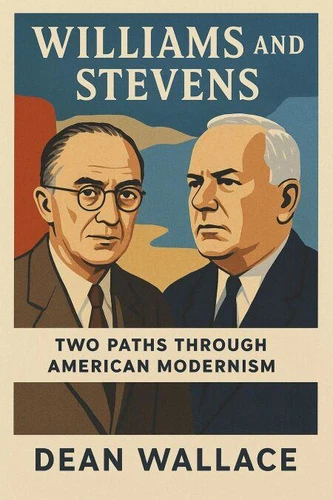
Williams and Stevens: Two Paths Through American Modernism
Par :Formats :
Disponible dans votre compte client Decitre ou Furet du Nord dès validation de votre commande. Le format ePub est :
- Compatible avec une lecture sur My Vivlio (smartphone, tablette, ordinateur)
- Compatible avec une lecture sur liseuses Vivlio
- Pour les liseuses autres que Vivlio, vous devez utiliser le logiciel Adobe Digital Edition. Non compatible avec la lecture sur les liseuses Kindle, Remarkable et Sony
 , qui est-ce ?
Notre partenaire de plateforme de lecture numérique où vous retrouverez l'ensemble de vos ebooks gratuitement
Pour en savoir plus sur nos ebooks, consultez notre aide en ligne ici
C'est si simple ! Lisez votre ebook avec l'app Vivlio sur votre tablette, mobile ou ordinateur :

- FormatePub
- ISBN8230909927
- EAN9798230909927
- Date de parution21/04/2025
- Protection num.pas de protection
- Infos supplémentairesepub
- ÉditeurIndependently Published
Résumé
"Williams and Stevens: Two Paths Through American Modernism" by Dean Wallace is an in-depth exploration of the distinct but interconnected literary journeys of two of the most influential poets of the 20th century. William Carlos Williams and Wallace Stevens, though both central figures in the American modernist movement, pursued divergent paths in their poetic expressions, tackling the complexities of modern life, fragmentation, and the role of imagination in an evolving world.
Williams's poetry, rooted in the physical and social landscapes of America, focused on the local, the everyday, and the concrete. Through works like Paterson and The Red Wheelbarrow, he captured the textures of ordinary life, embracing a realism that highlighted the beauty and significance found in the mundane. His search for a distinctly American voice sought to break free from European traditions and offer a voice to the struggles of the common people.
Stevens, on the other hand, took a more intellectual, philosophical approach to modernism. His poetry, including works like Harmonium and The Emperor of Ice-Cream, delved into the metaphysical, using the imagination as a lens to explore perception, reality, and the search for meaning in a fragmented world. Stevens's work was not concerned with the specificities of everyday life but with the abstract and the ideal, highlighting the mind's power to create order in a chaotic world.
This book traces their poetic careers, drawing comparisons between their thematic concerns, stylistic innovations, and their individual responses to the fragmented reality of the modern age. Through a critical examination of their key works, Dean Wallace provides insight into how Williams and Stevens redefined the role of the poet, offering distinct yet complementary ways of engaging with the world, the self, and the artistic process.
The book ultimately positions Williams and Stevens as two pillars of American modernism, offering profound contributions to the evolution of poetry in the 20th century.
Williams's poetry, rooted in the physical and social landscapes of America, focused on the local, the everyday, and the concrete. Through works like Paterson and The Red Wheelbarrow, he captured the textures of ordinary life, embracing a realism that highlighted the beauty and significance found in the mundane. His search for a distinctly American voice sought to break free from European traditions and offer a voice to the struggles of the common people.
Stevens, on the other hand, took a more intellectual, philosophical approach to modernism. His poetry, including works like Harmonium and The Emperor of Ice-Cream, delved into the metaphysical, using the imagination as a lens to explore perception, reality, and the search for meaning in a fragmented world. Stevens's work was not concerned with the specificities of everyday life but with the abstract and the ideal, highlighting the mind's power to create order in a chaotic world.
This book traces their poetic careers, drawing comparisons between their thematic concerns, stylistic innovations, and their individual responses to the fragmented reality of the modern age. Through a critical examination of their key works, Dean Wallace provides insight into how Williams and Stevens redefined the role of the poet, offering distinct yet complementary ways of engaging with the world, the self, and the artistic process.
The book ultimately positions Williams and Stevens as two pillars of American modernism, offering profound contributions to the evolution of poetry in the 20th century.
A propos de Dean Wallace


2,99 €


2,99 €


2,99 €

