SOLDES
Jusqu'à -70% sur une sélection d'articles*

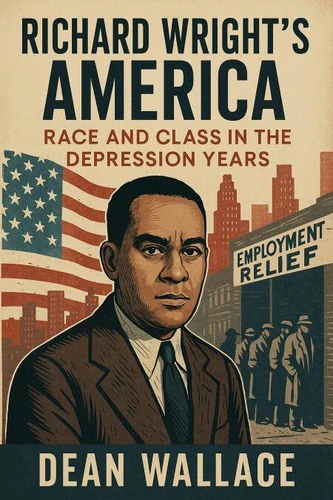
Richard Wright's America: Race and Class in the Depression Years
Par :Formats :
Disponible dans votre compte client Decitre ou Furet du Nord dès validation de votre commande. Le format ePub est :
- Compatible avec une lecture sur My Vivlio (smartphone, tablette, ordinateur)
- Compatible avec une lecture sur liseuses Vivlio
- Pour les liseuses autres que Vivlio, vous devez utiliser le logiciel Adobe Digital Edition. Non compatible avec la lecture sur les liseuses Kindle, Remarkable et Sony
 , qui est-ce ?
Notre partenaire de plateforme de lecture numérique où vous retrouverez l'ensemble de vos ebooks gratuitement
Pour en savoir plus sur nos ebooks, consultez notre aide en ligne ici
C'est si simple ! Lisez votre ebook avec l'app Vivlio sur votre tablette, mobile ou ordinateur :

- FormatePub
- ISBN8227710864
- EAN9798227710864
- Date de parution22/04/2025
- Protection num.pas de protection
- Infos supplémentairesepub
- ÉditeurBig Dog Books, LLC
Résumé
Richard Wright's America: Race and Class in the Depression Years by Dean Wallace delves into the profound intersection of race and class during one of America's most tumultuous periods-the Great Depression. This book offers an in-depth analysis of Richard Wright's exploration of racial oppression and economic disparity, set against the backdrop of the 1930s. Drawing from Wright's own experiences and literary works, particularly Native Son and Black Boy, Wallace examines how Wright's writings revealed the devastating impact of systemic racism and class stratification on African Americans.
The book contextualizes Wright's intellectual evolution, tracing his shift from an initial involvement in the Communist Party to his growing disillusionment with ideologies that failed to address the complexities of Black American life. By integrating historical events, social conditions, and Wright's personal experiences, this work highlights how the author critiqued the American system, including its failures to offer Black Americans any viable path to social and economic mobility.
With a focus on Wright's search for identity, his critiques of both racial and classist injustices, and his engagements with global anti-colonial movements, Wallace offers a fresh perspective on Wright's impact as a writer and intellectual. Through Wright's lens, the book brings to light the broader struggles for racial justice and equality during the Depression years, showing how Wright's vision of revolution resonated with, and ultimately inspired, future movements for Black liberation.
The book contextualizes Wright's intellectual evolution, tracing his shift from an initial involvement in the Communist Party to his growing disillusionment with ideologies that failed to address the complexities of Black American life. By integrating historical events, social conditions, and Wright's personal experiences, this work highlights how the author critiqued the American system, including its failures to offer Black Americans any viable path to social and economic mobility.
With a focus on Wright's search for identity, his critiques of both racial and classist injustices, and his engagements with global anti-colonial movements, Wallace offers a fresh perspective on Wright's impact as a writer and intellectual. Through Wright's lens, the book brings to light the broader struggles for racial justice and equality during the Depression years, showing how Wright's vision of revolution resonated with, and ultimately inspired, future movements for Black liberation.
A propos de Dean Wallace


2,99 €


2,99 €


2,99 €


