SOLDES
Jusqu'à -70% sur une sélection d'articles*

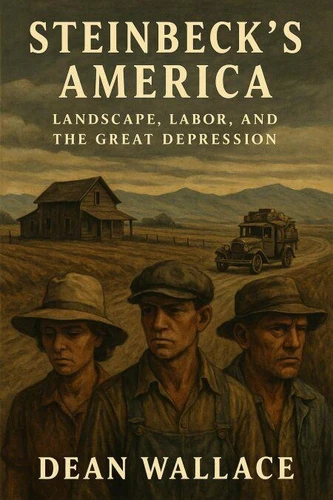
Steinbeck's America: Landscape, Labor, and the Great Depression
Par :Formats :
Disponible dans votre compte client Decitre ou Furet du Nord dès validation de votre commande. Le format ePub est :
- Compatible avec une lecture sur My Vivlio (smartphone, tablette, ordinateur)
- Compatible avec une lecture sur liseuses Vivlio
- Pour les liseuses autres que Vivlio, vous devez utiliser le logiciel Adobe Digital Edition. Non compatible avec la lecture sur les liseuses Kindle, Remarkable et Sony
 , qui est-ce ?
Notre partenaire de plateforme de lecture numérique où vous retrouverez l'ensemble de vos ebooks gratuitement
Pour en savoir plus sur nos ebooks, consultez notre aide en ligne ici
C'est si simple ! Lisez votre ebook avec l'app Vivlio sur votre tablette, mobile ou ordinateur :

- FormatePub
- ISBN8230250609
- EAN9798230250609
- Date de parution22/04/2025
- Protection num.pas de protection
- Infos supplémentairesepub
- ÉditeurIndependently Published
Résumé
"Steinbeck's America: Landscape, Labor, and the Great Depression" offers a deep and comprehensive exploration of the societal and environmental contexts that shaped John Steinbeck's works, particularly his masterpieces like The Grapes of Wrath and Of Mice and Men. Through this analysis, author Dean Wallace delves into Steinbeck's portrayal of the American landscape during the Great Depression, examining how the harsh realities of both nature and capitalism deeply impacted the lives of ordinary people.
The book focuses on the symbiotic relationship between the land and the labor of those who worked it, drawing connections between Steinbeck's characters and the real-life migrants of the 1930s, whose struggle for survival is at the heart of his stories. Wallace traces how Steinbeck's own experiences with migrant laborers, his immersion in the agrarian labor movements, and his deep empathy for the disenfranchised drove him to create narratives that both document and critique the socio-political systems of the time.
By analyzing Steinbeck's depiction of landscapes-both the physical geography of the American West and the socio-political landscapes of oppression-the book reveals how Steinbeck's work became a powerful critique of the American Dream, exposing the inequalities faced by migrant workers, the role of corporate agriculture, and the failures of the capitalist system. This work does not merely offer an analysis of Steinbeck's novels but also positions him as a literary figure deeply engaged with the pressing political issues of his time, including labor rights, economic injustice, and the pursuit of solidarity.
Through an in-depth examination of Steinbeck's portrayal of landscapes and labor, Wallace provides a fresh perspective on how the author's works remain profoundly relevant in understanding the ongoing struggles for social justice in America. "Steinbeck's America" offers readers an insightful historical lens into one of the most transformative periods in American literature and the life of one of its most iconic writers.
The book focuses on the symbiotic relationship between the land and the labor of those who worked it, drawing connections between Steinbeck's characters and the real-life migrants of the 1930s, whose struggle for survival is at the heart of his stories. Wallace traces how Steinbeck's own experiences with migrant laborers, his immersion in the agrarian labor movements, and his deep empathy for the disenfranchised drove him to create narratives that both document and critique the socio-political systems of the time.
By analyzing Steinbeck's depiction of landscapes-both the physical geography of the American West and the socio-political landscapes of oppression-the book reveals how Steinbeck's work became a powerful critique of the American Dream, exposing the inequalities faced by migrant workers, the role of corporate agriculture, and the failures of the capitalist system. This work does not merely offer an analysis of Steinbeck's novels but also positions him as a literary figure deeply engaged with the pressing political issues of his time, including labor rights, economic injustice, and the pursuit of solidarity.
Through an in-depth examination of Steinbeck's portrayal of landscapes and labor, Wallace provides a fresh perspective on how the author's works remain profoundly relevant in understanding the ongoing struggles for social justice in America. "Steinbeck's America" offers readers an insightful historical lens into one of the most transformative periods in American literature and the life of one of its most iconic writers.
A propos de Dean Wallace


2,99 €


2,99 €


2,99 €


