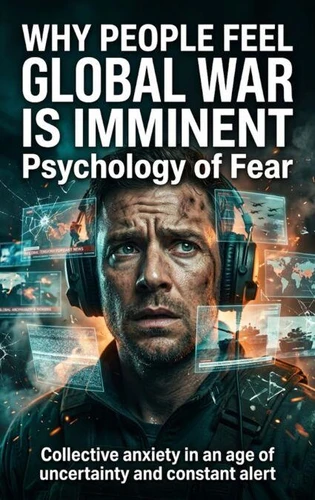
Why People Feel Global War Is Imminent: Psychology of Fear. Collective anxiety in an age of uncertainty and constant alert
Par :Formats :
Disponible dans votre compte client Decitre ou Furet du Nord dès validation de votre commande. Le format ePub est :
- Compatible avec une lecture sur My Vivlio (smartphone, tablette, ordinateur)
- Compatible avec une lecture sur liseuses Vivlio
- Pour les liseuses autres que Vivlio, vous devez utiliser le logiciel Adobe Digital Edition. Non compatible avec la lecture sur les liseuses Kindle, Remarkable et Sony
 , qui est-ce ?
Notre partenaire de plateforme de lecture numérique où vous retrouverez l'ensemble de vos ebooks gratuitement
Pour en savoir plus sur nos ebooks, consultez notre aide en ligne ici
C'est si simple ! Lisez votre ebook avec l'app Vivlio sur votre tablette, mobile ou ordinateur :

- Nombre de pages172
- FormatePub
- ISBN978-3-565-37198-3
- EAN9783565371983
- Date de parution30/03/2026
- Protection num.pas de protection
- Taille1 Mo
- Infos supplémentairesepub
- ÉditeurEmphaloz Publishing House
Résumé
Across newsfeeds and conversations, the sense that global conflict looms near has become an undercurrent of modern life. This book explores why societies in the 2020s seem trapped in a cycle of alarm and fatalism despite historically complex but measured geopolitical realities. It traces how fear spreads-from official warnings and online speculation to sensational headlines and social media amplifiers-creating emotional readiness for threats that may never arrive.
Drawing from psychology, history, and communication studies, it examines how human perception of risk evolved under continuous digital exposure and crisis-driven media. Instead of judging that fear, it reveals its roots in evolutionary survival patterns, cultural memory, and institutional distrust. By understanding these dynamics, readers grasp not only the triggers of collective panic but also the meaning behind humanity's enduring vigilance.
Drawing from psychology, history, and communication studies, it examines how human perception of risk evolved under continuous digital exposure and crisis-driven media. Instead of judging that fear, it reveals its roots in evolutionary survival patterns, cultural memory, and institutional distrust. By understanding these dynamics, readers grasp not only the triggers of collective panic but also the meaning behind humanity's enduring vigilance.