Author of English-language books fusing self-transformation, business tactics, and historical depth. Maya equips readers with tools from bygone eras to navigate and excel in today's landscape.
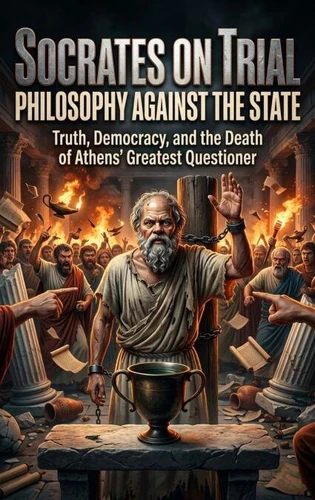
Socrates on Trial: Philosophy Against the State. Truth, Democracy, and the Death of Athens' Greatest Questioner
Par :Formats :
Disponible dans votre compte client Decitre ou Furet du Nord dès validation de votre commande. Le format ePub est :
- Compatible avec une lecture sur My Vivlio (smartphone, tablette, ordinateur)
- Compatible avec une lecture sur liseuses Vivlio
- Pour les liseuses autres que Vivlio, vous devez utiliser le logiciel Adobe Digital Edition. Non compatible avec la lecture sur les liseuses Kindle, Remarkable et Sony
 , qui est-ce ?
Notre partenaire de plateforme de lecture numérique où vous retrouverez l'ensemble de vos ebooks gratuitement
Pour en savoir plus sur nos ebooks, consultez notre aide en ligne ici
C'est si simple ! Lisez votre ebook avec l'app Vivlio sur votre tablette, mobile ou ordinateur :

- Nombre de pages201
- FormatePub
- ISBN978-3-565-32682-2
- EAN9783565326822
- Date de parution15/03/2026
- Protection num.pas de protection
- Taille2 Mo
- Infos supplémentairesepub
- ÉditeurEmphaloz Publishing House
Résumé
In 399 BCE, Athens put one of its own citizens to death-not for treason or violence, but for asking too many questions. Socrates, the man who believed that "the unexamined life is not worth living, " became the first philosopher tried and executed by a democracy in defense of itself. His trial marks one of the most enduring confrontations between free thought and political authority.
This book reconstructs the world behind that moment: a city still reeling from war, humiliation, and political turmoil.
Drawing on Plato's dialogues, Xenophon's accounts, and Athenian legal records, it traces how public suspicion turned philosophy into subversion, and dialectic into danger. Athens feared Socrates not for what he said, but for what his method revealed-a society unsure of its own values. By following the stages of the trial and the reasoning of his accusers, this narrative probes the tension between devotion to truth and loyalty to the state.
In Socrates' final words, Western philosophy inherited both a martyr and a mirror-reflecting the peril that awaits any democracy when it fears dissent more than ignorance.
Drawing on Plato's dialogues, Xenophon's accounts, and Athenian legal records, it traces how public suspicion turned philosophy into subversion, and dialectic into danger. Athens feared Socrates not for what he said, but for what his method revealed-a society unsure of its own values. By following the stages of the trial and the reasoning of his accusers, this narrative probes the tension between devotion to truth and loyalty to the state.
In Socrates' final words, Western philosophy inherited both a martyr and a mirror-reflecting the peril that awaits any democracy when it fears dissent more than ignorance.