SOLDES
Jusqu'à -70% sur une sélection d'articles*

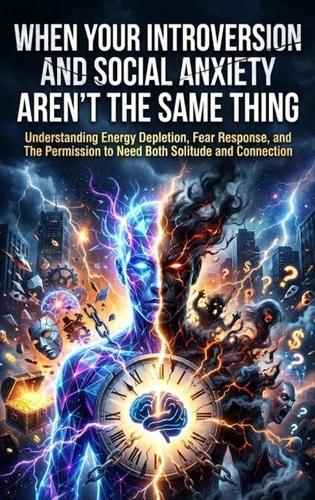
When Your Introversion and Social Anxiety Aren't the Same Thing. Understanding Energy Depletion, Fear Response, and The Permission to Need Both Solitude and Connection
Par :Formats :
Disponible dans votre compte client Decitre ou Furet du Nord dès validation de votre commande. Le format ePub est :
- Compatible avec une lecture sur My Vivlio (smartphone, tablette, ordinateur)
- Compatible avec une lecture sur liseuses Vivlio
- Pour les liseuses autres que Vivlio, vous devez utiliser le logiciel Adobe Digital Edition. Non compatible avec la lecture sur les liseuses Kindle, Remarkable et Sony
 , qui est-ce ?
Notre partenaire de plateforme de lecture numérique où vous retrouverez l'ensemble de vos ebooks gratuitement
Pour en savoir plus sur nos ebooks, consultez notre aide en ligne ici
C'est si simple ! Lisez votre ebook avec l'app Vivlio sur votre tablette, mobile ou ordinateur :

- Nombre de pages153
- FormatePub
- ISBN978-3-565-20346-8
- EAN9783565203468
- Date de parution28/01/2026
- Protection num.pas de protection
- Taille2 Mo
- Infos supplémentairesepub
- ÉditeurEmphaloz Publishing House
Résumé
Many introverts believe their struggle in social situations is simply part of their temperament-that needing alone time and feeling anxious around others are the same thing. But introversion is about energy management, while social anxiety is about threat perception. This book explores the space where these two experiences overlap and where they diverge, helping readers understand what comes from their natural wiring and what comes from learned fear.
It examines why introverts might develop social anxiety more readily, how nervous system sensitivity plays a role, and what happens when we confuse genuine preference for solitude with avoidance born from fear.
The book reframes social anxiety not as a personality flaw but as a protective response-one that made sense at some point but may no longer serve you. Rather than pushing readers toward extroversion or promising to eliminate anxiety, it offers insight into working with both your introversion and your nervous system. It explores questions like: What if you could want connection without forcing yourself to be someone you're not? What if solitude could be restorative instead of isolating? What if your caution in social spaces actually reflects intelligence, not inadequacy? For introverts who wonder if they're "broken" or "too sensitive, " this book offers validation, clarity, and a more compassionate way to understand themselves.
The book reframes social anxiety not as a personality flaw but as a protective response-one that made sense at some point but may no longer serve you. Rather than pushing readers toward extroversion or promising to eliminate anxiety, it offers insight into working with both your introversion and your nervous system. It explores questions like: What if you could want connection without forcing yourself to be someone you're not? What if solitude could be restorative instead of isolating? What if your caution in social spaces actually reflects intelligence, not inadequacy? For introverts who wonder if they're "broken" or "too sensitive, " this book offers validation, clarity, and a more compassionate way to understand themselves.
A propos de Celeste Rowan














8,99 €