Celeste Rowan is a nonfiction author known for writing reflective books on mindfulness, emotional resilience, and intentional living. Her calm and thoughtful approach blends psychology, philosophy, and everyday wisdom to help readers cultivate greater balance, clarity, and inner peace.
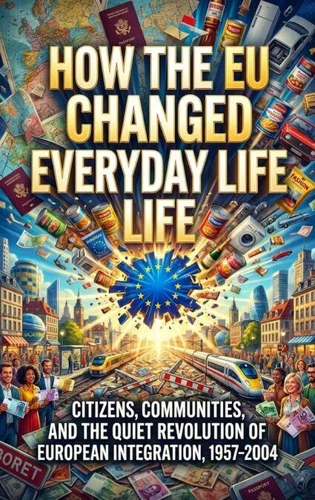
How the EU Changed Everyday Life. Citizens, Communities, and the Quiet Revolution of European Integration, 1957–2004
Par :Formats :
Disponible dans votre compte client Decitre ou Furet du Nord dès validation de votre commande. Le format ePub est :
- Compatible avec une lecture sur My Vivlio (smartphone, tablette, ordinateur)
- Compatible avec une lecture sur liseuses Vivlio
- Pour les liseuses autres que Vivlio, vous devez utiliser le logiciel Adobe Digital Edition. Non compatible avec la lecture sur les liseuses Kindle, Remarkable et Sony
 , qui est-ce ?
Notre partenaire de plateforme de lecture numérique où vous retrouverez l'ensemble de vos ebooks gratuitement
Pour en savoir plus sur nos ebooks, consultez notre aide en ligne ici
C'est si simple ! Lisez votre ebook avec l'app Vivlio sur votre tablette, mobile ou ordinateur :

- Nombre de pages182
- FormatePub
- ISBN978-3-565-27482-6
- EAN9783565274826
- Date de parution26/02/2026
- Protection num.pas de protection
- Taille2 Mo
- Infos supplémentairesepub
- ÉditeurEmphaloz Publishing House
Résumé
The European Union is most often discussed in the language of summits, treaties, and institutional architecture. But its most profound effects were felt not in Brussels conference rooms but in grocery stores, hospitals, university dormitories, border crossings, and kitchen tables across a continent. How the EU Changed Everyday Life shifts the lens from politics to people-tracing how five decades of integration quietly transformed the textures of ordinary European existence.
This book examines the lived experience of integration through six thematic threads: the freedom of movement that allowed a generation to study, work, and love across borders; the harmonization of consumer standards that reshaped markets and habits; the agricultural policies that restructured rural landscapes and farming communities; the regional development funds that rebuilt peripheral economies; the expansion eastward that brought post-communist societies into a new legal and cultural orbit; and the slow emergence of a European identity layered over-but never replacing-national belonging.
Drawing on oral histories, regional archives, and social surveys from across member states, this is a ground-level history of the world's most ambitious political experiment-told not through its architects, but through the people who lived it.