SOLDES
Jusqu'à -70% sur une sélection d'articles*

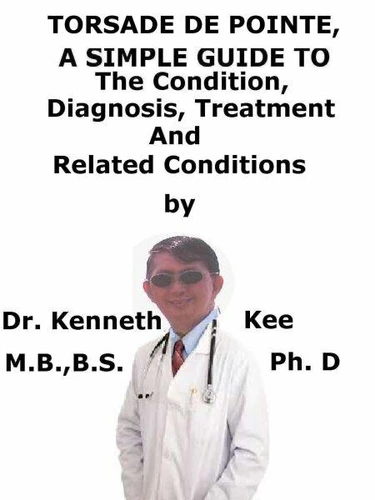
Torsade De Pointes, A Simple Guide To The Condition, Diagnosis, Treatment And Related Conditions
Par :Formats :
Disponible dans votre compte client Decitre ou Furet du Nord dès validation de votre commande. Le format ePub est :
- Compatible avec une lecture sur My Vivlio (smartphone, tablette, ordinateur)
- Compatible avec une lecture sur liseuses Vivlio
- Pour les liseuses autres que Vivlio, vous devez utiliser le logiciel Adobe Digital Edition. Non compatible avec la lecture sur les liseuses Kindle, Remarkable et Sony
 , qui est-ce ?
Notre partenaire de plateforme de lecture numérique où vous retrouverez l'ensemble de vos ebooks gratuitement
Pour en savoir plus sur nos ebooks, consultez notre aide en ligne ici
C'est si simple ! Lisez votre ebook avec l'app Vivlio sur votre tablette, mobile ou ordinateur :

- FormatePub
- ISBN978-1-370-70926-7
- EAN9781370709267
- Date de parution16/04/2018
- Protection num.pas de protection
- Infos supplémentairesepub
- ÉditeurEditeurs divers USA
Résumé
This book describes Torsade de pointes, Diagnosis and Treatment and Related DiseasesTorsades de pointes is a distinctive polymorphic ventricular tachycardia in which the QRS amplitude differs and the QRS complexes seem to twist around the baseline. Torsades de pointes (French for "twisting of the points") is linked with a prolonged QT interval, which may be congenital or acquiredTorsades de pointes is normally not sustained and ceases spontaneously but often returns unless the underlying cause is treated.
Torsades de pointes may deteriorate into sustained ventricular tachycardia or ventricular fibrillation. Torsades is a life-threatening arrhythmia and may manifest as sudden cardiac death in patients with structurally normal hearts. Risk factors1. Congenital long QT syndromes such as:a. Jervell and Lange-Nielsen syndrome, b. Romano-Ward syndrome.2. Acquired long QT syndromes:3. Acute myocardial infarction.4.
Drugs such as:a. Anti-arrhythmic agents of classes Ia and III, b. Erythromycin, c. Ketoconazole, d. Tricyclic antidepressants, e. Methadone, f. Antipsychotics5. Electrolyte disturbances:a. Hypo-kalemia, b. Hypo-magnesemia, c. Hypo-calcemia. Causes:TdP can be an after effect of a rare disorder called long QT syndrome. Most people with long QT syndrome are born with it, though the patient can get it later in life.
TdP episodes may be precipitated by the usage of certain drugs. These drugs are certain antibiotics and antipsychoticsTricyclic antidepressants may also put the patient at higher risk of TdP. Certain anti-arrhythmia drugs, which are planned to restore a healthy heart rhythm for people with arrhythmias, are also linked with TdP. Some of these anti-arrhythmic drugs are:1. Quinidine2. Procainamide3. DisopyramideSymptomsTdP can appear without warning.
The patient may rapidly feel the heart beating faster than normal, even when the patient is at rest. In some TdP episodes, the patient may feel light-headed and faint. In the most severe cases, TdP can induce cardiac arrest or sudden cardiac death.1. Nausea, 2. Pallor, 3. Cold sweats, 4. Shortness of breath and5. Chest painSigns:1. Rapid pulse, 2. Low or normal blood pressure3. Transient or prolonged loss of consciousnessDiagnosis:1.
ECG:a. Paroxysms of 5-20 beats, with a heart rate faster than 200 beats per minute. Sustained episodes are occasionally seen.b. Progressive change in polarity of QRS about the isoelectric line occurs with complete 180° twist of QRS complexes in 10-12 beats.c. Usually, a prolonged QT interval and pathological U waves are present. The most consistent indicator of QT prolongation is a QT of 0.60 seconds or longer or a QTc (corrected for heart rate) of 0.45 seconds or longer.
QTc = QT interval divided by the square root of the interval (in seconds) between the onset of each QRS complex (Bazett's formula).d. A short-long-short sequence between the R-R interval occurs before the trigger response.2. Electrolytes; hypo-kalemia, hypo-magnesemia and hypo-calcemia.3. Cardiac enzymes; assessment for myocardial ischemia.4. CXR and echocardiography, to rule out structural heart disease.
Short-term treatment1. Resuscitation2. Defibrillation:While torsades is often self-terminating, it may develop into ventricular fibrillation, which requires defibrillationIntravenous magnesium is the drug of choice for torsades de pointesIsoprenaline is used as an interim treatment until overdrive pacing can be startedTemporary transvenous pacing can be effective in stopping torsadeLong-term treatmentPatients without syncope, ventricular tachyarrhythmia should be monitoredPropranolol is usedPacemakerECG monitoringTABLE OF CONTENTIntroductionCh...
Torsades de pointes may deteriorate into sustained ventricular tachycardia or ventricular fibrillation. Torsades is a life-threatening arrhythmia and may manifest as sudden cardiac death in patients with structurally normal hearts. Risk factors1. Congenital long QT syndromes such as:a. Jervell and Lange-Nielsen syndrome, b. Romano-Ward syndrome.2. Acquired long QT syndromes:3. Acute myocardial infarction.4.
Drugs such as:a. Anti-arrhythmic agents of classes Ia and III, b. Erythromycin, c. Ketoconazole, d. Tricyclic antidepressants, e. Methadone, f. Antipsychotics5. Electrolyte disturbances:a. Hypo-kalemia, b. Hypo-magnesemia, c. Hypo-calcemia. Causes:TdP can be an after effect of a rare disorder called long QT syndrome. Most people with long QT syndrome are born with it, though the patient can get it later in life.
TdP episodes may be precipitated by the usage of certain drugs. These drugs are certain antibiotics and antipsychoticsTricyclic antidepressants may also put the patient at higher risk of TdP. Certain anti-arrhythmia drugs, which are planned to restore a healthy heart rhythm for people with arrhythmias, are also linked with TdP. Some of these anti-arrhythmic drugs are:1. Quinidine2. Procainamide3. DisopyramideSymptomsTdP can appear without warning.
The patient may rapidly feel the heart beating faster than normal, even when the patient is at rest. In some TdP episodes, the patient may feel light-headed and faint. In the most severe cases, TdP can induce cardiac arrest or sudden cardiac death.1. Nausea, 2. Pallor, 3. Cold sweats, 4. Shortness of breath and5. Chest painSigns:1. Rapid pulse, 2. Low or normal blood pressure3. Transient or prolonged loss of consciousnessDiagnosis:1.
ECG:a. Paroxysms of 5-20 beats, with a heart rate faster than 200 beats per minute. Sustained episodes are occasionally seen.b. Progressive change in polarity of QRS about the isoelectric line occurs with complete 180° twist of QRS complexes in 10-12 beats.c. Usually, a prolonged QT interval and pathological U waves are present. The most consistent indicator of QT prolongation is a QT of 0.60 seconds or longer or a QTc (corrected for heart rate) of 0.45 seconds or longer.
QTc = QT interval divided by the square root of the interval (in seconds) between the onset of each QRS complex (Bazett's formula).d. A short-long-short sequence between the R-R interval occurs before the trigger response.2. Electrolytes; hypo-kalemia, hypo-magnesemia and hypo-calcemia.3. Cardiac enzymes; assessment for myocardial ischemia.4. CXR and echocardiography, to rule out structural heart disease.
Short-term treatment1. Resuscitation2. Defibrillation:While torsades is often self-terminating, it may develop into ventricular fibrillation, which requires defibrillationIntravenous magnesium is the drug of choice for torsades de pointesIsoprenaline is used as an interim treatment until overdrive pacing can be startedTemporary transvenous pacing can be effective in stopping torsadeLong-term treatmentPatients without syncope, ventricular tachyarrhythmia should be monitoredPropranolol is usedPacemakerECG monitoringTABLE OF CONTENTIntroductionCh...
A propos de Kenneth Kee
4,49 €