SOLDES
Jusqu'à -70% sur une sélection d'articles*

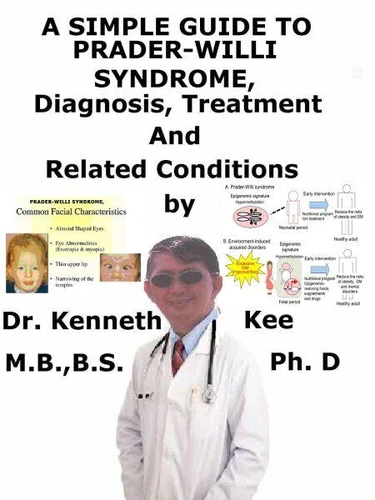
A Simple Guide to Prader-Willi Syndrome, Diagnosis, Treatment and Related Conditions
Par :Formats :
Disponible dans votre compte client Decitre ou Furet du Nord dès validation de votre commande. Le format ePub est :
- Compatible avec une lecture sur My Vivlio (smartphone, tablette, ordinateur)
- Compatible avec une lecture sur liseuses Vivlio
- Pour les liseuses autres que Vivlio, vous devez utiliser le logiciel Adobe Digital Edition. Non compatible avec la lecture sur les liseuses Kindle, Remarkable et Sony
 , qui est-ce ?
Notre partenaire de plateforme de lecture numérique où vous retrouverez l'ensemble de vos ebooks gratuitement
Pour en savoir plus sur nos ebooks, consultez notre aide en ligne ici
C'est si simple ! Lisez votre ebook avec l'app Vivlio sur votre tablette, mobile ou ordinateur :

- FormatePub
- ISBN8215403266
- EAN9798215403266
- Date de parution19/10/2023
- Protection num.pas de protection
- Infos supplémentairesepub
- ÉditeurWMG Publishing
Résumé
This book describes Prader-Willi Syndrome, Diagnosis and Treatment and Related DiseasesPrader-Willi Syndrome (PWS) is a complex genetic disorder that is present from birth and steadily affects the child to increase appetite and eat more food. Prader-Willi syndrome affects many parts of the body that leads to a number of physical, mental and behavioral disorders. In infants Prader-Willi syndrome is featured by:Weak muscle tone (hypo-tonia), Feeding disorders, Inadequate growth andDelayed development.
Starting in childhood, affected persons develop an insatiable appetite (hungry all the time), which leads to chronic overeating (hyper-phagia) and obesity. Some people with Prader-Willi syndrome, especially those with obesity, also develop diabetes type 2 (the most frequent form of diabetes). The patients also have:Poor muscle tone (hypo-tonia), Reduced mental ability andUnder-developed sex organs.
Signs and symptoms of Prader-Willi syndrome can differ among persons. Symptoms may slowly alter over time from childhood to adulthood. Patients with Prader-Willi syndrome have mild to moderate intellectual impairment and learning disorders. Behavioral disorders are frequent, such as temper outbursts, stubbornness, and compulsive behavior such as skin picking. Sleep abnormalities can also happen. Extra features of this disorder are:Typical facial features such as a narrow forehead, almond-shaped eyes, and a triangular mouth;Short stature; andSmall hands and feet.
Some people with Prader-Willi syndrome have abnormally fair skin and light-colored hair. Both men and women affected by Prader-Willi syndrome have underdeveloped genitals. Puberty is delayed or incomplete, and most affected persons are unable to have children (infertile). Prader-Willi syndrome is produced by the loss of function of genes in a particular area of chromosome 15. People normally inherit 1 copy of this chromosome from each parent.
The defect can happen in a few ways:The father's genes are missing on chromosome 15There are defects or problems with the father's genes on chromosome 15There are 2 copies of the mother's chromosome 15 and none from the fatherThese genetic alterations happen randomly. Some genes are activated only on the copy that is inherited from a person's father (paternal copy). This parent-specific gene activation is produced by a phenomenon called genomic imprinting.
Most patients with PWS are not inherited particularly those caused by changes in the genes:Deletion in the paternal chromosome 15 (70 % of cases) orMaternal uniparental disomy (25% of cases). These genetic changes happen as random episodes during the production of reproductive cells (eggs and sperm) or in early embryonic development. All infants and newborns with unexplained hypotonia and poor sucking function should be tested for Prader-Willi syndrome.
For confirmation of a diagnosis of Prader-Willi syndrome, specialized tests are needed such as DNA methylation tests and fluorescent in situ hybridization (FISH). Early diagnosis and a multidisciplinary approach to treatment are crucial in managing the symptoms and providing the best possible care and support for persons with Prader-Willi syndrome throughout their lives. There is no cure for Prader-Willi syndrome.
PWS patients may require lifelong help and monitoring to manage their health and well-being. Possible complications may include obesity-related health problems, developmental delays, behavioral and respiratory disorders. TABLE OF CONTENTIntroductionChapter 1 Prader-Willi SyndromeChapter 2 CauseChapter 3 SymptomsChapter 4 DiagnosisChapter 5 Treatment...
Starting in childhood, affected persons develop an insatiable appetite (hungry all the time), which leads to chronic overeating (hyper-phagia) and obesity. Some people with Prader-Willi syndrome, especially those with obesity, also develop diabetes type 2 (the most frequent form of diabetes). The patients also have:Poor muscle tone (hypo-tonia), Reduced mental ability andUnder-developed sex organs.
Signs and symptoms of Prader-Willi syndrome can differ among persons. Symptoms may slowly alter over time from childhood to adulthood. Patients with Prader-Willi syndrome have mild to moderate intellectual impairment and learning disorders. Behavioral disorders are frequent, such as temper outbursts, stubbornness, and compulsive behavior such as skin picking. Sleep abnormalities can also happen. Extra features of this disorder are:Typical facial features such as a narrow forehead, almond-shaped eyes, and a triangular mouth;Short stature; andSmall hands and feet.
Some people with Prader-Willi syndrome have abnormally fair skin and light-colored hair. Both men and women affected by Prader-Willi syndrome have underdeveloped genitals. Puberty is delayed or incomplete, and most affected persons are unable to have children (infertile). Prader-Willi syndrome is produced by the loss of function of genes in a particular area of chromosome 15. People normally inherit 1 copy of this chromosome from each parent.
The defect can happen in a few ways:The father's genes are missing on chromosome 15There are defects or problems with the father's genes on chromosome 15There are 2 copies of the mother's chromosome 15 and none from the fatherThese genetic alterations happen randomly. Some genes are activated only on the copy that is inherited from a person's father (paternal copy). This parent-specific gene activation is produced by a phenomenon called genomic imprinting.
Most patients with PWS are not inherited particularly those caused by changes in the genes:Deletion in the paternal chromosome 15 (70 % of cases) orMaternal uniparental disomy (25% of cases). These genetic changes happen as random episodes during the production of reproductive cells (eggs and sperm) or in early embryonic development. All infants and newborns with unexplained hypotonia and poor sucking function should be tested for Prader-Willi syndrome.
For confirmation of a diagnosis of Prader-Willi syndrome, specialized tests are needed such as DNA methylation tests and fluorescent in situ hybridization (FISH). Early diagnosis and a multidisciplinary approach to treatment are crucial in managing the symptoms and providing the best possible care and support for persons with Prader-Willi syndrome throughout their lives. There is no cure for Prader-Willi syndrome.
PWS patients may require lifelong help and monitoring to manage their health and well-being. Possible complications may include obesity-related health problems, developmental delays, behavioral and respiratory disorders. TABLE OF CONTENTIntroductionChapter 1 Prader-Willi SyndromeChapter 2 CauseChapter 3 SymptomsChapter 4 DiagnosisChapter 5 Treatment...
A propos de Kenneth Kee

4,49 €