A Simple Guide to Brugada Syndrome, Diagnosis, Treatment and Related Conditions
Par :Formats :
Disponible dans votre compte client Decitre ou Furet du Nord dès validation de votre commande. Le format ePub est :
- Compatible avec une lecture sur My Vivlio (smartphone, tablette, ordinateur)
- Compatible avec une lecture sur liseuses Vivlio
- Pour les liseuses autres que Vivlio, vous devez utiliser le logiciel Adobe Digital Edition. Non compatible avec la lecture sur les liseuses Kindle, Remarkable et Sony
 , qui est-ce ?
Notre partenaire de plateforme de lecture numérique où vous retrouverez l'ensemble de vos ebooks gratuitement
Pour en savoir plus sur nos ebooks, consultez notre aide en ligne ici
C'est si simple ! Lisez votre ebook avec l'app Vivlio sur votre tablette, mobile ou ordinateur :

- FormatePub
- ISBN8215932575
- EAN9798215932575
- Date de parution02/10/2023
- Protection num.pas de protection
- Infos supplémentairesepub
- ÉditeurWMG Publishing
Résumé
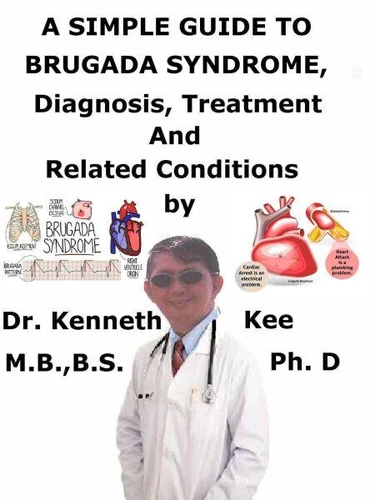
This book describes Brugada Syndrome, Diagnosis and Treatment and Related DiseasesI was watching an episode of Transplant Season 2 during which an Indian lawyer was seen at the emergency department for dizziness and tinnitus. He was suspected to have Meniere's disease but during his investigation time in the department he suddenly collapsed and his heart stopped. He was resuscitated back to life. His ECG showed signs of Brugada syndrome even though his heart appeared to be normal.
He was diagnosed as having Brugada syndrome and it was explained to him that it was not curable. While the doctors were talking to him, he suddenly had another heart arrest. This time they could not resuscitate him back to life. Brugada syndrome is a dangerous genetic heart disorder that can cause sudden cardiac arrestSudden cardiac death in young adults in Asia is found to be more common than in other populations.
A sudden death in a person about 40 years of age is always a tragedy. Nobody expects a young adult to die so suddenly and unexpectedly. Brugada syndrome is a rare genetic heart disorder that can lead to abnormal heart rhythms in the lower chambers of the heart and sudden cardiac arrest. Brugada syndrome is a rare but serious disorder that affects the way electrical signals pass through the heart inducing the heart to beat dangerously fast and suddenly stop.
The chances of this happening can be significantly reduced if it is diagnosed and treated. Brugada syndrome is normally caused by a faulty gene that is inherited by a child from a parent. A simple heart investigation (ECG) can be done to see if the person has it. The presence of the cardiac event is important. In many patients, cardiac arrest happens during sleep or rest. Brugada syndrome cases happening during physical activity are rare.
Sudden death normally happens around age 40. Brugada syndrome may be responsible for some instances of sudden infant death syndrome (SIDS), a major cause of death in babies younger than 1 year. Sudden infant death syndrome (SIDS) is featured by sudden and unexplained death, normally during sleep. Sudden unexplained nocturnal death syndrome is a disorder featured by unexpected cardiac arrest in young adults, normally at night during sleep.
It was first documented in Southeast Asian populations where it is a major cause of death. Brugada syndrome is primarily caused by genetic mutations that affect sodium channels in the heart muscle cells. It is an autosomal dominant genetic disorder, meaning that if one parent carries the mutation, there is a 50% chance of passing it on to their children. Most people diagnosed with Brugada syndrome do not experience any symptoms.
Those who do may have episodes of fainting, irregular heartbeats or sudden cardiac arrest. The symptoms may be abnormal heartbeat, chest pain or shortness of breath. These symptoms are often triggered by fever, certain medicines, alcohol consumption, or other factors that affect the heart's electrical activity. The ECG pattern of Brugada syndrome is characterized by a right bundle branch block (RBBB) pattern with coved ST-segment elevation over the right pre-cordial leads of V1-V3.
The main aim of treatment is to prevent life-threatening arrhythmias and sudden cardiac arrest. The treatment may involve medicines, an implantable cardioverter-defibrillator (ICD) or a procedure called catheter ablationAn ICD reduced the risk of sudden cardiac death by 90%. TABLE OF CONTENTIntroductionChapter 1 Brugada SyndromeChapter 2 CausesChapter 3 SymptomsChapter 4 DiagnosisChapter 5 TreatmentChapter 6 PrognosisChapter 7 Ventricular FibrillationChapter 8 Cardiac ArrestEpilogue
He was diagnosed as having Brugada syndrome and it was explained to him that it was not curable. While the doctors were talking to him, he suddenly had another heart arrest. This time they could not resuscitate him back to life. Brugada syndrome is a dangerous genetic heart disorder that can cause sudden cardiac arrestSudden cardiac death in young adults in Asia is found to be more common than in other populations.
A sudden death in a person about 40 years of age is always a tragedy. Nobody expects a young adult to die so suddenly and unexpectedly. Brugada syndrome is a rare genetic heart disorder that can lead to abnormal heart rhythms in the lower chambers of the heart and sudden cardiac arrest. Brugada syndrome is a rare but serious disorder that affects the way electrical signals pass through the heart inducing the heart to beat dangerously fast and suddenly stop.
The chances of this happening can be significantly reduced if it is diagnosed and treated. Brugada syndrome is normally caused by a faulty gene that is inherited by a child from a parent. A simple heart investigation (ECG) can be done to see if the person has it. The presence of the cardiac event is important. In many patients, cardiac arrest happens during sleep or rest. Brugada syndrome cases happening during physical activity are rare.
Sudden death normally happens around age 40. Brugada syndrome may be responsible for some instances of sudden infant death syndrome (SIDS), a major cause of death in babies younger than 1 year. Sudden infant death syndrome (SIDS) is featured by sudden and unexplained death, normally during sleep. Sudden unexplained nocturnal death syndrome is a disorder featured by unexpected cardiac arrest in young adults, normally at night during sleep.
It was first documented in Southeast Asian populations where it is a major cause of death. Brugada syndrome is primarily caused by genetic mutations that affect sodium channels in the heart muscle cells. It is an autosomal dominant genetic disorder, meaning that if one parent carries the mutation, there is a 50% chance of passing it on to their children. Most people diagnosed with Brugada syndrome do not experience any symptoms.
Those who do may have episodes of fainting, irregular heartbeats or sudden cardiac arrest. The symptoms may be abnormal heartbeat, chest pain or shortness of breath. These symptoms are often triggered by fever, certain medicines, alcohol consumption, or other factors that affect the heart's electrical activity. The ECG pattern of Brugada syndrome is characterized by a right bundle branch block (RBBB) pattern with coved ST-segment elevation over the right pre-cordial leads of V1-V3.
The main aim of treatment is to prevent life-threatening arrhythmias and sudden cardiac arrest. The treatment may involve medicines, an implantable cardioverter-defibrillator (ICD) or a procedure called catheter ablationAn ICD reduced the risk of sudden cardiac death by 90%. TABLE OF CONTENTIntroductionChapter 1 Brugada SyndromeChapter 2 CausesChapter 3 SymptomsChapter 4 DiagnosisChapter 5 TreatmentChapter 6 PrognosisChapter 7 Ventricular FibrillationChapter 8 Cardiac ArrestEpilogue
A propos de Kenneth Kee
4,49 €