SOLDES
Jusqu'à -70% sur une sélection d'articles*

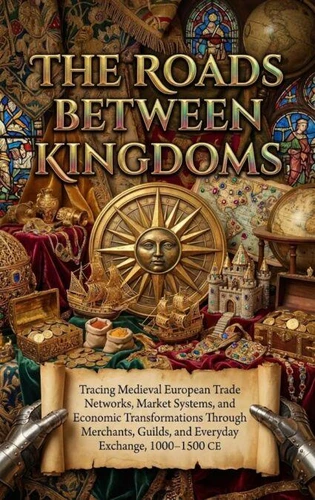
The Roads Between Kingdoms. Tracing Medieval European Trade Networks, Market Systems, and Economic Transformations Through Merchants, Guilds, and Everyday Exchange, 1000–1500 CE
Par :Formats :
Disponible dans votre compte client Decitre ou Furet du Nord dès validation de votre commande. Le format ePub est :
- Compatible avec une lecture sur My Vivlio (smartphone, tablette, ordinateur)
- Compatible avec une lecture sur liseuses Vivlio
- Pour les liseuses autres que Vivlio, vous devez utiliser le logiciel Adobe Digital Edition. Non compatible avec la lecture sur les liseuses Kindle, Remarkable et Sony
 , qui est-ce ?
Notre partenaire de plateforme de lecture numérique où vous retrouverez l'ensemble de vos ebooks gratuitement
Pour en savoir plus sur nos ebooks, consultez notre aide en ligne ici
C'est si simple ! Lisez votre ebook avec l'app Vivlio sur votre tablette, mobile ou ordinateur :

- Nombre de pages193
- FormatePub
- ISBN978-3-565-19868-9
- EAN9783565198689
- Date de parution27/01/2026
- Protection num.pas de protection
- Taille2 Mo
- Infos supplémentairesepub
- ÉditeurEmphaloz Publishing House
Résumé
Medieval Europe was not a static patchwork of isolated fiefdoms, but a continent connected by roads, rivers, and sea routes where wool from England met spices from the East, where silver mines in Bohemia financed Italian banking houses, and where a merchant's reputation in Bruges could determine credit access in Novgorod.
This book follows the flow of goods, people, and ideas across medieval trade networks, examining how economic relationships shaped political alliances, urban growth, and social mobility.
It traces the rise of merchant guilds and their regulation of quality and competition, the development of credit instruments that allowed transactions across vast distances, and the role of annual fairs in synchronizing regional economies. It explores how monastic estates managed agricultural surplus, how craft specialization transformed towns, and how taxation systems evolved to fund warfare and infrastructure. Drawing on account books, guild regulations, toll records, and archaeological evidence of trade goods, it reveals the practical mechanisms behind medieval commerce: how partnerships were structured to share risk, how disputes were arbitrated in merchant courts, how urban authorities balanced regulation with economic growth, and how plague, climate shifts, and warfare disrupted established patterns. This is an examination of how medieval people navigated scarcity, uncertainty, and opportunity-building economic institutions that would shape European development for centuries.
It traces the rise of merchant guilds and their regulation of quality and competition, the development of credit instruments that allowed transactions across vast distances, and the role of annual fairs in synchronizing regional economies. It explores how monastic estates managed agricultural surplus, how craft specialization transformed towns, and how taxation systems evolved to fund warfare and infrastructure. Drawing on account books, guild regulations, toll records, and archaeological evidence of trade goods, it reveals the practical mechanisms behind medieval commerce: how partnerships were structured to share risk, how disputes were arbitrated in merchant courts, how urban authorities balanced regulation with economic growth, and how plague, climate shifts, and warfare disrupted established patterns. This is an examination of how medieval people navigated scarcity, uncertainty, and opportunity-building economic institutions that would shape European development for centuries.
A propos de Talia Westcott














8,49 €
8,99 €