Talia Westcott is a nonfiction author who writes about modern culture, identity, and personal development. Her work combines reflective storytelling with practical insight, exploring how people adapt, grow, and find meaning in a fast-changing world.
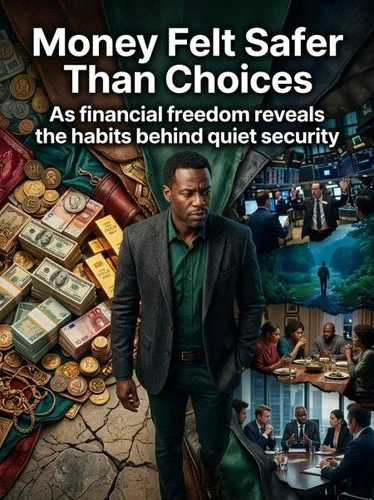
Money Felt Safer Than Choices. As financial freedom reveals the habits behind quiet security
Par :Formats :
Disponible dans votre compte client Decitre ou Furet du Nord dès validation de votre commande. Le format ePub est :
- Compatible avec une lecture sur My Vivlio (smartphone, tablette, ordinateur)
- Compatible avec une lecture sur liseuses Vivlio
- Pour les liseuses autres que Vivlio, vous devez utiliser le logiciel Adobe Digital Edition. Non compatible avec la lecture sur les liseuses Kindle, Remarkable et Sony
 , qui est-ce ?
Notre partenaire de plateforme de lecture numérique où vous retrouverez l'ensemble de vos ebooks gratuitement
Pour en savoir plus sur nos ebooks, consultez notre aide en ligne ici
C'est si simple ! Lisez votre ebook avec l'app Vivlio sur votre tablette, mobile ou ordinateur :

- Nombre de pages198
- FormatePub
- ISBN978-3-565-48108-8
- EAN9783565481088
- Date de parution06/06/2026
- Protection num.pas de protection
- Taille1 Mo
- Infos supplémentairesepub
- ÉditeurEmphaloz Publishing House
Résumé
Some people earn more and still feel one mistake away from losing themselves.
This book explores the emotional gap between looking rich and feeling free. Through the lens of money psychology, it looks at why spending often becomes reassurance, why saving can feel like control, and why financial freedom is less about impressive numbers than calm choices. It speaks to readers who have followed advice, tracked budgets, raised income, and still felt uneasy around money.
Instead of treating wealth as status, it follows the quieter human patterns beneath it: comparison, fear, patience, identity, and the need to prove we are doing well.
Real security often begins where performance ends. With grounded reflections on personal finance, habits, risk, and long-term thinking, it helps readers recognize how behavior shapes money more deeply than knowledge alone. Over time, wealth becomes less about having more to show and more about needing less from the world to feel steady.
Real security often begins where performance ends. With grounded reflections on personal finance, habits, risk, and long-term thinking, it helps readers recognize how behavior shapes money more deeply than knowledge alone. Over time, wealth becomes less about having more to show and more about needing less from the world to feel steady.