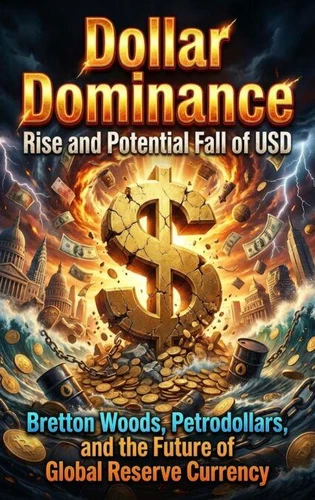
Dollar Dominance: Rise and Potential Fall of USD. Bretton Woods, Petrodollars, and the Future of Global Reserve Currency
Par :Formats :
Disponible dans votre compte client Decitre ou Furet du Nord dès validation de votre commande. Le format ePub est :
- Compatible avec une lecture sur My Vivlio (smartphone, tablette, ordinateur)
- Compatible avec une lecture sur liseuses Vivlio
- Pour les liseuses autres que Vivlio, vous devez utiliser le logiciel Adobe Digital Edition. Non compatible avec la lecture sur les liseuses Kindle, Remarkable et Sony
 , qui est-ce ?
Notre partenaire de plateforme de lecture numérique où vous retrouverez l'ensemble de vos ebooks gratuitement
Pour en savoir plus sur nos ebooks, consultez notre aide en ligne ici
C'est si simple ! Lisez votre ebook avec l'app Vivlio sur votre tablette, mobile ou ordinateur :

- Nombre de pages159
- FormatePub
- ISBN978-3-565-27975-3
- EAN9783565279753
- Date de parution27/02/2026
- Protection num.pas de protection
- Taille2 Mo
- Infos supplémentairesepub
- ÉditeurEmphaloz Publishing House
Résumé
When delegates from forty-four nations gathered at Bretton Woods in 1944, they built a monetary order around a single currency-the United States dollar. It was a decision shaped by wartime necessity and American economic supremacy, and it created a global financial architecture that has endured, adapted, and been repeatedly contested for eight decades. Dollar Dominance traces the full historical arc of that system: how it was constructed, how it survived the collapse of the gold standard in 1971, how the petrodollar arrangement extended its reach, and how it has been challenged by rival economies, regional currency blocs, and the emergence of digital finance.
Drawing on economic history, declassified treasury records, IMF documentation, and the testimony of policymakers and financial historians, each chapter examines a pivotal moment in the dollar's global career.
The book does not predict the dollar's demise-it examines the structural conditions that have sustained its dominance and the pressures that are genuinely testing it: rising US debt levels, de-dollarization initiatives among BRICS nations, sanctions-driven currency diversification, and the slow emergence of yuan-denominated trade settlement. This is a history of power expressed through monetary policy-how one nation's currency became the world's default language of commerce, debt, and reserves, and what it would mean, historically and practically, if that were to change.
For readers seeking to understand global finance through a serious historical lens, this book offers an essential foundation.
The book does not predict the dollar's demise-it examines the structural conditions that have sustained its dominance and the pressures that are genuinely testing it: rising US debt levels, de-dollarization initiatives among BRICS nations, sanctions-driven currency diversification, and the slow emergence of yuan-denominated trade settlement. This is a history of power expressed through monetary policy-how one nation's currency became the world's default language of commerce, debt, and reserves, and what it would mean, historically and practically, if that were to change.
For readers seeking to understand global finance through a serious historical lens, this book offers an essential foundation.