Nouveauté
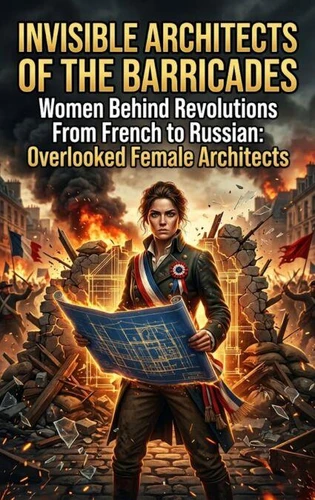
Invisible Architects of the Barricades. Women Behind Revolutions From French to Russian Overlooked Female Architects
Par :Formats :
Disponible dans votre compte client Decitre ou Furet du Nord dès validation de votre commande. Le format ePub est :
- Compatible avec une lecture sur My Vivlio (smartphone, tablette, ordinateur)
- Compatible avec une lecture sur liseuses Vivlio
- Pour les liseuses autres que Vivlio, vous devez utiliser le logiciel Adobe Digital Edition. Non compatible avec la lecture sur les liseuses Kindle, Remarkable et Sony
 , qui est-ce ?
Notre partenaire de plateforme de lecture numérique où vous retrouverez l'ensemble de vos ebooks gratuitement
Pour en savoir plus sur nos ebooks, consultez notre aide en ligne ici
C'est si simple ! Lisez votre ebook avec l'app Vivlio sur votre tablette, mobile ou ordinateur :

- Nombre de pages207
- FormatePub
- ISBN978-3-565-46169-1
- EAN9783565461691
- Date de parution26/05/2026
- Protection num.pas de protection
- Taille2 Mo
- Infos supplémentairesepub
- ÉditeurEmphaloz Publishing House
Résumé
This book investigates how women shaped the course of revolutions that routinely erase their names, tracing the lives of women who helped draft manifestos, march on palaces, and organize the streets from the French Revolution to the Russian upheavals of 1905 and 1917. It follows salon-hostesses, pamphleteers, rioters, and Bolshevik women cadres who turned bread riots into political insurrections, transforming everyday grievances into the language of rights, sovereignty, and class war.
Drawing on police files, prison memoirs, and party archives, the book reconstructs the mechanics of their participation: how women in Paris led the Women's March on Versailles, forcing the monarchy back to the capital; how radical women in Russia joined socialist circles, smuggled propaganda, and manned strikes and uprisings while the state punished them as both "subversives" and "unwomanly"; and how figures like Olympe de Gouges, Sophie de Condorcet, Inessa Armand, and Alexandra Kollontai laid ideological and organizational groundwork that later male-centric histories treated as footnotes.
It also examines how revolutionary governments and counter-revolutionary forces alike instrumentalized women's bodies and domestic roles, alternately praising them as "heroines of the street" and then silencing them when their demands for gender equality threatened the new order.
It also examines how revolutionary governments and counter-revolutionary forces alike instrumentalized women's bodies and domestic roles, alternately praising them as "heroines of the street" and then silencing them when their demands for gender equality threatened the new order.