Jonathan Hayes is an English-language author who writes about psychology, leadership, and personal development. His work blends thoughtful reflection with practical insight, exploring how mindset, resilience, and human behavior influence everyday decisions and long-term growth. His writing style is calm, engaging, and accessible, with a strong focus on clarity, self-awareness, and meaningful change.
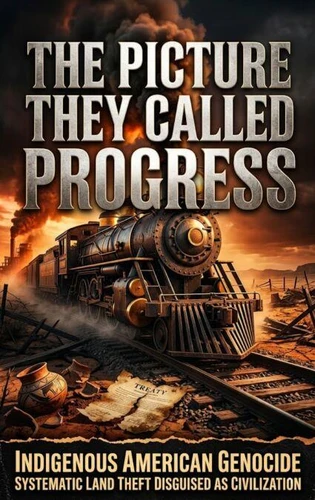
The Picture They Called Progress. Indigenous American Genocide Systematic Land Theft Disguised as Civilization
Par :Formats :
Disponible dans votre compte client Decitre ou Furet du Nord dès validation de votre commande. Le format ePub est :
- Compatible avec une lecture sur My Vivlio (smartphone, tablette, ordinateur)
- Compatible avec une lecture sur liseuses Vivlio
- Pour les liseuses autres que Vivlio, vous devez utiliser le logiciel Adobe Digital Edition. Non compatible avec la lecture sur les liseuses Kindle, Remarkable et Sony
 , qui est-ce ?
Notre partenaire de plateforme de lecture numérique où vous retrouverez l'ensemble de vos ebooks gratuitement
Pour en savoir plus sur nos ebooks, consultez notre aide en ligne ici
C'est si simple ! Lisez votre ebook avec l'app Vivlio sur votre tablette, mobile ou ordinateur :

- Nombre de pages227
- FormatePub
- ISBN978-3-565-46458-6
- EAN9783565464586
- Date de parution28/05/2026
- Protection num.pas de protection
- Taille2 Mo
- Infos supplémentairesepub
- ÉditeurEmphaloz Publishing House
Résumé
This book confronts the long arc of Indigenous American dispossession as a rolling genocide, where the seizure of land was progressively dressed in the language of treaties, reform, and "civilization." It traces how wars, removals, allotment laws, and resource extraction were framed as the advance of order and modernity, even as they shattered lifeways, killed entire communities, and relocated tribal nations into shrinking parcels of territory.
The narrative centers on three overlapping mechanisms: the legal and diplomatic veil of treaties that were routinely broken or twisted by the United States to open new territories; the institutionalized violence of removal-such as the Trail of Tears-and later the Dawes Act, which parcelized reservations into private plots and then sold "surplus" land to white settlers; and the cultural apparatus of "civilizing missions, " boarding schools, and missionary campaigns that turned the theft of territory into a moral project of assimilation.
Drawing on treaty records, government reports, and Native oral histories, the book shows how settler law and frontier violence combined to transform Indigenous homelands into extractive zones under the banner of progress.
Drawing on treaty records, government reports, and Native oral histories, the book shows how settler law and frontier violence combined to transform Indigenous homelands into extractive zones under the banner of progress.