Author
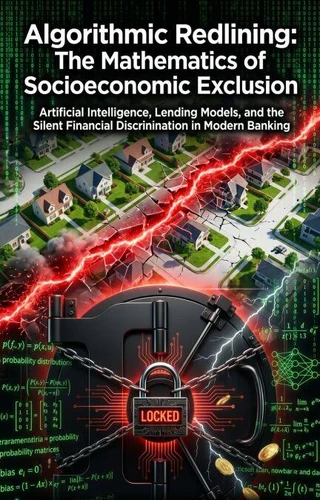
Algorithmic Redlining: The Mathematics of Socioeconomic Exclusion. Artificial Intelligence, Lending Models, and the Silent Financial Discrimination in Modern Banking
Par :Formats :
Disponible dans votre compte client Decitre ou Furet du Nord dès validation de votre commande. Le format ePub est :
- Compatible avec une lecture sur My Vivlio (smartphone, tablette, ordinateur)
- Compatible avec une lecture sur liseuses Vivlio
- Pour les liseuses autres que Vivlio, vous devez utiliser le logiciel Adobe Digital Edition. Non compatible avec la lecture sur les liseuses Kindle, Remarkable et Sony
 , qui est-ce ?
Notre partenaire de plateforme de lecture numérique où vous retrouverez l'ensemble de vos ebooks gratuitement
Pour en savoir plus sur nos ebooks, consultez notre aide en ligne ici
C'est si simple ! Lisez votre ebook avec l'app Vivlio sur votre tablette, mobile ou ordinateur :

- Nombre de pages168
- FormatePub
- ISBN978-3-565-41672-1
- EAN9783565416721
- Date de parution18/04/2026
- Protection num.pas de protection
- Taille874 Ko
- Infos supplémentairesepub
- ÉditeurEmphaloz Publishing House
Résumé
The global financial system has enthusiastically embraced artificial intelligence, marketing it as an entirely objective, bias-free mechanism for evaluating creditworthiness. We are led to believe that cold mathematical logic has finally eradicated the human prejudice that plagued historical banking. However, beneath the polished corporate surface, these highly complex neural networks are actively learning and aggressively amplifying our darkest societal flaws.
This investigation deconstructs the opaque, proprietary algorithms dictating modern economic mobility.
By feeding historical lending data into machine learning models, financial institutions are covertly recreating the discriminatory zoning practices of the twentieth century. Because these automated systems rely on proxy variables like zip codes, digital purchasing habits, and social web connections, they ruthlessly deny capital to marginalized communities without ever explicitly referencing race or class. Dismantle the dangerous illusion of algorithmic neutrality.
Uncover the terrifying legal loopholes protecting these predictive models from regulatory scrutiny, and understand the profound macroeconomic consequences of allowing unaccountable digital black boxes to unilaterally determine the financial destiny of millions.
By feeding historical lending data into machine learning models, financial institutions are covertly recreating the discriminatory zoning practices of the twentieth century. Because these automated systems rely on proxy variables like zip codes, digital purchasing habits, and social web connections, they ruthlessly deny capital to marginalized communities without ever explicitly referencing race or class. Dismantle the dangerous illusion of algorithmic neutrality.
Uncover the terrifying legal loopholes protecting these predictive models from regulatory scrutiny, and understand the profound macroeconomic consequences of allowing unaccountable digital black boxes to unilaterally determine the financial destiny of millions.