
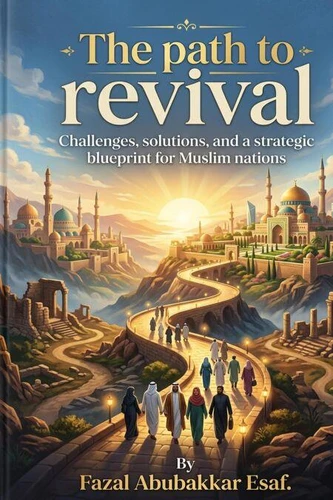
The Path to Revival
Par :Formats :
Disponible dans votre compte client Decitre ou Furet du Nord dès validation de votre commande. Le format ePub protégé est :
- Compatible avec une lecture sur My Vivlio (smartphone, tablette, ordinateur)
- Compatible avec une lecture sur liseuses Vivlio
- Pour les liseuses autres que Vivlio, vous devez utiliser le logiciel Adobe Digital Edition. Non compatible avec la lecture sur les liseuses Kindle, Remarkable et Sony
- Non compatible avec un achat hors France métropolitaine
 , qui est-ce ?
Notre partenaire de plateforme de lecture numérique où vous retrouverez l'ensemble de vos ebooks gratuitement
Pour en savoir plus sur nos ebooks, consultez notre aide en ligne ici
C'est si simple ! Lisez votre ebook avec l'app Vivlio sur votre tablette, mobile ou ordinateur :

- FormatePub
- ISBN8233822971
- EAN9798233822971
- Date de parution20/03/2026
- Protection num.Adobe DRM
- Infos supplémentairesepub
- ÉditeurLinda Balsamo
Résumé
The question of revival is not new, yet it has never been more urgent. Across the Muslim world, nations face a paradox: immense potential alongside persistent challenges. Rich in resources, history, and intellectual tradition, yet often hindered by internal fragmentation, weak institutions, and external pressures. This book was born from a simple but profound realization:decline is not inevitable, and revival is not accidental.
Revival requires clarity-an honest diagnosis of internal failures and external constraints. It demands courage-the willingness to confront uncomfortable truths. And above all, it requires strategy-a structured, actionable path forward. This work does not aim to assign blame, but to illuminate pathways. It does not seek to romanticize the past, but to learn from it. Nor does it propose abstract ideals without practical frameworks.
Instead, it offers a comprehensive blueprint-integrating governance, economics, education, social cohesion, and spirituality-toward a future defined by dignity, strength, and purpose.
Revival requires clarity-an honest diagnosis of internal failures and external constraints. It demands courage-the willingness to confront uncomfortable truths. And above all, it requires strategy-a structured, actionable path forward. This work does not aim to assign blame, but to illuminate pathways. It does not seek to romanticize the past, but to learn from it. Nor does it propose abstract ideals without practical frameworks.
Instead, it offers a comprehensive blueprint-integrating governance, economics, education, social cohesion, and spirituality-toward a future defined by dignity, strength, and purpose.
A propos de Fazal Abubakkar Esaf

4,49 €
4,49 €

4,49 €

3,49 €
Where the Pavement Ends
E-book
4,49 €

5,49 €

4,49 €

The Citizen's Guidebook
E-book
3,49 €

4,49 €

The Last Vigil
E-book
5,49 €

10,99 €

The Just State
E-book
7,99 €

Are You Really Free?
E-book
4,49 €

Beyond the Vote
E-book
4,49 €

3,99 €

The Complete Lawyer
E-book
7,99 €

Rape of Law
E-book
5,49 €

The Writer who Vanished
E-book
4,49 €

4,49 €