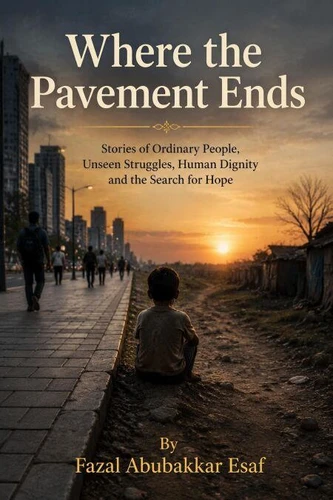
Where the Pavement Ends is a collection of stories about that hidden landscape. These stories travel between two worlds: the village and the city. One is rooted in soil, seasons, traditions, and memories. The other rises through concrete, ambition, migration, and constant change. Yet beneath their differences lies a common truth: people everywhere search for dignity, belonging, and hope. The village stories explore farmers facing uncertainty, families preserving traditions, children seeking education, and communities struggling between old ways and new realities.
The city stories examine migrants, workers, labourers, and forgotten individuals who build modern life while often remaining invisible within it. These are not stories only about poverty. They are stories about humanity. Hardship is present, but so is courage. Loss exists, but so does hope. Injustice appears, but so does the determination to survive and rebuild. The purpose of these stories is not to portray people only as victims of circumstances, but as individuals carrying dreams, wisdom, strength, and dignity.
The distance between dust and concrete is not merely geographical. It represents the journey of human beings navigating change, searching for opportunity, and trying to preserve their identity in a rapidly transforming world. Every person has a story. Many of those stories are never recorded. This book attempts to listen.
Where the Pavement Ends is a collection of stories about that hidden landscape. These stories travel between two worlds: the village and the city. One is rooted in soil, seasons, traditions, and memories. The other rises through concrete, ambition, migration, and constant change. Yet beneath their differences lies a common truth: people everywhere search for dignity, belonging, and hope. The village stories explore farmers facing uncertainty, families preserving traditions, children seeking education, and communities struggling between old ways and new realities.
The city stories examine migrants, workers, labourers, and forgotten individuals who build modern life while often remaining invisible within it. These are not stories only about poverty. They are stories about humanity. Hardship is present, but so is courage. Loss exists, but so does hope. Injustice appears, but so does the determination to survive and rebuild. The purpose of these stories is not to portray people only as victims of circumstances, but as individuals carrying dreams, wisdom, strength, and dignity.
The distance between dust and concrete is not merely geographical. It represents the journey of human beings navigating change, searching for opportunity, and trying to preserve their identity in a rapidly transforming world. Every person has a story. Many of those stories are never recorded. This book attempts to listen.


 , qui est-ce ?