
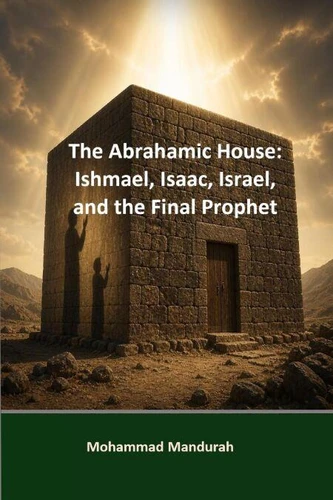
The Abrahamic House: Ishmael, Isaac, Israel, and the Final Prophet
Par :Formats :
Disponible dans votre compte client Decitre ou Furet du Nord dès validation de votre commande. Le format ePub est :
- Compatible avec une lecture sur My Vivlio (smartphone, tablette, ordinateur)
- Compatible avec une lecture sur liseuses Vivlio
- Pour les liseuses autres que Vivlio, vous devez utiliser le logiciel Adobe Digital Edition. Non compatible avec la lecture sur les liseuses Kindle, Remarkable et Sony
 , qui est-ce ?
Notre partenaire de plateforme de lecture numérique où vous retrouverez l'ensemble de vos ebooks gratuitement
Pour en savoir plus sur nos ebooks, consultez notre aide en ligne ici
C'est si simple ! Lisez votre ebook avec l'app Vivlio sur votre tablette, mobile ou ordinateur :

- FormatePub
- ISBN8235585867
- EAN9798235585867
- Date de parution26/05/2026
- Protection num.pas de protection
- Infos supplémentairesepub
- ÉditeurIoakim Ioakim
Résumé
Who truly inherits Abraham - and what does the Qur'an say about his family, covenant, and legacy?Abraham is honored by Jews, Christians, and Muslims. His name is invoked in scripture, prayer, pilgrimage, theology, and politics. Yet his legacy is also deeply contested. Was Abraham's inheritance based on bloodline, covenant, land, faith, or obedience? What roles do Ishmael and Isaac play in sacred history? Why does the Qur'an speak so often about the Children of Israel? And how does Muhammad ? complete the religion of Abraham?The Abrahamic House: Ishmael, Isaac, Israel, and the Final Prophet offers a clear and compelling Qur'an-centered study of Abraham's legacy.
It presents Abraham not as the possession of one tribe or later religious identity, but as the servant of God, the ?anif, the Muslim, and the imam appointed as a model for mankind. This book explores: Abraham's true religion - pure monotheism, surrender, and rejection of idolatry Ishmael and Isaac - two blessed sons, not rival claimants The Children of Israel - a people honored with prophets and scripture, yet held accountable by covenant Makkah and the Ka'bah - the Abrahamic sanctuary raised for the worship of God alone Pre-Islamic Arabia - a land that preserved Abrahamic memory while corrupting it with idolatry Muhammad ? - the fulfillment of Abraham and Ishmael's prayer and the final universal messenger Modern Abrahamic claims - including sacred land, chosenness, Zionism, Christian Zionism, and the moral limits of religious entitlement Written from within the Islamic worldview, The Abrahamic House argues that Abrahamic inheritance is not secured by ancestry alone.
Divine favor is a trust, not a guarantee. Scripture, lineage, land, and ritual only have meaning when joined to faith, justice, and obedience to God. The book rejects the idea that the Abrahamic story is a competition between Ishmael and Isaac, Arabs and Israelites, or one ethnic lineage against another. Instead, it shows that the Qur'an's central concern is deeper: taw?id against shirk, surrender against arrogance, justice against oppression, and obedience against rebellion.
At a time when Abraham's name is still used to support competing religious and political claims, this book calls readers back to the Qur'anic vision of Abraham: the man who broke idols, submitted to God, raised the Sacred House, and prayed for a final messenger who would teach, purify, and guide. A powerful study for readers interested in Islam, the Qur'an, Abrahamic religions, prophecy, the Ka'bah, the Children of Israel, and the final message of Muhammad ?.
It presents Abraham not as the possession of one tribe or later religious identity, but as the servant of God, the ?anif, the Muslim, and the imam appointed as a model for mankind. This book explores: Abraham's true religion - pure monotheism, surrender, and rejection of idolatry Ishmael and Isaac - two blessed sons, not rival claimants The Children of Israel - a people honored with prophets and scripture, yet held accountable by covenant Makkah and the Ka'bah - the Abrahamic sanctuary raised for the worship of God alone Pre-Islamic Arabia - a land that preserved Abrahamic memory while corrupting it with idolatry Muhammad ? - the fulfillment of Abraham and Ishmael's prayer and the final universal messenger Modern Abrahamic claims - including sacred land, chosenness, Zionism, Christian Zionism, and the moral limits of religious entitlement Written from within the Islamic worldview, The Abrahamic House argues that Abrahamic inheritance is not secured by ancestry alone.
Divine favor is a trust, not a guarantee. Scripture, lineage, land, and ritual only have meaning when joined to faith, justice, and obedience to God. The book rejects the idea that the Abrahamic story is a competition between Ishmael and Isaac, Arabs and Israelites, or one ethnic lineage against another. Instead, it shows that the Qur'an's central concern is deeper: taw?id against shirk, surrender against arrogance, justice against oppression, and obedience against rebellion.
At a time when Abraham's name is still used to support competing religious and political claims, this book calls readers back to the Qur'anic vision of Abraham: the man who broke idols, submitted to God, raised the Sacred House, and prayed for a final messenger who would teach, purify, and guide. A powerful study for readers interested in Islam, the Qur'an, Abrahamic religions, prophecy, the Ka'bah, the Children of Israel, and the final message of Muhammad ?.
A propos de Mohammad Mandurah

5,49 €

4,99 €
7,49 €