SOLDES
Jusqu'à -70% sur une sélection d'articles*

Nouveauté
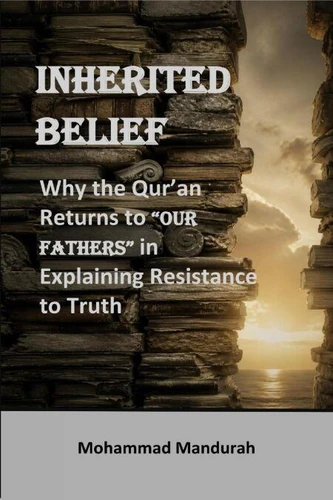
INHERITED BELIEF: Why the Qur’an Returns to “OUR FATHERS” in Explaining Resistance to Truth
Par :Formats :
Disponible dans votre compte client Decitre ou Furet du Nord dès validation de votre commande. Le format ePub est :
- Compatible avec une lecture sur My Vivlio (smartphone, tablette, ordinateur)
- Compatible avec une lecture sur liseuses Vivlio
- Pour les liseuses autres que Vivlio, vous devez utiliser le logiciel Adobe Digital Edition. Non compatible avec la lecture sur les liseuses Kindle, Remarkable et Sony
 , qui est-ce ?
Notre partenaire de plateforme de lecture numérique où vous retrouverez l'ensemble de vos ebooks gratuitement
Pour en savoir plus sur nos ebooks, consultez notre aide en ligne ici
C'est si simple ! Lisez votre ebook avec l'app Vivlio sur votre tablette, mobile ou ordinateur :

- FormatePub
- ISBN8233242717
- EAN9798233242717
- Date de parution25/06/2026
- Protection num.pas de protection
- Infos supplémentairesepub
- ÉditeurLinda Balsamo
Résumé
Why does the Qur'an so often describe resistant communities as saying: "We found our fathers upon a way, and we follow in their footsteps"? In Inherited Belief, Mohammad Mandurah offers a powerful and original answer: this recurring Qur'anic phrase is not just a reference to ancient ancestor worship or tribal conservatism. It is a profound explanation of how human beings resist truth. People do not reject revelation only because they lack evidence.
They often reject it because truth threatens their inherited world-its customs, loyalties, rituals, authorities, memories, status, and identity. Drawing on close Qur'anic reading, moral psychology, social theory, and comparative scripture, this book argues that "our fathers" names a much larger human pattern. It points not only to literal ancestors, but also to communal forebears, living religious authorities, institutional gatekeepers, racial identities, national myths, chosenness narratives, and modern ideological orthodoxies.
In each case, the same structure appears: what is inherited is treated as self-validating, and belonging becomes a shield against correction. Far from being anti-tradition, the Qur'an-Mandurah argues-is anti-self-certifying tradition. It does not reject continuity, memory, or legitimate authority. It rejects the corruption by which ancestry, office, race, nation, or inherited prestige are used to avoid accountability before God. This wide-ranging study explores: the Qur'an's repeated use of the phrase "our fathers" as a key explanation of resistance to revelation how inherited belief is formed through family, community, ritual, and socialization why people cling to familiar falsehood even when disruptive truth confronts them the role of priests, rabbis, scholars, clerics, and institutions as "living fathers" who preserve inherited legitimacy how identity becomes proof, and continuity becomes superiority racism as a modern form of inherited hierarchy and secularized ancestry national exceptionalism and corrupted chosenness as forms of collective self-certification the Qur'an's distinction between truthful continuity and inherited falsehood why modern societies still have "fathers" in the form of institutions, expert cultures, racial norms, national myths, and ideological orthodoxies At once scriptural, philosophical, and socially incisive, Inherited Belief offers a fresh lens on the Qur'an and a penetrating diagnosis of one of humanity's oldest moral temptations: to make what is ours into what must therefore be true. Perfect for readers interested in: Qur'anic studies Islamic theology religion and social theory authority and tradition race, nationalism, and identity comparative scripture belief formation and moral psychology Readers will discover:A challenging and deeply relevant argument about ancestry, authority, belonging, and the hidden ways inherited worlds resist truth.
They often reject it because truth threatens their inherited world-its customs, loyalties, rituals, authorities, memories, status, and identity. Drawing on close Qur'anic reading, moral psychology, social theory, and comparative scripture, this book argues that "our fathers" names a much larger human pattern. It points not only to literal ancestors, but also to communal forebears, living religious authorities, institutional gatekeepers, racial identities, national myths, chosenness narratives, and modern ideological orthodoxies.
In each case, the same structure appears: what is inherited is treated as self-validating, and belonging becomes a shield against correction. Far from being anti-tradition, the Qur'an-Mandurah argues-is anti-self-certifying tradition. It does not reject continuity, memory, or legitimate authority. It rejects the corruption by which ancestry, office, race, nation, or inherited prestige are used to avoid accountability before God. This wide-ranging study explores: the Qur'an's repeated use of the phrase "our fathers" as a key explanation of resistance to revelation how inherited belief is formed through family, community, ritual, and socialization why people cling to familiar falsehood even when disruptive truth confronts them the role of priests, rabbis, scholars, clerics, and institutions as "living fathers" who preserve inherited legitimacy how identity becomes proof, and continuity becomes superiority racism as a modern form of inherited hierarchy and secularized ancestry national exceptionalism and corrupted chosenness as forms of collective self-certification the Qur'an's distinction between truthful continuity and inherited falsehood why modern societies still have "fathers" in the form of institutions, expert cultures, racial norms, national myths, and ideological orthodoxies At once scriptural, philosophical, and socially incisive, Inherited Belief offers a fresh lens on the Qur'an and a penetrating diagnosis of one of humanity's oldest moral temptations: to make what is ours into what must therefore be true. Perfect for readers interested in: Qur'anic studies Islamic theology religion and social theory authority and tradition race, nationalism, and identity comparative scripture belief formation and moral psychology Readers will discover:A challenging and deeply relevant argument about ancestry, authority, belonging, and the hidden ways inherited worlds resist truth.
A propos de Mohammad Mandurah
5,49 €

4,99 €
7,49 €