
Nouveauté
Abraham in the Qur’an and the Torah
Par :Formats :
Disponible dans votre compte client Decitre ou Furet du Nord dès validation de votre commande. Le format ePub est :
- Compatible avec une lecture sur My Vivlio (smartphone, tablette, ordinateur)
- Compatible avec une lecture sur liseuses Vivlio
- Pour les liseuses autres que Vivlio, vous devez utiliser le logiciel Adobe Digital Edition. Non compatible avec la lecture sur les liseuses Kindle, Remarkable et Sony
 , qui est-ce ?
Notre partenaire de plateforme de lecture numérique où vous retrouverez l'ensemble de vos ebooks gratuitement
Pour en savoir plus sur nos ebooks, consultez notre aide en ligne ici
C'est si simple ! Lisez votre ebook avec l'app Vivlio sur votre tablette, mobile ou ordinateur :

- FormatePub
- ISBN8235001725
- EAN9798235001725
- Date de parution12/06/2026
- Protection num.pas de protection
- Infos supplémentairesepub
- ÉditeurIoakim Ioakim
Résumé
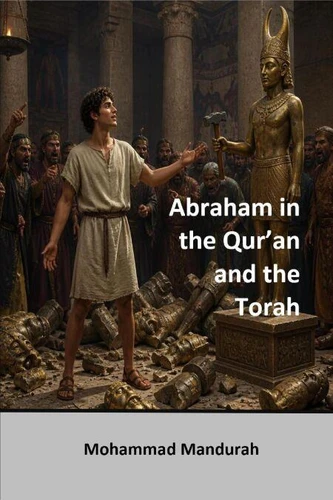
Few figures in sacred history are as revered-or as contested-as Abraham. Claimed by Jews, Christians, and Muslims alike, he stands at the intersection of revelation, memory, covenant, and identity. But how do the Torah and the Qur'an actually portray him? Is Abraham remembered primarily as patriarch, or as prophet?In Abraham in the Qur'an and the Torah, Mohammad Mandurah offers a bold and carefully argued comparative study of Abraham in Genesis and the Qur'an.
Written from an openly Islamic perspective, this book argues that Genesis preserves Abraham chiefly as the patriarch of promise, covenant, land, and descendants, while the Qur'an restores Abraham more fully as prophet, preacher of pure monotheism, challenger of idolatry, and universal guide for humanity. Rather than reducing one scripture to the other, the book examines how each text remembers Abraham according to its own theological purpose.
Genesis is read as an Israelite ancestral narrative, focused on covenantal continuity through Isaac and Jacob. The Qur'an, by contrast, re-centers Abraham around taw?id, submission, prayer, sacred worship, and prophetic mission. This study explores major questions such as: Why does Genesis emphasize lineage, covenant, and land? Why does the Qur'an highlight Abraham's struggle against idols, celestial worship, and tyranny? How do the two scriptures differ in their treatment of Ishmael, Isaac, Sarah, and Hajar? What is the significance of the sacrifice narrative in Genesis and the Qur'an? Why are Makkah, the Ka?bah, and the pilgrimage rites central to the Qur'anic Abraham? What does the Qur'an mean by Millat Ibrahim, the religion of Abraham? Who are Abraham's true heirs: those of bloodline, or those who follow his faith and submission? The book also argues that the Qur'an does not simply retell Abraham's story-it completes it.
According to this thesis, Genesis preserves Abraham with power and dignity, but selectively. The Qur'an confirms what Genesis preserves while restoring what it leaves less developed: Abraham's prophetic mission, his uncompromising monotheism, the restoration of Hajar and Ishmael, the sacred significance of the House in Makkah, and the moral meaning of covenant beyond ancestry alone. Scholarly yet accessible, theological yet comparative, this work engages Qur'anic studies, biblical theology, comparative scripture, and Abrahamic identity with seriousness and depth.
It will be of particular interest to readers of Islam, Judaism, Christianity, interfaith studies, and anyone seeking to understand how Abraham stands at the center of both shared memory and profound theological difference. A compelling reexamination of Abraham as both patriarch and prophet-and a bold case for recovering the complete Abraham.
Written from an openly Islamic perspective, this book argues that Genesis preserves Abraham chiefly as the patriarch of promise, covenant, land, and descendants, while the Qur'an restores Abraham more fully as prophet, preacher of pure monotheism, challenger of idolatry, and universal guide for humanity. Rather than reducing one scripture to the other, the book examines how each text remembers Abraham according to its own theological purpose.
Genesis is read as an Israelite ancestral narrative, focused on covenantal continuity through Isaac and Jacob. The Qur'an, by contrast, re-centers Abraham around taw?id, submission, prayer, sacred worship, and prophetic mission. This study explores major questions such as: Why does Genesis emphasize lineage, covenant, and land? Why does the Qur'an highlight Abraham's struggle against idols, celestial worship, and tyranny? How do the two scriptures differ in their treatment of Ishmael, Isaac, Sarah, and Hajar? What is the significance of the sacrifice narrative in Genesis and the Qur'an? Why are Makkah, the Ka?bah, and the pilgrimage rites central to the Qur'anic Abraham? What does the Qur'an mean by Millat Ibrahim, the religion of Abraham? Who are Abraham's true heirs: those of bloodline, or those who follow his faith and submission? The book also argues that the Qur'an does not simply retell Abraham's story-it completes it.
According to this thesis, Genesis preserves Abraham with power and dignity, but selectively. The Qur'an confirms what Genesis preserves while restoring what it leaves less developed: Abraham's prophetic mission, his uncompromising monotheism, the restoration of Hajar and Ishmael, the sacred significance of the House in Makkah, and the moral meaning of covenant beyond ancestry alone. Scholarly yet accessible, theological yet comparative, this work engages Qur'anic studies, biblical theology, comparative scripture, and Abrahamic identity with seriousness and depth.
It will be of particular interest to readers of Islam, Judaism, Christianity, interfaith studies, and anyone seeking to understand how Abraham stands at the center of both shared memory and profound theological difference. A compelling reexamination of Abraham as both patriarch and prophet-and a bold case for recovering the complete Abraham.
A propos de Mohammad Mandurah


4,99 €

7,49 €