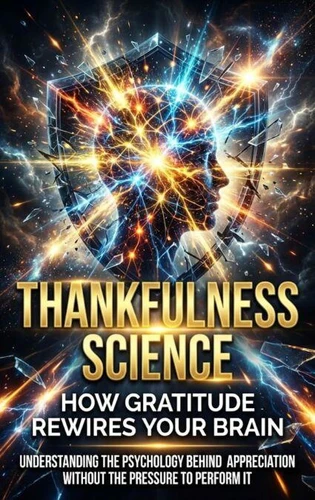
Thankfulness Science: How Gratitude Rewires Your Brain. Understanding the Psychology Behind Appreciation Without the Pressure to Perform It
Par :Formats :
Disponible dans votre compte client Decitre ou Furet du Nord dès validation de votre commande. Le format ePub est :
- Compatible avec une lecture sur My Vivlio (smartphone, tablette, ordinateur)
- Compatible avec une lecture sur liseuses Vivlio
- Pour les liseuses autres que Vivlio, vous devez utiliser le logiciel Adobe Digital Edition. Non compatible avec la lecture sur les liseuses Kindle, Remarkable et Sony
 , qui est-ce ?
Notre partenaire de plateforme de lecture numérique où vous retrouverez l'ensemble de vos ebooks gratuitement
Pour en savoir plus sur nos ebooks, consultez notre aide en ligne ici
C'est si simple ! Lisez votre ebook avec l'app Vivlio sur votre tablette, mobile ou ordinateur :

- Nombre de pages147
- FormatePub
- ISBN978-3-565-23789-0
- EAN9783565237890
- Date de parution11/02/2026
- Protection num.pas de protection
- Taille2 Mo
- Infos supplémentairesepub
- ÉditeurEmphaloz Publishing House
Résumé
Gratitude has become a cultural mandate-journals, affirmations, daily lists of things to be thankful for. The science backs it up: gratitude can shift perspective, improve wellbeing, even change neural patterns. But what happens when understanding the neuroscience of gratitude doesn't make it easier to feel? When knowing it's "good for you" creates more pressure than relief?
This book examines the psychology and neuroscience of gratitude while acknowledging the gap between intellectual understanding and lived experience.
It explores how the brain processes appreciation, why some people find gratitude naturally accessible while others struggle, and what blocks genuine thankfulness-unprocessed grief, chronic stress, the exhaustion of forcing positivity when life feels unrelenting. Through compassionate insight, it invites readers to reconsider gratitude not as a moral obligation or performance metric, but as a capacity that develops when conditions allow.
It looks at the difference between mandated appreciation and organic recognition, between gratitude as self-improvement tool and gratitude as spontaneous noticing. Rather than prescribing exercises or promising brain rewiring through sheer willpower, it opens space to explore what makes gratitude feel authentic versus performative. It examines the relief of removing pressure, the importance of honoring what's difficult first, and the possibility that gratitude emerges most naturally when we stop forcing it into place. For anyone interested in the science but tired of being told gratitude is simple, feeling guilty for not being more thankful, or wondering why knowing the research doesn't make the practice easier.
It explores how the brain processes appreciation, why some people find gratitude naturally accessible while others struggle, and what blocks genuine thankfulness-unprocessed grief, chronic stress, the exhaustion of forcing positivity when life feels unrelenting. Through compassionate insight, it invites readers to reconsider gratitude not as a moral obligation or performance metric, but as a capacity that develops when conditions allow.
It looks at the difference between mandated appreciation and organic recognition, between gratitude as self-improvement tool and gratitude as spontaneous noticing. Rather than prescribing exercises or promising brain rewiring through sheer willpower, it opens space to explore what makes gratitude feel authentic versus performative. It examines the relief of removing pressure, the importance of honoring what's difficult first, and the possibility that gratitude emerges most naturally when we stop forcing it into place. For anyone interested in the science but tired of being told gratitude is simple, feeling guilty for not being more thankful, or wondering why knowing the research doesn't make the practice easier.