Mae Collinsworth is a nonfiction author known for writing thoughtful books on relationships, emotional healing, and personal transformation. Her warm and approachable style blends psychological insight with everyday reflection, helping readers navigate change with greater confidence and self-understanding.
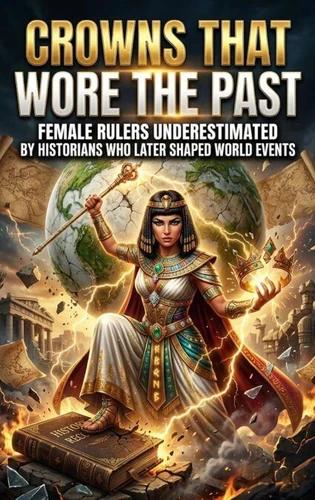
Crowns That Wore the Past. Female Rulers Underestimated by Historians Who Later Shaped World Events
Par :Formats :
Disponible dans votre compte client Decitre ou Furet du Nord dès validation de votre commande. Le format ePub est :
- Compatible avec une lecture sur My Vivlio (smartphone, tablette, ordinateur)
- Compatible avec une lecture sur liseuses Vivlio
- Pour les liseuses autres que Vivlio, vous devez utiliser le logiciel Adobe Digital Edition. Non compatible avec la lecture sur les liseuses Kindle, Remarkable et Sony
 , qui est-ce ?
Notre partenaire de plateforme de lecture numérique où vous retrouverez l'ensemble de vos ebooks gratuitement
Pour en savoir plus sur nos ebooks, consultez notre aide en ligne ici
C'est si simple ! Lisez votre ebook avec l'app Vivlio sur votre tablette, mobile ou ordinateur :

- Nombre de pages219
- FormatePub
- ISBN978-3-565-46171-4
- EAN9783565461714
- Date de parution26/05/2026
- Protection num.pas de protection
- Taille2 Mo
- Infos supplémentairesepub
- ÉditeurEmphaloz Publishing House
Résumé
This book investigates how female rulers quietly reshaped empires, frontiers, and belief systems despite being dismissed, caricatured, or erased by the historians who wrote after them. It follows queens, empresses, and sovereigns from different continents and centuries-women whose authority was often framed as "accidental, " "emotional, " or "corrupting, " even as their decisions stabilised dynasties, redirected wars, and re-oriented trade and law.
Drawing on diplomatic correspondence, chronicles, and court records, the book reconstructs how these women wielded power through marriage, inheritance, religious patronage, and military command, often ruling as regents or de facto principals while their male heirs or spouses were named as the formal sovereigns.
It also examines how later chroniclers-monks, courtiers, and colonial scholars-flattened them into figures of seduction, cruelty, or madness, turning complex political actors into cautionary tales that fit patriarchal templates of "dangerous" female rule.
It also examines how later chroniclers-monks, courtiers, and colonial scholars-flattened them into figures of seduction, cruelty, or madness, turning complex political actors into cautionary tales that fit patriarchal templates of "dangerous" female rule.