Mae Collinsworth is a nonfiction author known for writing thoughtful books on relationships, emotional healing, and personal transformation. Her warm and approachable style blends psychological insight with everyday reflection, helping readers navigate change with greater confidence and self-understanding.
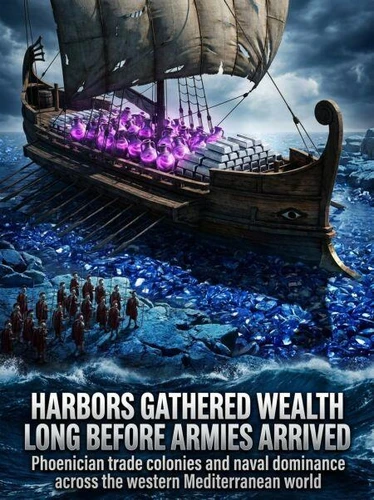
Harbors Gathered Wealth Long Before Armies Arrived. Phoenician trade colonies and naval dominance across the western Mediterranean world
Par :Formats :
Disponible dans votre compte client Decitre ou Furet du Nord dès validation de votre commande. Le format ePub est :
- Compatible avec une lecture sur My Vivlio (smartphone, tablette, ordinateur)
- Compatible avec une lecture sur liseuses Vivlio
- Pour les liseuses autres que Vivlio, vous devez utiliser le logiciel Adobe Digital Edition. Non compatible avec la lecture sur les liseuses Kindle, Remarkable et Sony
 , qui est-ce ?
Notre partenaire de plateforme de lecture numérique où vous retrouverez l'ensemble de vos ebooks gratuitement
Pour en savoir plus sur nos ebooks, consultez notre aide en ligne ici
C'est si simple ! Lisez votre ebook avec l'app Vivlio sur votre tablette, mobile ou ordinateur :

- Nombre de pages150
- FormatePub
- ISBN978-3-565-48621-2
- EAN9783565486212
- Date de parution08/06/2026
- Protection num.pas de protection
- Taille1 Mo
- Infos supplémentairesepub
- ÉditeurEmphaloz Publishing House
Résumé
Carthage rose to power through commerce before it became feared for war. Built upon Phoenician maritime traditions, the city transformed trade routes, coastal settlements, and naval infrastructure into one of the ancient world's most influential commercial empires.
This book examines the economic foundations of Carthaginian power across the western Mediterranean. Merchant fleets connected colonies from North Africa to Iberia, Sicily, and beyond, securing access to silver, tin, and maritime commodities essential to regional economies.
Harbors became centers of political coordination as trade wealth financed military expansion and diplomatic influence. The narrative also explores how Carthage balanced imperial control with commercial pragmatism. Colonial settlements often retained local autonomy while remaining integrated into larger networks of tribute, shipping, and naval defense. Economic strategy allowed Carthage to project influence without relying solely on territorial conquest. Carthage emerges here not simply as Rome's enemy, but as a sophisticated maritime civilization whose prosperity depended on controlling the movement of goods, information, and sea power across an interconnected Mediterranean world.
Harbors became centers of political coordination as trade wealth financed military expansion and diplomatic influence. The narrative also explores how Carthage balanced imperial control with commercial pragmatism. Colonial settlements often retained local autonomy while remaining integrated into larger networks of tribute, shipping, and naval defense. Economic strategy allowed Carthage to project influence without relying solely on territorial conquest. Carthage emerges here not simply as Rome's enemy, but as a sophisticated maritime civilization whose prosperity depended on controlling the movement of goods, information, and sea power across an interconnected Mediterranean world.