Mae Collinsworth is a nonfiction author known for writing thoughtful books on relationships, emotional healing, and personal transformation. Her warm and approachable style blends psychological insight with everyday reflection, helping readers navigate change with greater confidence and self-understanding.
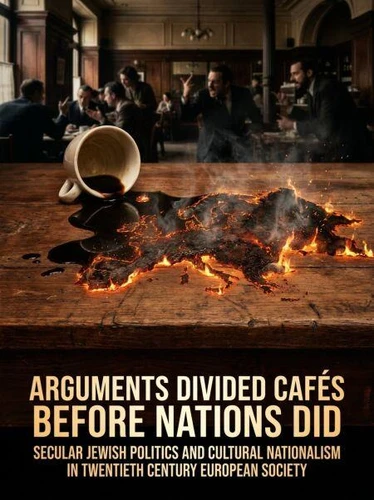
Arguments Divided Cafés Before Nations Did. Secular Jewish politics and cultural nationalism in twentieth century European society
Par :Formats :
Disponible dans votre compte client Decitre ou Furet du Nord dès validation de votre commande. Le format ePub est :
- Compatible avec une lecture sur My Vivlio (smartphone, tablette, ordinateur)
- Compatible avec une lecture sur liseuses Vivlio
- Pour les liseuses autres que Vivlio, vous devez utiliser le logiciel Adobe Digital Edition. Non compatible avec la lecture sur les liseuses Kindle, Remarkable et Sony
 , qui est-ce ?
Notre partenaire de plateforme de lecture numérique où vous retrouverez l'ensemble de vos ebooks gratuitement
Pour en savoir plus sur nos ebooks, consultez notre aide en ligne ici
C'est si simple ! Lisez votre ebook avec l'app Vivlio sur votre tablette, mobile ou ordinateur :

- Nombre de pages195
- FormatePub
- ISBN978-3-565-47782-1
- EAN9783565477821
- Date de parution05/06/2026
- Protection num.pas de protection
- Taille951 Ko
- Infos supplémentairesepub
- ÉditeurEmphaloz Publishing House
Résumé
Jewish political movements entering the twentieth century faced a profound question: should survival depend on integration into secular modern society, or on preserving a distinct cultural and national identity? The answer fractured intellectual circles already divided by socialism, nationalism, and the pressures of modern Europe.
This account examines the ideological conflicts between secular leftist assimilation movements and emerging forms of Jewish cultural nationalism during the early twentieth century.
Some activists believed universal socialist politics could overcome ethnic and religious divisions altogether. Others argued that assimilation risked dissolving historical continuity and communal autonomy in increasingly volatile political environments. The book reconstructs debates carried through newspapers, unions, cafés, universities, and political organizations across Europe. Philosophers, sociologists, and organizers shaped broader conversations concerning minority identity, state power, and collective belonging at a moment when nationalism was transforming the continent.
These internal divisions later influenced civil rights movements, protest strategies, and theories of political resistance far beyond Jewish communities themselves. The result is a study of modern ideology at the intersection of memory, migration, and competing visions of liberation.
Some activists believed universal socialist politics could overcome ethnic and religious divisions altogether. Others argued that assimilation risked dissolving historical continuity and communal autonomy in increasingly volatile political environments. The book reconstructs debates carried through newspapers, unions, cafés, universities, and political organizations across Europe. Philosophers, sociologists, and organizers shaped broader conversations concerning minority identity, state power, and collective belonging at a moment when nationalism was transforming the continent.
These internal divisions later influenced civil rights movements, protest strategies, and theories of political resistance far beyond Jewish communities themselves. The result is a study of modern ideology at the intersection of memory, migration, and competing visions of liberation.