SOLDES
Jusqu'à -70% sur une sélection d'articles*

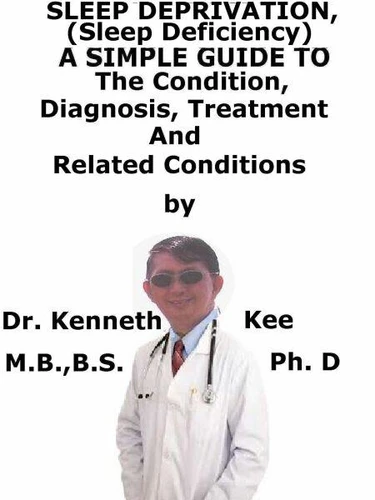
Sleep Deprivation (Sleep Deficiency), A Simple Guide To The Condition, Diagnosis, Treatment And Related Conditions
Par :Formats :
Disponible dans votre compte client Decitre ou Furet du Nord dès validation de votre commande. Le format ePub est :
- Compatible avec une lecture sur My Vivlio (smartphone, tablette, ordinateur)
- Compatible avec une lecture sur liseuses Vivlio
- Pour les liseuses autres que Vivlio, vous devez utiliser le logiciel Adobe Digital Edition. Non compatible avec la lecture sur les liseuses Kindle, Remarkable et Sony
 , qui est-ce ?
Notre partenaire de plateforme de lecture numérique où vous retrouverez l'ensemble de vos ebooks gratuitement
Pour en savoir plus sur nos ebooks, consultez notre aide en ligne ici
C'est si simple ! Lisez votre ebook avec l'app Vivlio sur votre tablette, mobile ou ordinateur :

- FormatePub
- ISBN978-1-370-81590-6
- EAN9781370815906
- Date de parution17/12/2016
- Protection num.pas de protection
- Infos supplémentairesepub
- ÉditeurEditeurs divers USA
Résumé
Sleep deprivation is the medical disorder of a person not having enough sleep. Sleep deficiency has a wider implication. It occurs if the person has one or more of:1. Not having enough sleep (sleep deprivation)2. Sleeping at the wrong time of day (out of sync with the body's natural clock)3. Not sleeping well or getting all of the different forms of sleep that the body needs4. Having a sleep disorder that prevents the person from getting enough sleep or induces poor quality sleepThe amount of sleep that a person requires differs from one person to anotherOn average most adults require about seven to eight hours of sleep each night to feel alert and well rested.
Teens require an average of about nine hours of sleep per nightChildren require nine hours of nightly sleep or more, depending on their age. About one in five adults are not able to get enough sleep. Acute sleep deprivation indicates a period of 1 night, or a few nights, without sleep or with curtailed sleep. Chronic sleep deprivation indicates a prolonged period of time (weeks, months, or years) without sleep or with curtailed sleep.
A chronic sleep-restricted state can induce:1. Fatigue, 2. Daytime sleepiness, 3. Clumsiness and4. Weight loss or weight gain. It adversely affects the normal functioning of the brain. Total sleep deprivation indicates the avoidance of sleep for a period of at least 1 night. Partial sleep deprivation, or sleep restriction, indicates the reduction in the total sleep time relative to one's normal baseline during a 24-hour period.
This is probably the most frequent type of sleep deprivation observed in daily life. Closely related to sleep deprivation is the process of sleep fragmentation which indicates the interruption of sleep by brief awakenings (arousals), such as environmental noise or physical discomfort, normally observed as an acceleration of the electroencephalographic (EEG) frequency for a few seconds. Sleep fragmentation is linked with a higher number in awakenings (arousals) and a decrease of deep (delta) sleep, and can increase daytime sleepinessThe diagnosis of sleep deprivation should take into account:1.
Miscellaneous sleep disorders, 2. NREM parasomnias, and3. Rapid eye movement (REM)-related parasomnias. One which is commonly done in medical sleep laboratory settings is the multiple sleep latency tests. The only best way for a patient to counter sleep deprivation is to increase nightly sleep time to satisfy his or her biological sleep requirement; there is no substitute for enough sleep.1. Go to bed at the same time nightly2.
Get adequate sleep3. Avoid napping4. Avoid stress, fatigue and sleep deprivation5. Moderate or relaxation exercises6. Avoid any kind of stimuli prior to bedtimeProper sleep hygiene should be maintained. Medical help should be sought if the patient feels that the patient is not sleeping wellTABLE OF CONTENTIntroductionChapter 1 Sleep Deprivation (Sleep Deficiency)Chapter 2 CausesChapter 3 SymptomsChapter 4 DiagnosisChapter 5 TreatmentChapter 6 PrognosisChapter 7 Sleep WalkingChapter 8 Nightmare DisorderEpilogue
Teens require an average of about nine hours of sleep per nightChildren require nine hours of nightly sleep or more, depending on their age. About one in five adults are not able to get enough sleep. Acute sleep deprivation indicates a period of 1 night, or a few nights, without sleep or with curtailed sleep. Chronic sleep deprivation indicates a prolonged period of time (weeks, months, or years) without sleep or with curtailed sleep.
A chronic sleep-restricted state can induce:1. Fatigue, 2. Daytime sleepiness, 3. Clumsiness and4. Weight loss or weight gain. It adversely affects the normal functioning of the brain. Total sleep deprivation indicates the avoidance of sleep for a period of at least 1 night. Partial sleep deprivation, or sleep restriction, indicates the reduction in the total sleep time relative to one's normal baseline during a 24-hour period.
This is probably the most frequent type of sleep deprivation observed in daily life. Closely related to sleep deprivation is the process of sleep fragmentation which indicates the interruption of sleep by brief awakenings (arousals), such as environmental noise or physical discomfort, normally observed as an acceleration of the electroencephalographic (EEG) frequency for a few seconds. Sleep fragmentation is linked with a higher number in awakenings (arousals) and a decrease of deep (delta) sleep, and can increase daytime sleepinessThe diagnosis of sleep deprivation should take into account:1.
Miscellaneous sleep disorders, 2. NREM parasomnias, and3. Rapid eye movement (REM)-related parasomnias. One which is commonly done in medical sleep laboratory settings is the multiple sleep latency tests. The only best way for a patient to counter sleep deprivation is to increase nightly sleep time to satisfy his or her biological sleep requirement; there is no substitute for enough sleep.1. Go to bed at the same time nightly2.
Get adequate sleep3. Avoid napping4. Avoid stress, fatigue and sleep deprivation5. Moderate or relaxation exercises6. Avoid any kind of stimuli prior to bedtimeProper sleep hygiene should be maintained. Medical help should be sought if the patient feels that the patient is not sleeping wellTABLE OF CONTENTIntroductionChapter 1 Sleep Deprivation (Sleep Deficiency)Chapter 2 CausesChapter 3 SymptomsChapter 4 DiagnosisChapter 5 TreatmentChapter 6 PrognosisChapter 7 Sleep WalkingChapter 8 Nightmare DisorderEpilogue
A propos de Kenneth Kee

4,49 €