SOLDES
Jusqu'à -70% sur une sélection d'articles*

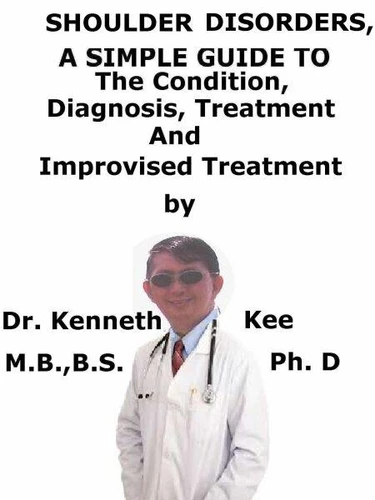
Shoulder Disorders, A Simple Guide To The condition, Diagnosis, Treatment And Improvised Treatment
Par :Formats :
Disponible dans votre compte client Decitre ou Furet du Nord dès validation de votre commande. Le format ePub est :
- Compatible avec une lecture sur My Vivlio (smartphone, tablette, ordinateur)
- Compatible avec une lecture sur liseuses Vivlio
- Pour les liseuses autres que Vivlio, vous devez utiliser le logiciel Adobe Digital Edition. Non compatible avec la lecture sur les liseuses Kindle, Remarkable et Sony
 , qui est-ce ?
Notre partenaire de plateforme de lecture numérique où vous retrouverez l'ensemble de vos ebooks gratuitement
Pour en savoir plus sur nos ebooks, consultez notre aide en ligne ici
C'est si simple ! Lisez votre ebook avec l'app Vivlio sur votre tablette, mobile ou ordinateur :

- FormatePub
- ISBN978-0-463-18099-0
- EAN9780463180990
- Date de parution30/08/2019
- Protection num.pas de protection
- Infos supplémentairesepub
- ÉditeurBluewater
Résumé
This book describes Shoulder Disorders, Diagnosis and Treatment and Improvised TreatmentThe shoulder is one of the largest joint and the most complicated joint in the body. The shoulder joint is formed where the humerus (upper arm bone) goes into the scapula (shoulder blade), like a ball and socket. Other important bones in the shoulder are:1. The acromion is a bony protrusion off the scapula.2. The clavicle (collarbone) joins the acromion in the acromioclavicular joint.3.
The coracoid process is a hook-like bony protrusion from the scapula. The shoulder has quite a few other important structures:1. The rotator cuff is a collection of muscles and tendons that enclose the shoulder, providing it support and permitting a wide range of motion.2. The bursa is a small sac of fluid that pads and protects the tendons of the rotator cuff.3. A cuff of cartilage called the labrum forms a cup for the ball-like head of the humerus to move into.4.
The humerus goes relatively loosely into the shoulder joint. This gives the shoulder a wide range of movement, but also makes it susceptible to injury. Shoulder DisordersFrozen shoulder:The inflammation forms in the shoulder that causes pain and stiffness. As a frozen shoulder continues, the movement in the shoulder can be severely restricted. Osteoarthritis:The frequent "wear-and-tear" arthritis that happens with aging.
The shoulder is less often involved by osteoarthritis than the knee. Rheumatoid arthritis:This is a form of autoimmune arthritis in which the immune system attacks the joints, producing inflammation and pain. Rheumatoid arthritis can involve any joint, including the shoulder. Gout:This is a form of arthritis in which crystals form in the joints, producing inflammation and pain. The shoulder is an infrequent location for gout.
Rotator cuff tear:A tear may happen in one of the muscles or tendons enclosing the top of the humerus. A rotator cuff tear may be a sudden injury, or happen from steady overuse. Shoulder impingement:The acromion (edge of the scapula) compresses on the rotator cuff when the arm is lifted. If inflammation or an injury in the rotator cuff is evident, this impingement produces pain. Shoulder dislocation:The humerus or one of the other bones in the shoulder slides out of position.
Raising the arm produces pain and a "popping" sensation if the shoulder is dislocated. Shoulder tendonitis:This is the inflammation of one of the tendons in the shoulder's rotator cuff. Shoulder bursitis:There is inflammation of the bursa, the small sac of fluid that rests over the rotator cuff tendons. Pain with the use of overhead activities or pressure on the upper, outer arm are symptoms. Labral tear:An accident or overuse can produce a tear in the labrum, the cuff of cartilage that covers the head of the humerus.
Most labral tears recover without needing surgery. Shoulder TestsMagnetic resonance imaging:An MRI scanner uses a high-powered magnet and a computer to produce high-resolution images of the shoulder and enclosing structures. Computed tomography:A CT scanner obtains multiple X-rays, and a computer produces detailed images of the shoulder. Shoulder X-ray:A plain X-ray film of the shoulder may reveal dislocation, osteoarthritis or a fracture of the humerus.
X-ray films may not diagnose muscle or tendon injuries. Shoulder TreatmentsShoulder surgery:Surgery is normally done to help make the shoulder joint more stable. Shoulder surgery may be done with arthroscopic (several small incisions) or open (large incision). Physical therapyPain reliefRICE therapySteroid injectionTABLE OF CONTENTIntroductionChapter 1 Shoulder DisordersChapter 2 Shoulder BursitisChapter 3 Shoulder Arthritis...
The coracoid process is a hook-like bony protrusion from the scapula. The shoulder has quite a few other important structures:1. The rotator cuff is a collection of muscles and tendons that enclose the shoulder, providing it support and permitting a wide range of motion.2. The bursa is a small sac of fluid that pads and protects the tendons of the rotator cuff.3. A cuff of cartilage called the labrum forms a cup for the ball-like head of the humerus to move into.4.
The humerus goes relatively loosely into the shoulder joint. This gives the shoulder a wide range of movement, but also makes it susceptible to injury. Shoulder DisordersFrozen shoulder:The inflammation forms in the shoulder that causes pain and stiffness. As a frozen shoulder continues, the movement in the shoulder can be severely restricted. Osteoarthritis:The frequent "wear-and-tear" arthritis that happens with aging.
The shoulder is less often involved by osteoarthritis than the knee. Rheumatoid arthritis:This is a form of autoimmune arthritis in which the immune system attacks the joints, producing inflammation and pain. Rheumatoid arthritis can involve any joint, including the shoulder. Gout:This is a form of arthritis in which crystals form in the joints, producing inflammation and pain. The shoulder is an infrequent location for gout.
Rotator cuff tear:A tear may happen in one of the muscles or tendons enclosing the top of the humerus. A rotator cuff tear may be a sudden injury, or happen from steady overuse. Shoulder impingement:The acromion (edge of the scapula) compresses on the rotator cuff when the arm is lifted. If inflammation or an injury in the rotator cuff is evident, this impingement produces pain. Shoulder dislocation:The humerus or one of the other bones in the shoulder slides out of position.
Raising the arm produces pain and a "popping" sensation if the shoulder is dislocated. Shoulder tendonitis:This is the inflammation of one of the tendons in the shoulder's rotator cuff. Shoulder bursitis:There is inflammation of the bursa, the small sac of fluid that rests over the rotator cuff tendons. Pain with the use of overhead activities or pressure on the upper, outer arm are symptoms. Labral tear:An accident or overuse can produce a tear in the labrum, the cuff of cartilage that covers the head of the humerus.
Most labral tears recover without needing surgery. Shoulder TestsMagnetic resonance imaging:An MRI scanner uses a high-powered magnet and a computer to produce high-resolution images of the shoulder and enclosing structures. Computed tomography:A CT scanner obtains multiple X-rays, and a computer produces detailed images of the shoulder. Shoulder X-ray:A plain X-ray film of the shoulder may reveal dislocation, osteoarthritis or a fracture of the humerus.
X-ray films may not diagnose muscle or tendon injuries. Shoulder TreatmentsShoulder surgery:Surgery is normally done to help make the shoulder joint more stable. Shoulder surgery may be done with arthroscopic (several small incisions) or open (large incision). Physical therapyPain reliefRICE therapySteroid injectionTABLE OF CONTENTIntroductionChapter 1 Shoulder DisordersChapter 2 Shoulder BursitisChapter 3 Shoulder Arthritis...
A propos de Kenneth Kee

4,49 €