Writer / Scholar/ Visiting Researcher at CARC: Shanghai International Studies University. Published over 50 books and counting, Authored co-authored, edited, and published hundreds of daily/ weekly/ monthly briefings, reports and analyses, peer-reviewed articles, monographs, and books, about MENA region and international politics.
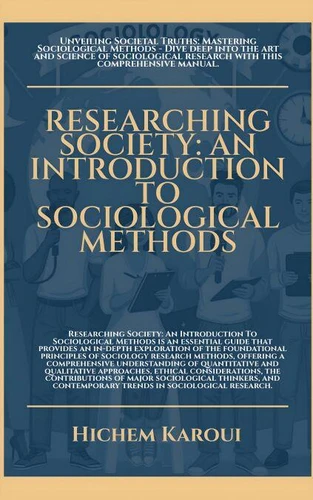
Researching Society: An Introduction To Sociological Methods. Sociology and Sociologists
Par :Formats :
Disponible dans votre compte client Decitre ou Furet du Nord dès validation de votre commande. Le format ePub protégé est :
- Compatible avec une lecture sur My Vivlio (smartphone, tablette, ordinateur)
- Compatible avec une lecture sur liseuses Vivlio
- Pour les liseuses autres que Vivlio, vous devez utiliser le logiciel Adobe Digital Edition. Non compatible avec la lecture sur les liseuses Kindle, Remarkable et Sony
- Non compatible avec un achat hors France métropolitaine
 , qui est-ce ?
Notre partenaire de plateforme de lecture numérique où vous retrouverez l'ensemble de vos ebooks gratuitement
Pour en savoir plus sur nos ebooks, consultez notre aide en ligne ici
C'est si simple ! Lisez votre ebook avec l'app Vivlio sur votre tablette, mobile ou ordinateur :

- FormatePub
- ISBN8230872320
- EAN9798230872320
- Date de parution23/11/2024
- Protection num.Adobe DRM
- Infos supplémentairesepub
- ÉditeurIndependently Published
Résumé
"Researching Society: An Introduction To Sociological Methods" emerges as a tour de force in methodological instruction, with Hichem Karoui masterfully unraveling the intricate tapestry of sociological research. Through ten meticulously crafted chapters, the book soars. What sets this work apart? First, its brilliant architectural framework. Starting with foundational concepts, it rockets through the research landscape - from basic principles to the dizzying complexities of big data analytics.
Simple, yet profound. The methodology sections pack a punch. Karoui deftly weaves quantitative precision with qualitative depth, creating a rich methodological mosaic that speaks to both newcomers and seasoned researchers. Digital tools and big data - those revolutionary forces reshaping modern sociology - get their due spotlight. But here's the kicker: ethical considerations aren't merely tacked on as an afterthought.
They're woven into the very fabric of the text, challenging researchers to think deeply about their responsibilities. Critical stuff. The book's treatment of theoretical frameworks deserves special mention. Drawing from intellectual giants while remaining remarkably accessible, it bridges the often-intimidating gap between theory and practice. Case studies punctuate the text, bringing abstract concepts crashing into reality with striking clarity.
In just 10 chapters, Karoui accomplishes something remarkable - a comprehensive research methods guide that's both rigorous and readable. Whether you're a wide-eyed undergraduate or a battle-hardened researcher, this book delivers. And it does so with uncommon grace. The data analysis section? Sharp as a tack. The research design chapter? Crystal clear. Each element builds upon the last, creating an intellectual scaffold that supports genuine understanding, not mere memorization.
Simple, yet profound. The methodology sections pack a punch. Karoui deftly weaves quantitative precision with qualitative depth, creating a rich methodological mosaic that speaks to both newcomers and seasoned researchers. Digital tools and big data - those revolutionary forces reshaping modern sociology - get their due spotlight. But here's the kicker: ethical considerations aren't merely tacked on as an afterthought.
They're woven into the very fabric of the text, challenging researchers to think deeply about their responsibilities. Critical stuff. The book's treatment of theoretical frameworks deserves special mention. Drawing from intellectual giants while remaining remarkably accessible, it bridges the often-intimidating gap between theory and practice. Case studies punctuate the text, bringing abstract concepts crashing into reality with striking clarity.
In just 10 chapters, Karoui accomplishes something remarkable - a comprehensive research methods guide that's both rigorous and readable. Whether you're a wide-eyed undergraduate or a battle-hardened researcher, this book delivers. And it does so with uncommon grace. The data analysis section? Sharp as a tack. The research design chapter? Crystal clear. Each element builds upon the last, creating an intellectual scaffold that supports genuine understanding, not mere memorization.
A propos de Hichem Karoui

N Like Necropolis
E-book
14,99 €

14,99 €

14,99 €





The Abraham Protocol
E-book
14,99 €

14,99 €

14,99 €



Le Protocole d'Abraham
E-book
14,99 €

Le cartouche d'Isis
E-book
14,99 €


The Cartouche of Isis
E-book
14,99 €

Le Ministère des Utopies
E-book
24,99 €

The Ministry of Utopias
E-book
24,99 €