SOLDES
Jusqu'à -70% sur une sélection d'articles*
Nouveauté
Aman and Empire: Diplomacy, Treaties, and the Rise of Early Islam (570–661 CE). Islam In The World
Par :Formats :
Disponible dans votre compte client Decitre ou Furet du Nord dès validation de votre commande. Le format ePub protégé est :
- Compatible avec une lecture sur My Vivlio (smartphone, tablette, ordinateur)
- Compatible avec une lecture sur liseuses Vivlio
- Pour les liseuses autres que Vivlio, vous devez utiliser le logiciel Adobe Digital Edition. Non compatible avec la lecture sur les liseuses Kindle, Remarkable et Sony
- Non compatible avec un achat hors France métropolitaine
 , qui est-ce ?
Notre partenaire de plateforme de lecture numérique où vous retrouverez l'ensemble de vos ebooks gratuitement
Pour en savoir plus sur nos ebooks, consultez notre aide en ligne ici
C'est si simple ! Lisez votre ebook avec l'app Vivlio sur votre tablette, mobile ou ordinateur :

- FormatePub
- ISBN8235767171
- EAN9798235767171
- Date de parution10/07/2026
- Protection num.Adobe DRM
- Infos supplémentairesepub
- ÉditeurIoakim Ioakim
Résumé
How did a fragmented tribal society become one of history's most sophisticated diplomatic civilisations?Aman and Empire offer a fresh interpretation of the formative decades of Islam by examining the political ideas, legal innovations, and diplomatic practices that transformed Arabia into a unified state and laid the foundations of an expanding empire. Rather than focusing exclusively on military campaigns, Hichem Karoui explores the institutions that made lasting political order possible: treaties, safe-conduct (aman), constitutional agreements, arbitration, religious pluralism, negotiated surrender, taxation, and the ethics of governance.
Beginning with the complex geopolitical landscape of Late Antiquity, where Byzantium, Sasanian Persia, and the Arab tribes interacted through alliances and commercial networks, the book follows the emergence of Islamic diplomacy from the Constitution of Medina through the Treaty of Hudaybiyyah, the conquest of Mecca, the caliphates of Abu Bakr, Umar, Uthman, and Ali, and the administration of newly incorporated territories from Jerusalem and Egypt to Syria, Iraq, and Persia.
Drawing upon classical Arabic chronicles alongside contemporary historical scholarship, Aman and Empire demonstrates that early Islamic statecraft was neither accidental nor purely military. It evolved through negotiation, legal innovation, pragmatic governance, and carefully crafted political institutions that balanced justice, security, and coexistence across remarkably diverse societies. Accessible to general readers while grounded in rigorous academic research, this volume offers a compelling contribution to the study of Islamic history, international relations, diplomacy, political thought, and comparative legal traditions.
Whether you are a student of Middle Eastern history, a scholar of diplomacy, or simply interested in understanding how one of the world's great civilisations developed its political philosophy, Aman and Empire provides a nuanced, evidence-based account of the diplomatic revolution that reshaped the seventh-century world and continues to influence international thought today.
Beginning with the complex geopolitical landscape of Late Antiquity, where Byzantium, Sasanian Persia, and the Arab tribes interacted through alliances and commercial networks, the book follows the emergence of Islamic diplomacy from the Constitution of Medina through the Treaty of Hudaybiyyah, the conquest of Mecca, the caliphates of Abu Bakr, Umar, Uthman, and Ali, and the administration of newly incorporated territories from Jerusalem and Egypt to Syria, Iraq, and Persia.
Drawing upon classical Arabic chronicles alongside contemporary historical scholarship, Aman and Empire demonstrates that early Islamic statecraft was neither accidental nor purely military. It evolved through negotiation, legal innovation, pragmatic governance, and carefully crafted political institutions that balanced justice, security, and coexistence across remarkably diverse societies. Accessible to general readers while grounded in rigorous academic research, this volume offers a compelling contribution to the study of Islamic history, international relations, diplomacy, political thought, and comparative legal traditions.
Whether you are a student of Middle Eastern history, a scholar of diplomacy, or simply interested in understanding how one of the world's great civilisations developed its political philosophy, Aman and Empire provides a nuanced, evidence-based account of the diplomatic revolution that reshaped the seventh-century world and continues to influence international thought today.
A propos de Hichem Karoui

The Abraham Protocol
E-book
14,99 €

14,99 €

14,99 €
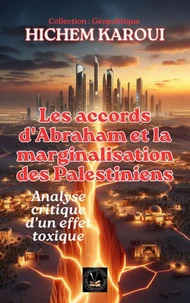


Le Protocole d'Abraham
E-book
16,99 €
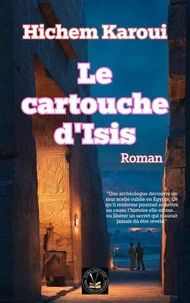
Le cartouche d'Isis
E-book
23,49 €

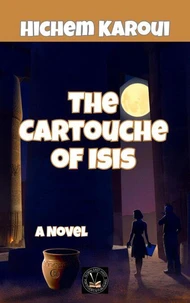
The Cartouche of Isis
E-book
24,49 €

Le Ministère des Utopies
E-book
24,99 €

The Ministry of Utopias
E-book
24,99 €