Writer / Scholar/ Visiting Researcher at CARC: Shanghai International Studies University. Published over 50 books and counting, Authored co-authored, edited, and published hundreds of daily/ weekly/ monthly briefings, reports and analyses, peer-reviewed articles, monographs, and books, about MENA region and international politics.
Nouveauté
N Like Necropolis
Par :Formats :
Disponible dans votre compte client Decitre ou Furet du Nord dès validation de votre commande. Le format ePub protégé est :
- Compatible avec une lecture sur My Vivlio (smartphone, tablette, ordinateur)
- Compatible avec une lecture sur liseuses Vivlio
- Pour les liseuses autres que Vivlio, vous devez utiliser le logiciel Adobe Digital Edition. Non compatible avec la lecture sur les liseuses Kindle, Remarkable et Sony
- Non compatible avec un achat hors France métropolitaine
 , qui est-ce ?
Notre partenaire de plateforme de lecture numérique où vous retrouverez l'ensemble de vos ebooks gratuitement
Pour en savoir plus sur nos ebooks, consultez notre aide en ligne ici
C'est si simple ! Lisez votre ebook avec l'app Vivlio sur votre tablette, mobile ou ordinateur :

- FormatePub
- ISBN8235893436
- EAN9798235893436
- Date de parution20/08/2026
- Protection num.Adobe DRM
- Infos supplémentairesepub
- ÉditeurIoakim Ioakim
Résumé
N: Like Necropolis is an ambitious work of literary and philosophical fiction that combines dream narrative, surreal imagery, political allegory, mythology, erotic symbolism, and metafiction. Rather than offering a conventional linear plot, Hichem Karoui constructs a shifting universe in which the reader is repeatedly invited to question the distinction between reality and imagination. The novel opens with "Another Man's Dream" and develops through a sequence of episodes and narrative thresholds.
Gabriel, the "Son of Earth, " encounters Reem, a philosophy student who identifies herself with the Virgin Mary. Their journey into a cemetery becomes an encounter with the metaphysical dimensions of desire, death and rebirth. The necropolis is not merely a setting: it becomes a symbolic world in which the living and the dead, the human and the cosmic, continually exchange places. The book also introduces striking political and institutional imagery.
The attack of bats on the Ministry of Information, the confrontation with the "Tiger" state, and the recurring imagery of walls, barriers, fortresses and locked doors suggest a world in which authority seeks to define reality-and the imagination struggles to escape it. As the narrative progresses, Queen Sinut emerges as a powerful symbolic presence associated with the city, the graveyard, life, death and destiny.
A later section, "The Corpse Speaks, " intensifies the novel's challenge to conventional narrative logic, while letters and direct addresses undermine the supposed sovereignty of the novelist. The book even turns its own act of creation into a subject: an imagined figure claims independence from its creator and insists that what was once illusion has become reality. For booksellers, librarians, reviewers, and readers' advisors, N: Like Necropolis is best positioned as experimental literary fiction with strong appeal to readers of surrealist, philosophical, psychological and politically charged novels.
It is especially suited to audiences interested in Arabic literature in translation, metafiction, mythic storytelling, philosophical fiction, political allegory, and unconventional narrative structures. Its contents explicitly move through dreams, necropolis, political imagery, flashback, the speaking corpse and "The End of All Ends, " reinforcing its deliberately fragmented architecture and its movement toward a deliberately unresolved symbolic final horizon.
First published in Arabic in 1982, this novel, celebrated as a literary success, is now available for English readers.
Gabriel, the "Son of Earth, " encounters Reem, a philosophy student who identifies herself with the Virgin Mary. Their journey into a cemetery becomes an encounter with the metaphysical dimensions of desire, death and rebirth. The necropolis is not merely a setting: it becomes a symbolic world in which the living and the dead, the human and the cosmic, continually exchange places. The book also introduces striking political and institutional imagery.
The attack of bats on the Ministry of Information, the confrontation with the "Tiger" state, and the recurring imagery of walls, barriers, fortresses and locked doors suggest a world in which authority seeks to define reality-and the imagination struggles to escape it. As the narrative progresses, Queen Sinut emerges as a powerful symbolic presence associated with the city, the graveyard, life, death and destiny.
A later section, "The Corpse Speaks, " intensifies the novel's challenge to conventional narrative logic, while letters and direct addresses undermine the supposed sovereignty of the novelist. The book even turns its own act of creation into a subject: an imagined figure claims independence from its creator and insists that what was once illusion has become reality. For booksellers, librarians, reviewers, and readers' advisors, N: Like Necropolis is best positioned as experimental literary fiction with strong appeal to readers of surrealist, philosophical, psychological and politically charged novels.
It is especially suited to audiences interested in Arabic literature in translation, metafiction, mythic storytelling, philosophical fiction, political allegory, and unconventional narrative structures. Its contents explicitly move through dreams, necropolis, political imagery, flashback, the speaking corpse and "The End of All Ends, " reinforcing its deliberately fragmented architecture and its movement toward a deliberately unresolved symbolic final horizon.
First published in Arabic in 1982, this novel, celebrated as a literary success, is now available for English readers.
A propos de Hichem Karoui
14,99 €
14,99 €

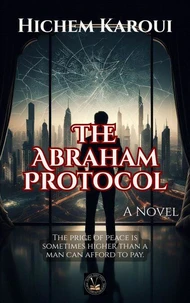
The Abraham Protocol
E-book
14,99 €
14,99 €

14,99 €

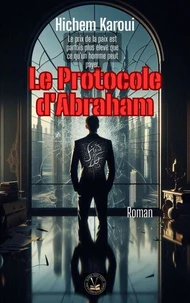
Le Protocole d'Abraham
E-book
14,99 €
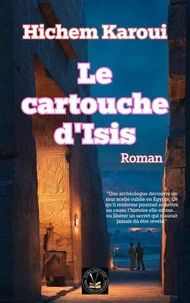
Le cartouche d'Isis
E-book
14,99 €
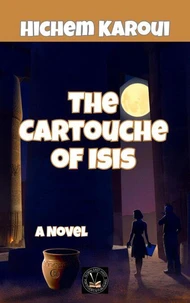
The Cartouche of Isis
E-book
14,99 €
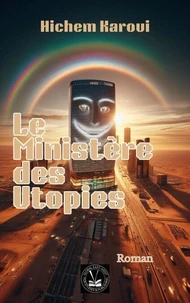
Le Ministère des Utopies
E-book
24,99 €
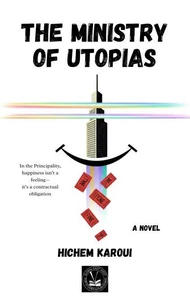
The Ministry of Utopias
E-book
24,99 €