SOLDES
Jusqu'à -70% sur une sélection d'articles*

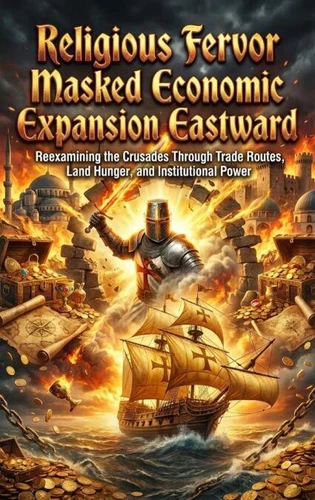
Religious Fervor Masked Economic Expansion Eastward. Reexamining the Crusades Through Trade Routes, Land Hunger, and Institutional Power
Par :Formats :
Disponible dans votre compte client Decitre ou Furet du Nord dès validation de votre commande. Le format ePub est :
- Compatible avec une lecture sur My Vivlio (smartphone, tablette, ordinateur)
- Compatible avec une lecture sur liseuses Vivlio
- Pour les liseuses autres que Vivlio, vous devez utiliser le logiciel Adobe Digital Edition. Non compatible avec la lecture sur les liseuses Kindle, Remarkable et Sony
 , qui est-ce ?
Notre partenaire de plateforme de lecture numérique où vous retrouverez l'ensemble de vos ebooks gratuitement
Pour en savoir plus sur nos ebooks, consultez notre aide en ligne ici
C'est si simple ! Lisez votre ebook avec l'app Vivlio sur votre tablette, mobile ou ordinateur :

- Nombre de pages180
- FormatePub
- ISBN978-3-565-20752-7
- EAN9783565207527
- Date de parution29/01/2026
- Protection num.pas de protection
- Taille2 Mo
- Infos supplémentairesepub
- ÉditeurEmphaloz Publishing House
Résumé
The Crusades are remembered as holy wars fought for Jerusalem's salvation. Yet this spiritual narrative overlooks the economic and political forces that sustained two centuries of military campaigns: Italian merchant cities competing for Mediterranean trade dominance, younger sons of noble families seeking land they could never inherit at home, and papal authority using warfare to consolidate institutional power across Christian Europe.
This book traces the Crusades through financial records, merchant correspondence, land charters, and eyewitness accounts from multiple perspectives-Latin Christian, Byzantine, Muslim, and Jewish.
It examines how religious motivation intertwined with material interest, how local populations experienced repeated invasions, and how the movement transformed European society through debt financing, taxation systems, and the militarization of religious orders. By analyzing the gap between stated purpose and documented action, this work reveals how the Crusades functioned as engines of territorial ambition and economic reorganization.
It explores the human cost on all sides while asking: when does religious conviction become inseparable from the pursuit of wealth and power?
It examines how religious motivation intertwined with material interest, how local populations experienced repeated invasions, and how the movement transformed European society through debt financing, taxation systems, and the militarization of religious orders. By analyzing the gap between stated purpose and documented action, this work reveals how the Crusades functioned as engines of territorial ambition and economic reorganization.
It explores the human cost on all sides while asking: when does religious conviction become inseparable from the pursuit of wealth and power?
A propos de Talia Westcott











8,49 €
8,99 €