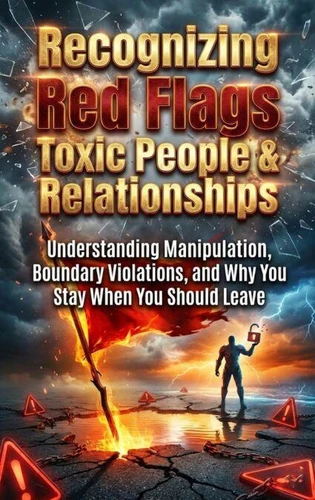
Recognizing Red Flags: Toxic People & Relationships. Understanding Manipulation, Boundary Violations, and Why You Stay When You Should Leave
Par :Formats :
Disponible dans votre compte client Decitre ou Furet du Nord dès validation de votre commande. Le format ePub est :
- Compatible avec une lecture sur My Vivlio (smartphone, tablette, ordinateur)
- Compatible avec une lecture sur liseuses Vivlio
- Pour les liseuses autres que Vivlio, vous devez utiliser le logiciel Adobe Digital Edition. Non compatible avec la lecture sur les liseuses Kindle, Remarkable et Sony
 , qui est-ce ?
Notre partenaire de plateforme de lecture numérique où vous retrouverez l'ensemble de vos ebooks gratuitement
Pour en savoir plus sur nos ebooks, consultez notre aide en ligne ici
C'est si simple ! Lisez votre ebook avec l'app Vivlio sur votre tablette, mobile ou ordinateur :

- Nombre de pages213
- FormatePub
- ISBN978-3-565-23712-8
- EAN9783565237128
- Date de parution11/02/2026
- Protection num.pas de protection
- Taille2 Mo
- Infos supplémentairesepub
- ÉditeurEmphaloz Publishing House
Résumé
This book explores the dynamics of toxic relationships by examining not just the behaviors of harmful people, but why certain patterns feel difficult to recognize, name, or leave. It investigates what red flags actually signal, and what your tolerance for them reveals about your relationship with conflict, boundaries, and the conditions under which you learned that love requires enduring harm.
Rather than simply listing warning signs, this book reframes red flag recognition as a practice requiring self-trust, emotional literacy, and the willingness to prioritize your wellbeing over preserving connection.
It examines the psychology of manipulation, how toxic people exploit empathy and loyalty, and why early red flags are often rationalized, minimized, or reframed as misunderstandings. It explores the difference between healthy conflict and patterns designed to confuse, control, or diminish you, and why leaving often requires more than recognizing the problem-it requires believing you deserve better. Through compassionate inquiry, the book navigates the confusion when someone's words contradict their actions, the guilt that accompanies setting boundaries with people you care about, and the shame of realizing you stayed longer than you wish you had.
It offers insight into recognizing gaslighting, love bombing, intermittent reinforcement, and other manipulation tactics, while addressing why these strategies work and what internal shifts are needed to resist them. This is an invitation to examine not just whether someone is toxic, but why their toxicity feels tolerable to you-because sometimes the red flag isn't just their behavior, it's your willingness to explain it away, and understanding that pattern matters as much as leaving the relationship.
It examines the psychology of manipulation, how toxic people exploit empathy and loyalty, and why early red flags are often rationalized, minimized, or reframed as misunderstandings. It explores the difference between healthy conflict and patterns designed to confuse, control, or diminish you, and why leaving often requires more than recognizing the problem-it requires believing you deserve better. Through compassionate inquiry, the book navigates the confusion when someone's words contradict their actions, the guilt that accompanies setting boundaries with people you care about, and the shame of realizing you stayed longer than you wish you had.
It offers insight into recognizing gaslighting, love bombing, intermittent reinforcement, and other manipulation tactics, while addressing why these strategies work and what internal shifts are needed to resist them. This is an invitation to examine not just whether someone is toxic, but why their toxicity feels tolerable to you-because sometimes the red flag isn't just their behavior, it's your willingness to explain it away, and understanding that pattern matters as much as leaving the relationship.