SOLDES
Jusqu'à -70% sur une sélection d'articles*

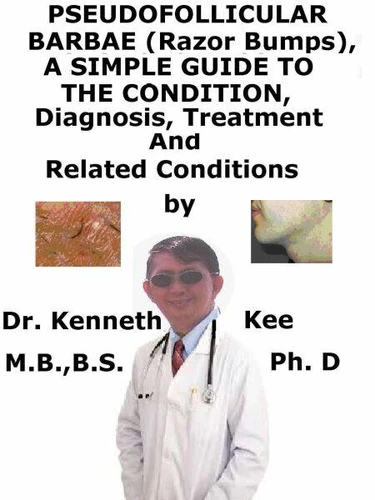
Pseudofolliculitis barbae (Razor Bumps), A Simple Guide To The Condition, Diagnosis, Treatment And Related Conditions
Par :Formats :
Disponible dans votre compte client Decitre ou Furet du Nord dès validation de votre commande. Le format ePub est :
- Compatible avec une lecture sur My Vivlio (smartphone, tablette, ordinateur)
- Compatible avec une lecture sur liseuses Vivlio
- Pour les liseuses autres que Vivlio, vous devez utiliser le logiciel Adobe Digital Edition. Non compatible avec la lecture sur les liseuses Kindle, Remarkable et Sony
 , qui est-ce ?
Notre partenaire de plateforme de lecture numérique où vous retrouverez l'ensemble de vos ebooks gratuitement
Pour en savoir plus sur nos ebooks, consultez notre aide en ligne ici
C'est si simple ! Lisez votre ebook avec l'app Vivlio sur votre tablette, mobile ou ordinateur :

- FormatePub
- ISBN978-1-005-36345-1
- EAN9781005363451
- Date de parution21/01/2021
- Protection num.pas de protection
- Infos supplémentairesepub
- ÉditeurC. C. Chamberlane
Résumé
This book describes Pseudofolliculitis barbae (Razor Bumps), Diagnosis and Treatment and Related DiseasesWhen I first read about Pseudofolliculitis barbae (Razor Bumps), I said that that that disorder describes my brother's exact situation when he was about 18 years old and started to shave with a razor blade. I was then 13 years old still growing with no face mustache or beard. But my brother was already shaving to show a clean shaven face when going to school and meeting girl friends.
Then small little bumps started to appear on his lower face and he was rather irritated by them. A barber told him to shave with shaving cream instead of shaving dry. Since then he did not have any red bumps on his face. Just like in my book on Entroprion (Ingrown Eyelashes), Pseudofolliculitis barbae is a chronic inflammatory skin disorder produced by ingrown hairs. It is most often activated by hair removal, particularly shaving, since shaving cuts the hair into a sharp tip that can more easily pierce the skin as it grows.
Pseudofolliculitis barbae often develops in the beard region of men, but it can happen in all sexes and in any area where thick or coarse hair grows. Pseudofolliculitis barbae (razor bumps) is a frequent disorder of the beard area happening in up to 60% African American men and other people with curly hair. A good, clean shave makes the skin feel so smooth and soft at first but then come the red razor bumps.
Pseudofolliculitis barbae (razor bumps) are more than just an irritation; in some cases, they can produce permanent damage if they are not treated. The disorder happens when highly curved hairs grow back into the skin producing inflammation and a foreign body reaction. Over time, this can induce keloidal scarring which looks like hard bumps of the beard area and neck. Shaving makes the ends of the hairs sharp like a spear.
The hairs then grow back into the skin producing pseudofolliculitis barbae. Other names for pseudofolliculitis barbae (PFB) are:1. Razor bumps2. Barber's itch3. Pseudofolliculitis pubis (specifically when the bumps occur in the pubic area)4. Folliculitis barbae traumaticaThere are three main causes that, together, activate pseudofolliculitis development.1. Having curly hair2. Being genetically prone to the condition3.
The present hair grooming methodPseudofolliculitis happens when the terminal hair does not develop and move out of the hair follicle normally through the opening at the skin's surface, also called the pore. Instead, the hair develops laterally, underneath the skin's surface, through the follicle wall, and into the neighboring skin tissue. Occasionally the hair will pass out of the pore normally but do a sharp "U-turn" and grow back into the skin from the surface.
Either way, the skin now feels the hair as a foreign invader and the body attacks it. Curly HairThe bumps happen when curly hairs are stuck inside the hair folliclesGenetic PredispositionPeople who had a single nucleotide substitution in a specific keratin gene (K6hf) were 6 times more likely to have pseudofolliculitis barbae than those without this point mutation. ShavingShaving produces a sharp, angled point at the tips of the hair where it has been slicedThis sharp point can more easily penetrate the skin as the hair grows.
This produces inflamed, painful, red bumps. The best treatment for pseudofolliculitis is prevention to stop shaving and permit the hair to grow out. Other treatments are:Chemical depilatories (break hair)Topical steroids or tretinoin (inflammation)Antibiotics (infection)Eflornithine (stop hair growth)Laser hair removalTABLE OF CONTENTIntroduction...
Then small little bumps started to appear on his lower face and he was rather irritated by them. A barber told him to shave with shaving cream instead of shaving dry. Since then he did not have any red bumps on his face. Just like in my book on Entroprion (Ingrown Eyelashes), Pseudofolliculitis barbae is a chronic inflammatory skin disorder produced by ingrown hairs. It is most often activated by hair removal, particularly shaving, since shaving cuts the hair into a sharp tip that can more easily pierce the skin as it grows.
Pseudofolliculitis barbae often develops in the beard region of men, but it can happen in all sexes and in any area where thick or coarse hair grows. Pseudofolliculitis barbae (razor bumps) is a frequent disorder of the beard area happening in up to 60% African American men and other people with curly hair. A good, clean shave makes the skin feel so smooth and soft at first but then come the red razor bumps.
Pseudofolliculitis barbae (razor bumps) are more than just an irritation; in some cases, they can produce permanent damage if they are not treated. The disorder happens when highly curved hairs grow back into the skin producing inflammation and a foreign body reaction. Over time, this can induce keloidal scarring which looks like hard bumps of the beard area and neck. Shaving makes the ends of the hairs sharp like a spear.
The hairs then grow back into the skin producing pseudofolliculitis barbae. Other names for pseudofolliculitis barbae (PFB) are:1. Razor bumps2. Barber's itch3. Pseudofolliculitis pubis (specifically when the bumps occur in the pubic area)4. Folliculitis barbae traumaticaThere are three main causes that, together, activate pseudofolliculitis development.1. Having curly hair2. Being genetically prone to the condition3.
The present hair grooming methodPseudofolliculitis happens when the terminal hair does not develop and move out of the hair follicle normally through the opening at the skin's surface, also called the pore. Instead, the hair develops laterally, underneath the skin's surface, through the follicle wall, and into the neighboring skin tissue. Occasionally the hair will pass out of the pore normally but do a sharp "U-turn" and grow back into the skin from the surface.
Either way, the skin now feels the hair as a foreign invader and the body attacks it. Curly HairThe bumps happen when curly hairs are stuck inside the hair folliclesGenetic PredispositionPeople who had a single nucleotide substitution in a specific keratin gene (K6hf) were 6 times more likely to have pseudofolliculitis barbae than those without this point mutation. ShavingShaving produces a sharp, angled point at the tips of the hair where it has been slicedThis sharp point can more easily penetrate the skin as the hair grows.
This produces inflamed, painful, red bumps. The best treatment for pseudofolliculitis is prevention to stop shaving and permit the hair to grow out. Other treatments are:Chemical depilatories (break hair)Topical steroids or tretinoin (inflammation)Antibiotics (infection)Eflornithine (stop hair growth)Laser hair removalTABLE OF CONTENTIntroduction...
A propos de Kenneth Kee


4,49 €