Nouveauté
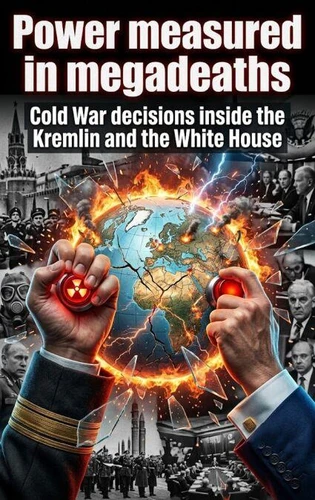
Power measured in megadeaths. Cold War decisions inside the Kremlin and the White House
Par :Formats :
Disponible dans votre compte client Decitre ou Furet du Nord dès validation de votre commande. Le format ePub est :
- Compatible avec une lecture sur My Vivlio (smartphone, tablette, ordinateur)
- Compatible avec une lecture sur liseuses Vivlio
- Pour les liseuses autres que Vivlio, vous devez utiliser le logiciel Adobe Digital Edition. Non compatible avec la lecture sur les liseuses Kindle, Remarkable et Sony
 , qui est-ce ?
Notre partenaire de plateforme de lecture numérique où vous retrouverez l'ensemble de vos ebooks gratuitement
Pour en savoir plus sur nos ebooks, consultez notre aide en ligne ici
C'est si simple ! Lisez votre ebook avec l'app Vivlio sur votre tablette, mobile ou ordinateur :

- Nombre de pages170
- FormatePub
- ISBN978-3-565-54771-5
- EAN9783565547715
- Date de parution08/07/2026
- Protection num.pas de protection
- Taille612 Ko
- Infos supplémentairesepub
- ÉditeurEmphaloz Publishing House
Résumé
They never fired a single shot at each other. Yet for four decades, the leaders of the United States and the Soviet Union planned for a war that could erase entire nations. This book examines the Cold War not as a clash of ideologies alone, but as a machinery of decision-making where men weighed millions of lives against geopolitical advantage. From the Berlin Blockade to the Cuban Missile Crisis, from nuclear doctrine to proxy battlefields, it reconstructs how fear of annihilation drove the very actions that kept annihilation at bay.
The logic was circular. The stakes were absolute. And the men who held the codes knew that one mistake meant no second chance. Drawing on declassified documents, diplomatic cables, and internal military assessments, the narrative traces how two superpowers built a global order on the edge of its own destruction. The Cold War was not simply a standoff. It was a system of organized distrust, where every move was calculated against a response that could end everything.
This book asks what that system demanded of those who operated it, and what it left behind for a world that inherited its structures.
The logic was circular. The stakes were absolute. And the men who held the codes knew that one mistake meant no second chance. Drawing on declassified documents, diplomatic cables, and internal military assessments, the narrative traces how two superpowers built a global order on the edge of its own destruction. The Cold War was not simply a standoff. It was a system of organized distrust, where every move was calculated against a response that could end everything.
This book asks what that system demanded of those who operated it, and what it left behind for a world that inherited its structures.