- Accueil /
- Conrad Shaw
Conrad Shaw

Dernière sortie
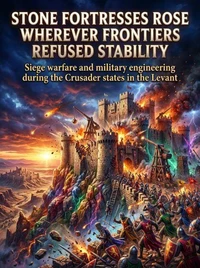
Stone Fortresses Rose Wherever Frontiers Refused Stability
The Crusades reshaped medieval warfare through the demands of defending and conquering fortified cities across the eastern Mediterranean. Castles, siege engines, and supply systems became decisive instruments in a conflict where territorial control depended on endurance as much as battlefield victory.
This account explores the military architecture and strategic evolution of the Crusading era. Crusader and Muslim forces developed increasingly sophisticated fortifications capable of controlling trade routes, river crossings, and pilgrimage corridors throughout the Levant.
Massive castles functioned simultaneously as military bases, administrative centers, and symbols of political authority. The book also examines the structured siege campaigns surrounding cities such as Jerusalem and Antioch. Logistics, naval coordination, engineering expertise, and famine often determined outcomes more decisively than open combat alone. Warfare became increasingly technical as armies adapted to prolonged regional conflict. The Crusades emerge here as a turning point in medieval military history, where fortified landscapes and organized siege warfare transformed how power was projected across contested territories.
The Crusades reshaped medieval warfare through the demands of defending and conquering fortified cities across the eastern Mediterranean. Castles, siege engines, and supply systems became decisive instruments in a conflict where territorial control depended on endurance as much as battlefield victory.
This account explores the military architecture and strategic evolution of the Crusading era. Crusader and Muslim forces developed increasingly sophisticated fortifications capable of controlling trade routes, river crossings, and pilgrimage corridors throughout the Levant.
Massive castles functioned simultaneously as military bases, administrative centers, and symbols of political authority. The book also examines the structured siege campaigns surrounding cities such as Jerusalem and Antioch. Logistics, naval coordination, engineering expertise, and famine often determined outcomes more decisively than open combat alone. Warfare became increasingly technical as armies adapted to prolonged regional conflict. The Crusades emerge here as a turning point in medieval military history, where fortified landscapes and organized siege warfare transformed how power was projected across contested territories.
Les livres de Conrad Shaw
Nouveauté