SOLDES
Jusqu'à -70% sur une sélection d'articles*

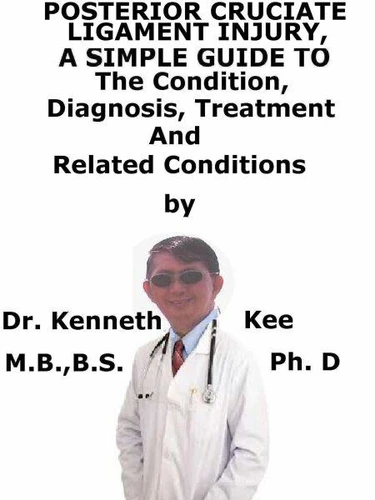
Posterior Cruciate Ligament Injury, A Simple Guide To The Condition, Diagnosis, Treatment And Related Conditions
Par :Formats :
Disponible dans votre compte client Decitre ou Furet du Nord dès validation de votre commande. Le format ePub est :
- Compatible avec une lecture sur My Vivlio (smartphone, tablette, ordinateur)
- Compatible avec une lecture sur liseuses Vivlio
- Pour les liseuses autres que Vivlio, vous devez utiliser le logiciel Adobe Digital Edition. Non compatible avec la lecture sur les liseuses Kindle, Remarkable et Sony
 , qui est-ce ?
Notre partenaire de plateforme de lecture numérique où vous retrouverez l'ensemble de vos ebooks gratuitement
Pour en savoir plus sur nos ebooks, consultez notre aide en ligne ici
C'est si simple ! Lisez votre ebook avec l'app Vivlio sur votre tablette, mobile ou ordinateur :

- FormatePub
- ISBN978-0-463-97826-9
- EAN9780463978269
- Date de parution05/07/2019
- Protection num.pas de protection
- Infos supplémentairesepub
- ÉditeurBluewater
Résumé
This book describes Posterior Cruciate Ligament Injury, Diagnosis and Treatment and Related DiseasesRecently I have a patient who complains of weakness of the left knee after a car road accident where he was sitting nest to the driver. His MRI showed the presence of a complete Posterior Cruciate Ligament Tear. A posterior cruciate ligament injury is a partial or complete tearing or injury of any part of the posterior cruciate ligament (PCL).
The posterior cruciate ligament (PCL) is one of the 4 ligaments inside the knee. It obtains its name from the fact that it passes behind another ligament, the anterior cruciate ligament (ACL), forming a cross shape. The posterior cruciate ligament is sited in the back of the knee. It is one of several ligaments that join the femur (thighbone) to the tibia (shinbone). There are 4 primary ligaments in the knee.
They function as strong ropes to hold the bones together and keep the knee stable. Collateral ligamentsThese ligaments are found on the sides of the knee. The medial collateral ligament is on the inside and the lateral collateral ligament is on the outside. They regulate the sideways movement of the knee and brace it against abnormal movement. Cruciate ligamentsThese are present inside the knee joint.
They cross each other to form an "X" with the anterior cruciate ligament in front and the posterior cruciate ligament at the back. The cruciate ligaments regulate the back and forth movement of the knee. The posterior cruciate ligament stops the tibia from moving backwards too far. Along with the other ligaments in the knee, it maintains the stability of the knee and prevents the thigh and shin bones moving out of place.
The PCL is one of the 2 cruciate ligaments of the knee. It functions as the major stabilizing ligament of the knee and stops the tibia from excessive posterior displacement in relation to the femur. It also functions to stop hyper-extension and restricts internal rotation, adduction and abduction at the knee joint. The PCL is two times as thick as the ACL and sustains less injury than the ACL because of its stronger nature.
As a result, PCL injuries are less frequent than ACL injuries. Possible causes of PCL injuries are:1. Football injuries2. Running injuries3. Motor vehicle accidents4. Falls onto a flexed kneeMore mechanisms of PCL injury are:1. Bad landings from a jump, 2. A simple misstep or3. Fast direction change. Because it takes such great strength to tear such a strong ligament such as the posterior cruciate ligament, a complete rupture of the PCL will be difficult to repair.
The normal symptoms of a posterior cruciate ligament injury are:1. Pain with swelling that happens steadily and quickly after the injuryThere is tenderness in the space behind the knee (popliteal fossa)2. Swelling that makes the knee stiff and may induce a limp3. Difficulty walking4. The knee feels unstable, like it may give wayThe MRI is till the best way to diagnose a PCL injury or tear. Important signs are the positive posterior sag test, quadriceps active teat and posterior drawer tests.
Treatments of posterior cruciate ligament (PCL) injury are:1. Protection, from further harm with support or splint2. Rest, the injured leg for 2-3 weeks; use crutches if needed3. Ice, wrapped in cloth, applied to injury reduces swelling every 15-20 minutes4. Compression with bandages or tubing to reduce movement and swelling5. Elevation of injured leg above the heart using support6. PainkillersSurgical treatment may be needed only if conservative treatment fails.
This is normally followed by rehabilitation and physiotherapy. TABLE OF CONTENTIntroductionChapter 1 Posterior Cruciate Ligament InjuryChapter 2 Causes...
The posterior cruciate ligament (PCL) is one of the 4 ligaments inside the knee. It obtains its name from the fact that it passes behind another ligament, the anterior cruciate ligament (ACL), forming a cross shape. The posterior cruciate ligament is sited in the back of the knee. It is one of several ligaments that join the femur (thighbone) to the tibia (shinbone). There are 4 primary ligaments in the knee.
They function as strong ropes to hold the bones together and keep the knee stable. Collateral ligamentsThese ligaments are found on the sides of the knee. The medial collateral ligament is on the inside and the lateral collateral ligament is on the outside. They regulate the sideways movement of the knee and brace it against abnormal movement. Cruciate ligamentsThese are present inside the knee joint.
They cross each other to form an "X" with the anterior cruciate ligament in front and the posterior cruciate ligament at the back. The cruciate ligaments regulate the back and forth movement of the knee. The posterior cruciate ligament stops the tibia from moving backwards too far. Along with the other ligaments in the knee, it maintains the stability of the knee and prevents the thigh and shin bones moving out of place.
The PCL is one of the 2 cruciate ligaments of the knee. It functions as the major stabilizing ligament of the knee and stops the tibia from excessive posterior displacement in relation to the femur. It also functions to stop hyper-extension and restricts internal rotation, adduction and abduction at the knee joint. The PCL is two times as thick as the ACL and sustains less injury than the ACL because of its stronger nature.
As a result, PCL injuries are less frequent than ACL injuries. Possible causes of PCL injuries are:1. Football injuries2. Running injuries3. Motor vehicle accidents4. Falls onto a flexed kneeMore mechanisms of PCL injury are:1. Bad landings from a jump, 2. A simple misstep or3. Fast direction change. Because it takes such great strength to tear such a strong ligament such as the posterior cruciate ligament, a complete rupture of the PCL will be difficult to repair.
The normal symptoms of a posterior cruciate ligament injury are:1. Pain with swelling that happens steadily and quickly after the injuryThere is tenderness in the space behind the knee (popliteal fossa)2. Swelling that makes the knee stiff and may induce a limp3. Difficulty walking4. The knee feels unstable, like it may give wayThe MRI is till the best way to diagnose a PCL injury or tear. Important signs are the positive posterior sag test, quadriceps active teat and posterior drawer tests.
Treatments of posterior cruciate ligament (PCL) injury are:1. Protection, from further harm with support or splint2. Rest, the injured leg for 2-3 weeks; use crutches if needed3. Ice, wrapped in cloth, applied to injury reduces swelling every 15-20 minutes4. Compression with bandages or tubing to reduce movement and swelling5. Elevation of injured leg above the heart using support6. PainkillersSurgical treatment may be needed only if conservative treatment fails.
This is normally followed by rehabilitation and physiotherapy. TABLE OF CONTENTIntroductionChapter 1 Posterior Cruciate Ligament InjuryChapter 2 Causes...
A propos de Kenneth Kee



4,49 €