SOLDES
Jusqu'à -70% sur une sélection d'articles*

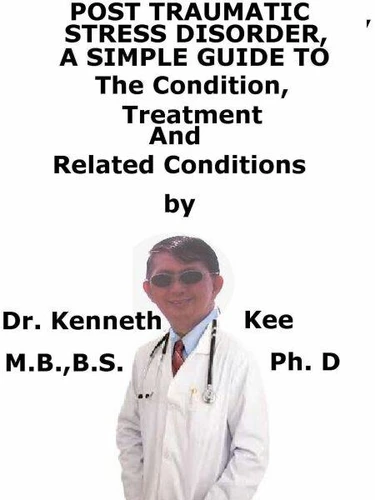
Post Traumatic Stress Disorders, A Simple Guide To The Condition, Treatment And Related Conditions
Par :Formats :
Disponible dans votre compte client Decitre ou Furet du Nord dès validation de votre commande. Le format ePub est :
- Compatible avec une lecture sur My Vivlio (smartphone, tablette, ordinateur)
- Compatible avec une lecture sur liseuses Vivlio
- Pour les liseuses autres que Vivlio, vous devez utiliser le logiciel Adobe Digital Edition. Non compatible avec la lecture sur les liseuses Kindle, Remarkable et Sony
 , qui est-ce ?
Notre partenaire de plateforme de lecture numérique où vous retrouverez l'ensemble de vos ebooks gratuitement
Pour en savoir plus sur nos ebooks, consultez notre aide en ligne ici
C'est si simple ! Lisez votre ebook avec l'app Vivlio sur votre tablette, mobile ou ordinateur :

- FormatePub
- ISBN978-1-370-82361-1
- EAN9781370823611
- Date de parution09/11/2016
- Protection num.pas de protection
- Infos supplémentairesepub
- ÉditeurEditeurs divers USA
Résumé
Post Traumatic Stress DisorderIs this the hero of whom I have readCurled up in a blanket on the hospital bedHe twisted and turned as he sleptThis dreaming savior of people weptHe saw the number of people trapped in a burning office buildingAnd some that jumped to their death to escape the burningHe rushed through the burning downstairs doorAnd up the stairs to the occupied floorThe people were trapped by the locked stairs doorThey could not get out by the stairs from their floorHe unlocked each locked door and called to the trapped'Come and get out down the stairs by the steps'He pushed them down the stairs with quiet authority'Do not jump, I will lead you down the stairs warily'And he did so with the greatest impunityThe people rushed out of the burning door readilyThere were some minor burns to the skinBut they have survived the fire without jumpingHe remembered those who jumped and the fear on their facesIt was a nightmare to remember in any placeHe could not eat or drink and tried to sleepBut sleep would not come as he continued to weepHis heart was sad as he remembered the tragic events of the dayHappy are the families of those saved who can see their children play.-An original poem by Kenneth KeePost Traumatic Stress Disorder is a psychosocial stress caused by exposure to an extreme stress occurrence in the work place or at home.1.
Witnessing the death of a colleague shot by a robber or crushed by a collapsed heavy machinery2. Seeing a person falls from great heights and seriously injured3. Witnessing the amputation of a colleague's limb4. Accident involving explosion or fire5. Violence or fighting at workThe appearance of occupational Post Traumatic Stress disorder may vary from mild presentation of insomnia to the more severe presentation of panic and nervous breakdown.1.
Re-experiencing symptomsa. Flashbacks of accident or traumatic events for minutes or daysb. Post Traumatic Stress dreams and nightmares of the traumatic eventc. Frightened easily by loud noises. Re-experiencing symptoms may cause problems in a person's everyday routine.2. Avoidance of the traumatic site or thinking about the eventa. Avoidance away from places, events or objects that are reminders of the experienceb.
Feeling Emotional upset and numbc. Feeling strong guilt, depression or worryd. Losing interest in activities that were enjoyable in the paste. Having trouble remembering the dangerous event.f. Things that remind a person of the traumatic event can trigger avoidance symptoms.g. These symptoms may cause a person to change his or her personal routine.3. Hyper arousal symptomsHyper arousal symptoms are usually constant instead of being triggered by things that remind one of the traumatic events.
These symptoms may make it hard to do daily tasks such as sleeping, eating or concentrating. Sometimes people have very serious symptoms that go away after a few weeks. This is called acute stress disorder or ASD. When the symptoms last more than a few weeks and become an ongoing problem, they might be PTSD. To be diagnosed with PTSD a person must have all of the following for at least 1 month:1. At least one re-experiencing symptom2.
At least three avoidance symptoms3. At least two hyper arousal symptomsCounseling and education will help patient to return to work without feeling fear or panic about their working place. Encourage the affected persons to talk and share their traumatic experienceAntidepressant medicines may help. TABLE OF CONTENTIntroductionChapter 1 Post Traumatic Stress DisordersChapter 2 Interesting Facts about PTSDChapter 3 Treatment of PTSDChapter 4 PanicChapter 5 Anx...
Witnessing the death of a colleague shot by a robber or crushed by a collapsed heavy machinery2. Seeing a person falls from great heights and seriously injured3. Witnessing the amputation of a colleague's limb4. Accident involving explosion or fire5. Violence or fighting at workThe appearance of occupational Post Traumatic Stress disorder may vary from mild presentation of insomnia to the more severe presentation of panic and nervous breakdown.1.
Re-experiencing symptomsa. Flashbacks of accident or traumatic events for minutes or daysb. Post Traumatic Stress dreams and nightmares of the traumatic eventc. Frightened easily by loud noises. Re-experiencing symptoms may cause problems in a person's everyday routine.2. Avoidance of the traumatic site or thinking about the eventa. Avoidance away from places, events or objects that are reminders of the experienceb.
Feeling Emotional upset and numbc. Feeling strong guilt, depression or worryd. Losing interest in activities that were enjoyable in the paste. Having trouble remembering the dangerous event.f. Things that remind a person of the traumatic event can trigger avoidance symptoms.g. These symptoms may cause a person to change his or her personal routine.3. Hyper arousal symptomsHyper arousal symptoms are usually constant instead of being triggered by things that remind one of the traumatic events.
These symptoms may make it hard to do daily tasks such as sleeping, eating or concentrating. Sometimes people have very serious symptoms that go away after a few weeks. This is called acute stress disorder or ASD. When the symptoms last more than a few weeks and become an ongoing problem, they might be PTSD. To be diagnosed with PTSD a person must have all of the following for at least 1 month:1. At least one re-experiencing symptom2.
At least three avoidance symptoms3. At least two hyper arousal symptomsCounseling and education will help patient to return to work without feeling fear or panic about their working place. Encourage the affected persons to talk and share their traumatic experienceAntidepressant medicines may help. TABLE OF CONTENTIntroductionChapter 1 Post Traumatic Stress DisordersChapter 2 Interesting Facts about PTSDChapter 3 Treatment of PTSDChapter 4 PanicChapter 5 Anx...
A propos de Kenneth Kee
4,49 €