
Nguy?n Dông Hung (bác si) / Nguyen Dong Hung, M. D. Bút danh / Pen name: Minh HungSinh / Born: Vi?t Nam / Vietnam
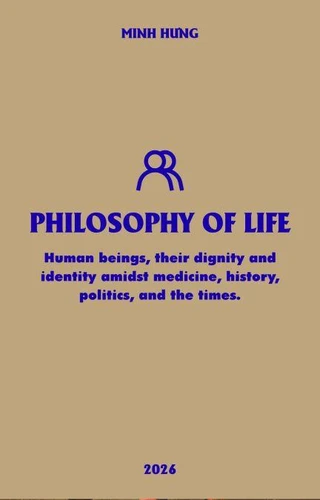
Philosophy of Life
Par :Formats :
Disponible dans votre compte client Decitre ou Furet du Nord dès validation de votre commande. Le format ePub est :
- Compatible avec une lecture sur My Vivlio (smartphone, tablette, ordinateur)
- Compatible avec une lecture sur liseuses Vivlio
- Pour les liseuses autres que Vivlio, vous devez utiliser le logiciel Adobe Digital Edition. Non compatible avec la lecture sur les liseuses Kindle, Remarkable et Sony
 , qui est-ce ?
Notre partenaire de plateforme de lecture numérique où vous retrouverez l'ensemble de vos ebooks gratuitement
Pour en savoir plus sur nos ebooks, consultez notre aide en ligne ici
C'est si simple ! Lisez votre ebook avec l'app Vivlio sur votre tablette, mobile ou ordinateur :

- FormatePub
- ISBN8195282790
- EAN9798195282790
- Date de parution02/05/2026
- Protection num.pas de protection
- Infos supplémentairesepub
- ÉditeurKindred Quill Publishing
Résumé
Philosophy of life: The Human Person, Dignity, and Fate between Medicine, History, Politics, and the Age of AI is an interdisciplinary scholarly and humanistic work by Minh Hung / Nguy?n Dông Hung. The book reopens one of the most fundamental questions of our time: What becomes of the human person in an age of technical medicine, organizational power, artificial intelligence, digital media, historical upheaval, and crises of dignity?This is not a self-help book, not a collection of personal essays, and not a political manifesto.
It is a serious work of interdisciplinary thought that places the concrete human person at the center: the patient, the poor, the worker, the elderly, the dying, the forgotten figures of history, the digital subject, and all those whose lives are easily reduced by systems. Drawing from the author's experience as a physician, writer, and observer of history and politics, Human Life Theory develops a distinctive conceptual framework: concrete personhood, irreducible dignity, dignity-based medicine, history of lived fate, ethical memory, politics of human welfare, communities of care, the digital subject, and the ethics of presence.
The book enters into dialogue with major intellectual traditions: Aristotle, Kant, Hegel, Marx, Nietzsche, Heidegger, Hannah Arendt, Foucault, Viktor Frankl, Camus, Confucianism, Buddhism, medical humanities, narrative medicine, and Vietnamese intellectual sources such as Nguy?n Trãi, H?i Thu?ng Lãn Ông, Nguy?n Du, and the historical memory of the Vietnamese people. Across eight major parts, the book examines the irreducibility of the human person; the body, illness, and suffering; finitude, meaning, and communities of care; history, memory, and the Vietnamese condition; power, labor, and livelihood; medical humanities, education, and literature; technology, AI, and the digital subject; and finally, the methodology, dialogue, and manifesto of Human Life Theory.
This book is written for readers interested in philosophy of human life, medical humanities, medical ethics, history, political thought, social welfare, education, testimonial literature, AI ethics, technology and human dignity, and contemporary Vietnamese thought. Its central message is clear: every system - medicine, politics, education, history, media, or technology - is legitimate only when it continues to see the concrete human person in life, suffering, memory, freedom, responsibility, and dignity.
It is a serious work of interdisciplinary thought that places the concrete human person at the center: the patient, the poor, the worker, the elderly, the dying, the forgotten figures of history, the digital subject, and all those whose lives are easily reduced by systems. Drawing from the author's experience as a physician, writer, and observer of history and politics, Human Life Theory develops a distinctive conceptual framework: concrete personhood, irreducible dignity, dignity-based medicine, history of lived fate, ethical memory, politics of human welfare, communities of care, the digital subject, and the ethics of presence.
The book enters into dialogue with major intellectual traditions: Aristotle, Kant, Hegel, Marx, Nietzsche, Heidegger, Hannah Arendt, Foucault, Viktor Frankl, Camus, Confucianism, Buddhism, medical humanities, narrative medicine, and Vietnamese intellectual sources such as Nguy?n Trãi, H?i Thu?ng Lãn Ông, Nguy?n Du, and the historical memory of the Vietnamese people. Across eight major parts, the book examines the irreducibility of the human person; the body, illness, and suffering; finitude, meaning, and communities of care; history, memory, and the Vietnamese condition; power, labor, and livelihood; medical humanities, education, and literature; technology, AI, and the digital subject; and finally, the methodology, dialogue, and manifesto of Human Life Theory.
This book is written for readers interested in philosophy of human life, medical humanities, medical ethics, history, political thought, social welfare, education, testimonial literature, AI ethics, technology and human dignity, and contemporary Vietnamese thought. Its central message is clear: every system - medicine, politics, education, history, media, or technology - is legitimate only when it continues to see the concrete human person in life, suffering, memory, freedom, responsibility, and dignity.
A propos de MINH HUNG
The Apology
E-book
9,49 €
1,99 €
Urological Emergency
E-book
2,99 €
General Urology
E-book
4,49 €
Human to Human
E-book
2,99 €
Jewish History
E-book
2,99 €
Gold-Plated Puppets
E-book
4,49 €
Boredrom and Creativity
E-book
4,49 €
Behind a Patient
E-book
4,49 €
The Awakened Physician
E-book
2,99 €
11,49 €

7,99 €

4,49 €
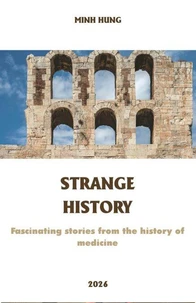
Strange History
E-book
4,49 €

The Fevers of History
E-book
2,99 €
Human Lives in the City
E-book
2,99 €
4,49 €
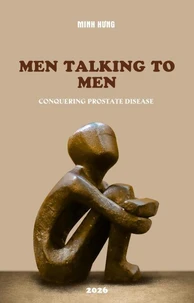
Men Talking to Men
E-book
6,99 €

6,99 €