
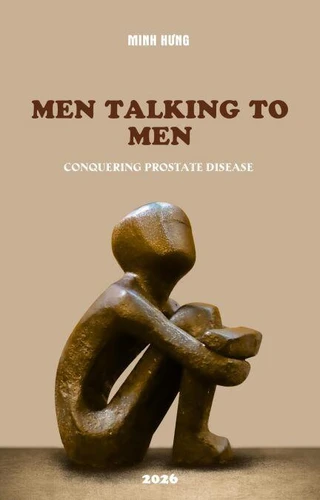
Nguy?n Dông Hung (bác si) / Nguyen Dong Hung, M. D. Bút danh / Pen name: Minh HungSinh / Born: Vi?t Nam / Vietnam
Men Talking to Men
Par :Formats :
Disponible dans votre compte client Decitre ou Furet du Nord dès validation de votre commande. Le format ePub est :
- Compatible avec une lecture sur My Vivlio (smartphone, tablette, ordinateur)
- Compatible avec une lecture sur liseuses Vivlio
- Pour les liseuses autres que Vivlio, vous devez utiliser le logiciel Adobe Digital Edition. Non compatible avec la lecture sur les liseuses Kindle, Remarkable et Sony
 , qui est-ce ?
Notre partenaire de plateforme de lecture numérique où vous retrouverez l'ensemble de vos ebooks gratuitement
Pour en savoir plus sur nos ebooks, consultez notre aide en ligne ici
C'est si simple ! Lisez votre ebook avec l'app Vivlio sur votre tablette, mobile ou ordinateur :

- FormatePub
- ISBN8258132888
- EAN9798258132888
- Date de parution20/04/2026
- Protection num.pas de protection
- Infos supplémentairesepub
- ÉditeurMINH HUNG
Résumé
Some illnesses do not remain confined to the body. They enter sleep, self-respect, married life, a father's silence, a husband's anxiety about providing, and the look in a man's eyes when he first realizes that his body no longer obeys him as it once did. Men Talking to Men is a book written from precisely that terrain of pain-a place where prostate disease is no longer merely a medical issue, but becomes a test of masculinity, love, family, and human dignity.
Writing as a urological surgeon, Dr. Nguyen Dong Hung, under the pen name Minh Hung, does more than explain disease in the language of medicine. He reaches the deepest and most private dimensions of what illness means for Vietnamese men: the embarrassment of speaking about urination and sexuality, the fear of losing one's role as husband, father, and provider, the feeling of being estranged from one's own body, and the quiet struggle to preserve selfhood in life's most vulnerable moments.
In this book, the prostate is not treated merely as an anatomical organ. It is placed where it truly belongs in lived experience: at the intersection of biology, psychology, culture, and human fate. The book takes readers through a complete and deeply layered journey: from the silence of Vietnamese men in the face of pain, to the scientific foundations of prostate anatomy, physiology, and common disorders; from prostatitis, benign prostatic hyperplasia, and prostate cancer, to diagnosis, treatment choices, physical recovery, psychological healing, and the rebuilding of life after illness.
Yet the distinctive strength of Men Talking to Men lies here: it is not merely a book that answers the question, "What is the disease?" It goes straight to a larger and far more difficult one: How does a man continue living when his body has changed, when his self-respect has been tested, and when the hardest things to say must finally be spoken aloud?With a voice that is calm, humane, accessible, and still scientifically grounded, this book opens a rare space for dialogue about men's health in the Vietnamese cultural context.
Here, medicine is no longer trapped in numbers and treatment protocols; it unfolds into the realities of everyday life: the successful man haunted by shame, the working man burdened by the fear of lost income, the husband growing quiet behind the bedroom door, the father hiding his illness so his children will not worry, the lonely man moving through the hospital like a shadow with no one beside him.
For that reason, this is not a book only for patients. It is also for wives, children, families, and for anyone who wants to understand men more deeply in the very parts of themselves they speak of least. Men Talking to Men is a book about the prostate, but more profoundly, it is a book about the human being. About how men suffer. About how they remain silent. About how illness can shake a life that once seemed solid.
And also about how a person, if properly understood, properly treated, and properly loved, can still move through rupture without losing life, truth, and dignity. This is a book every adult man should read, every Vietnamese family should have, and everyone should encounter who believes that the highest purpose of medicine is not only to cure disease, but to help human beings remain whole in the face of it.
Writing as a urological surgeon, Dr. Nguyen Dong Hung, under the pen name Minh Hung, does more than explain disease in the language of medicine. He reaches the deepest and most private dimensions of what illness means for Vietnamese men: the embarrassment of speaking about urination and sexuality, the fear of losing one's role as husband, father, and provider, the feeling of being estranged from one's own body, and the quiet struggle to preserve selfhood in life's most vulnerable moments.
In this book, the prostate is not treated merely as an anatomical organ. It is placed where it truly belongs in lived experience: at the intersection of biology, psychology, culture, and human fate. The book takes readers through a complete and deeply layered journey: from the silence of Vietnamese men in the face of pain, to the scientific foundations of prostate anatomy, physiology, and common disorders; from prostatitis, benign prostatic hyperplasia, and prostate cancer, to diagnosis, treatment choices, physical recovery, psychological healing, and the rebuilding of life after illness.
Yet the distinctive strength of Men Talking to Men lies here: it is not merely a book that answers the question, "What is the disease?" It goes straight to a larger and far more difficult one: How does a man continue living when his body has changed, when his self-respect has been tested, and when the hardest things to say must finally be spoken aloud?With a voice that is calm, humane, accessible, and still scientifically grounded, this book opens a rare space for dialogue about men's health in the Vietnamese cultural context.
Here, medicine is no longer trapped in numbers and treatment protocols; it unfolds into the realities of everyday life: the successful man haunted by shame, the working man burdened by the fear of lost income, the husband growing quiet behind the bedroom door, the father hiding his illness so his children will not worry, the lonely man moving through the hospital like a shadow with no one beside him.
For that reason, this is not a book only for patients. It is also for wives, children, families, and for anyone who wants to understand men more deeply in the very parts of themselves they speak of least. Men Talking to Men is a book about the prostate, but more profoundly, it is a book about the human being. About how men suffer. About how they remain silent. About how illness can shake a life that once seemed solid.
And also about how a person, if properly understood, properly treated, and properly loved, can still move through rupture without losing life, truth, and dignity. This is a book every adult man should read, every Vietnamese family should have, and everyone should encounter who believes that the highest purpose of medicine is not only to cure disease, but to help human beings remain whole in the face of it.
A propos de MINH HUNG
The Apology
E-book
9,49 €
1,99 €
Urological Emergency
E-book
2,99 €
General Urology
E-book
4,49 €
Human to Human
E-book
2,99 €

Jewish History
E-book
2,99 €
Boredrom and Creativity
E-book
4,49 €
Gold-Plated Puppets
E-book
4,49 €
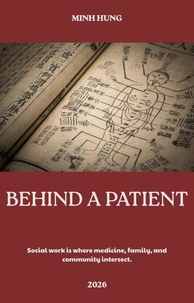
Behind a Patient
E-book
4,49 €
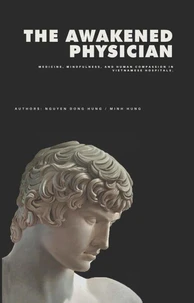
The Awakened Physician
E-book
2,99 €
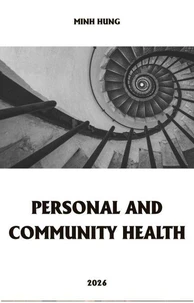
11,49 €

7,99 €

4,49 €

Strange History
E-book
4,49 €

The Fevers of History
E-book
2,99 €
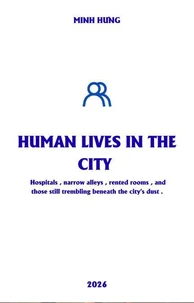
Human Lives in the City
E-book
2,99 €

Philosophy of Life
E-book
4,49 €
4,49 €

6,99 €