SOLDES
Jusqu'à -70% sur une sélection d'articles*

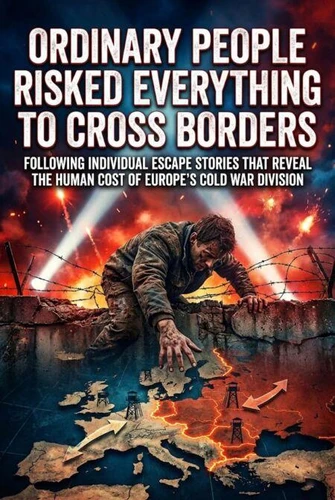
Ordinary People Risked Everything to Cross Borders. Following Individual Escape Stories That Reveal the Human Cost of Europe's Cold War Division
Par :Formats :
Disponible dans votre compte client Decitre ou Furet du Nord dès validation de votre commande. Le format ePub est :
- Compatible avec une lecture sur My Vivlio (smartphone, tablette, ordinateur)
- Compatible avec une lecture sur liseuses Vivlio
- Pour les liseuses autres que Vivlio, vous devez utiliser le logiciel Adobe Digital Edition. Non compatible avec la lecture sur les liseuses Kindle, Remarkable et Sony
 , qui est-ce ?
Notre partenaire de plateforme de lecture numérique où vous retrouverez l'ensemble de vos ebooks gratuitement
Pour en savoir plus sur nos ebooks, consultez notre aide en ligne ici
C'est si simple ! Lisez votre ebook avec l'app Vivlio sur votre tablette, mobile ou ordinateur :

- Nombre de pages208
- FormatePub
- ISBN978-3-565-21086-2
- EAN9783565210862
- Date de parution30/01/2026
- Protection num.pas de protection
- Taille2 Mo
- Infos supplémentairesepub
- ÉditeurEmphaloz Publishing House
Résumé
Behind Cold War statistics of defectors and refugees stand thousands of individual decisions to abandon homes, families, and entire lives for uncertain freedom. This book follows personal testimonies of those who escaped across the Iron Curtain-their planning, terror, narrow successes, and frequent failures-to understand what division meant for ordinary Europeans trapped on the wrong side of ideological boundaries.
Through escape narratives preserved in refugee interviews, Stasi surveillance files, border guard reports, Western intelligence debriefings, and family correspondence, the narrative reconstructs how people assessed impossible choices.
A young engineer calculates risks of swimming the Danube versus bribing officials. Parents debate whether escaping with children increases danger or moral necessity. Artists weigh creative freedom against leaving aging relatives who'll face interrogation. The book examines escape methods across decades: early postwar chaos when borders remained porous, Berlin Wall's construction forcing desperate improvisation, sophisticated tunnel networks and forged documents, diplomatic asylum requests, and late-Cold War legal emigration that still required years of bureaucratic limbo.
It explores the infrastructure supporting escapes-Western organizations funding operations, underground networks smuggling people, safe houses along routes-and brutal suppression efforts including shoot-to-kill orders, minefields, and systematic punishment of failed escapees' families. The narrative follows escapees beyond border crossing: refugee camp processing, integration struggles, survivor guilt, and decades spent advocating for those left behind.
It includes stories of those caught attempting escape, whose imprisonment and forced separation reveal the system's cruelty toward anyone choosing exit over loyalty.
A young engineer calculates risks of swimming the Danube versus bribing officials. Parents debate whether escaping with children increases danger or moral necessity. Artists weigh creative freedom against leaving aging relatives who'll face interrogation. The book examines escape methods across decades: early postwar chaos when borders remained porous, Berlin Wall's construction forcing desperate improvisation, sophisticated tunnel networks and forged documents, diplomatic asylum requests, and late-Cold War legal emigration that still required years of bureaucratic limbo.
It explores the infrastructure supporting escapes-Western organizations funding operations, underground networks smuggling people, safe houses along routes-and brutal suppression efforts including shoot-to-kill orders, minefields, and systematic punishment of failed escapees' families. The narrative follows escapees beyond border crossing: refugee camp processing, integration struggles, survivor guilt, and decades spent advocating for those left behind.
It includes stories of those caught attempting escape, whose imprisonment and forced separation reveal the system's cruelty toward anyone choosing exit over loyalty.
A propos de Talia Westcott














8,49 €
8,99 €